To celebrate the International Women’s Day and with this our ongoing struggle and resistance, we want to share some thoughts of Rêber Apo about the meaning and importance of the 8th of March with you.
As internationalist young women in Rojava, we continue our struggle for a free and dignified life and with big dreams and strong determination we send our greetings to all women around the world. To approach every day as 8th of March also means for us to give effort every day to build strong relations, a strong comradeship between us women and to search for our shared roots in order to set foot on the path towards freedom.
Author: Young Internationalist Women
-
Rêber Apo: It’s necessary to approach every day as 8th of March
-
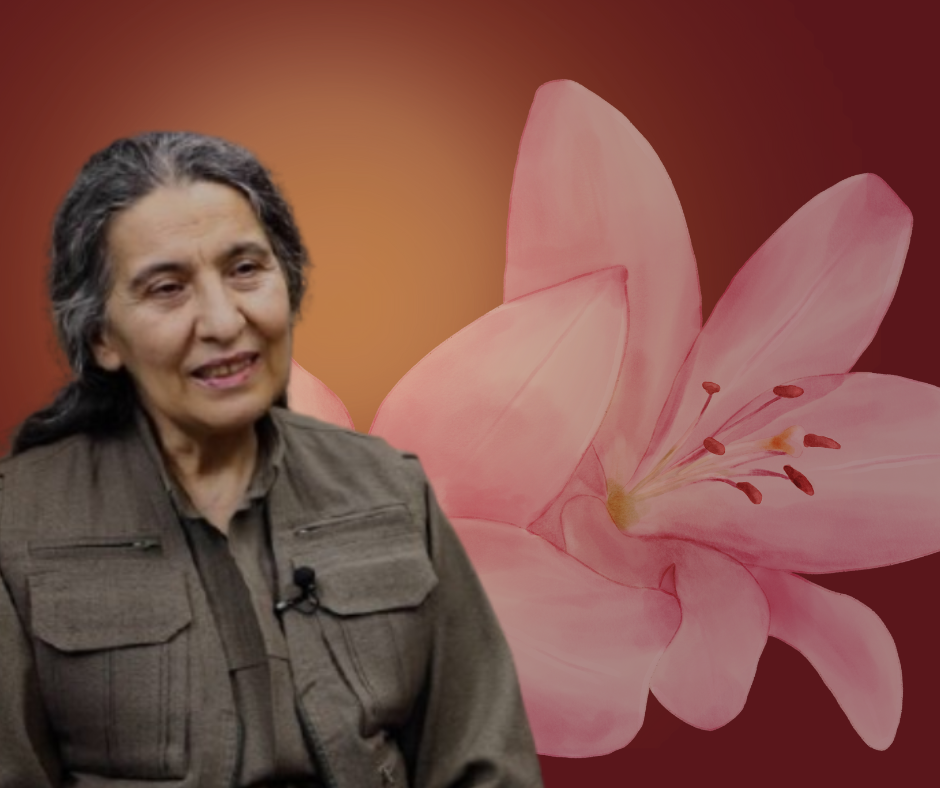
AYTEN DERSÎM: DEBEMOS UNIRNOS EN TORNO A LA RESISTENCIA DEL PUEBLO DE ROJAVA
Ayten Dersîm, miembro de la Coordinación del PAJK, afirmó que la decisión del pueblo de Rojava de defenderse de los ataques era muy importante, y declaró: «Hoy debemos unirnos y fortalecer a las combatientes del YPJ que lideran nuestra gloriosa lucha y la resistencia del pueblo de Rojava».
Ayten Dersîm participó en el programa especial de Medya Haber TV y evaluó los ataques contra Rojava y la lucha de las mujeres.
Dersîm afirmó que los ataques de las bandas ISIS-HTS contra Rojava forman parte de un plan internacional, y añadió que, a través del ISIS, quieren rediseñar Oriente Medio. A pesar de todos los ataques, el pueblo kurdo ha mostrado una gran resistencia, y esto es muy importante; la lucha debe intensificarse en todos los frentes. Ayten Dersim, miembro de la coordinación del PAJK, llamó la atención sobre el hecho de que los ataques de hoy contra el pueblo kurdo en Rojava se extenderán mañana a todos los pueblos, y afirmó que el pueblo kurdo, en particular las mujeres, no bajarán la cabeza ante estos ataques bárbaros.
Las valoraciones de Ayten Dersim, miembro de la Coordinación del PAJK, son las siguientes:
En primer lugar, con motivo del aniversario del martirio de las compañeras Sara, Rojbîn y Ronahî renuevan su compromiso de que seguiremos comprometidas con su lucha y llevaremos esta lucha por la libertad a buen término. Porque la compañera Sara fue una de las pioneras del Movimiento de Mujeres Libres. En ese sentido, su línea, su postura, es determinante y caracteriza nuestra lucha.
La brutalidad de este año va dirigida tanto contra la sociedad como contra las mujeres. No se trata solo de una situación de este año, sino que lleva años siendo así. Las fuerzas dominantes, los poderes gobernantes, las fuerzas fascistas temen sobre todo a las mujeres y cometen brutalidades contra ellas. Porque la presencia de la mujer en la sociedad, su autonomía y su papel social son uno de los factores más importantes que la definen. En ese sentido, también lo hemos valorado en nuestros programas a lo largo de los años anteriores. Pero con la llegada de este año, debemos comprender la realidad de Rojava: en años anteriores, luchó contra la brutalidad del ISIS, desarrolló sus propias fuerzas de autodefensa y protegió y liberó verdaderamente a los pueblos de Oriente Medio, a la humanidad y a las mujeres. Se trata de una resistencia que se extendió por todo el mundo; se convirtió en una postura y una resistencia en las que se inspiran las mujeres de todo el mundo. Nosotras, como mujeres, también vimos esto: que si te organizas y resistes, los círculos que te rodean también crecen. Porque esa realidad existe de verdad; la sociedad moral y política no ha sido destruida. Ha sido reprimida y negada. Todas las mujeres están esperando una chispa. Están esperando un movimiento y una organización. Debido a esta situación tan grave, hay una falta de pioneras. Esto dio lugar a las fuerzas y combatientes de las YPJ. Las combatientes y fuerzas de las YPJ eran las hijas de ese pueblo. Vieron el peligro. En otras palabras, se ofreció verdaderamente al mundo, porque también se desarrolló en el marco de un plan preparado y avanzó contra DAESH. Si nos organizamos contra esto, avanzamos en nuestra autodefensa y nuestra lucha, podemos defendernos a nosotras mismas y defender a los pueblos. Y lo demostraron en los años de lucha. Es decir, todas las mujeres, todos los pueblos vieron su propia existencia en su propio lugar. Esta es la prueba de ello: permanecer en silencio, permanecer pasivo, inclinar la cabeza ante el orden existente, es inexistencia, es esclavitud.
LA HUMANIDAD ENCONTRÓ SU LIBERACIÓN EN LA LUCHA DEL KURDISTÁN
Cuando miramos desde la historia hasta la actualidad, esta cuestión ha existido en diferentes niveles. Ahora, el Movimiento de Libertad, el Movimiento de Mujeres Libres, ha dado un giro a esta situación. Es decir, el pueblo y las mujeres no son esclavos. En otras palabras, estaban esclavizados, se les mantenía inconscientes y sin voluntad, y esta situación estaba institucionalizada. Ahora, esta situación no es ni un destino ni algo que deba ser. Fue creada, fue impuesta, y estas cosas se pueden superar. Esto se logró gracias a los frutos de una lucha que duró años. Es decir, esta resistencia, esta defensa, protegió al pueblo de esta barbarie y del DAESH, y miles de personas fueron martirizadas. Ahora bien, esta es una lucha muy honorable. La humanidad, en este sentido, ha tomado su lugar en torno a esta lucha. La humanidad, en este sentido, vio allí su salvación. La humanidad, en este sentido, vio lo siguiente: si te organizas, existes; si no lo haces, no existes. Ahora, desde principios de año, esta tiranía ha cambiado de nombre; alguien ha pasado a primer plano, se llama gobierno, se llama presidencia, pero su fundamento es el mismo. Sus métodos de imposición son los mismos, la tiranía es la misma. Esto también es un concepto preparado por las potencias internacionales. En otras palabras, son la aplicación práctica y los preparativos para la reestructuración de Oriente Medio. Ahora bien, cuando uno piensa con normalidad, se pregunta: el pueblo kurdo y el Kurdistán, el pueblo del noreste de Siria —porque allí viven muchos pueblos— son un mosaico de pueblos y mujeres. De todas las lenguas, todas las confesiones, todas las creencias. Porque para los pueblos esto no es un problema, para las mujeres tampoco es un problema. Miren, en Kobane está la resistencia de las mujeres, está la resistencia para la protección de las mujeres, pero una mujer de América Latina también se ve a sí misma aquí. En otras palabras, las fronteras no son una barrera, la fe no es una barrera, la religión no es una barrera, el idioma no es una barrera. Son los Estados o los poderes gobernantes, las hegemonías, los que crean estas barreras. En ese sentido, ven a este pueblo como una amenaza para ellos mismos, Ven a este pueblo como una amenaza y, para destruirlo, desatan toda su brutalidad. Esto no está de acuerdo con la humanidad, con la moral, con las normas internacionales ni con el estado de derecho. La realidad es que hay pueblos que se defienden, se gobiernan por su propia voluntad, no hacen daño a ningún otro pueblo y, en particular, se oponen a los ataques contra las mujeres. Porque DAESH realmente asesinó a mujeres de una manera muy brutal. Las capturaron de una manera muy brutal y querían utilizarlas de una manera muy brutal. Ahora las fuerzas YPJ las han liberado de allí. El mosaico de esos pueblos, que no perjudican a ninguna nación y se gobiernan libremente a través de su propio sistema democrático, sin atacar a ninguna región ni codiciar ninguna tierra, es uno de los pueblos más inocente de Oriente Medio: los kurdos. No tiene ese tipo de problemas ni cuestiones con las mujeres.
HTS IMPONE LA ESCLAVITUD Y LA SUMISIÓN A LOS PUEBLOS
Esta es la lucha por la existencia humana. Ahora ha llegado HTS, su nombre ha cambiado, su forma ha cambiado, pero todas las fuerzas mafiosas, que antes eran Al-Nusra, se convirtieron en DAESH, han surgido cientos de nombres diferentes, todos ellos con el objetivo común de eliminar a los pueblos con libre albedrío y continuar su brutalidad contra las naciones. El mundo ha sido testigo de ello; repetirlo una y otra vez puede que no sea apropiado. Estamos hablando del ISIS con un disfraz diferente; su fundamento y su método son los mismos. Utiliza la violencia, imponiendo la esclavitud, la subyugación y la impotencia a los pueblos. Ahora, esta es la demanda del pueblo kurdo y del Kurdistán. Porque nosotros, como pueblo y como mujeres, hemos llegado a esta conclusión: sea cual sea el pueblo, cualquier problema puede resolverse muy fácilmente mediante el diálogo, la negociación y el debate. El propio liderazgo está librando esta lucha en su totalidad. Afirma que los problemas no se resuelven con la guerra. Pero no han llegado a eso. Por lo que hemos observado y visto, sin llegar a ningún acuerdo general, diálogo o debate, han puesto en acción todas sus fuerzas militantes. Hay una fuerza que ha estado organizando y preparando esto desde el principio, y que una vez más está atacando con brutalidad. En oposición a esto, existe una conspiración que las potencias hegemónicas internacionales llevan años desarrollando contra el pueblo kurdo. Como no aceptan la existencia del pueblo kurdo y del Kurdistán, han visto especialmente la lucha de las mujeres dentro del pueblo kurdo, la más dinámica de todas, como una amenaza para ellos mismos. Ahora se están lanzando ataques contra esto. Cuando se produjeron estos ataques, sin duda todos nuestros pueblos, nuestras mujeres, iniciaron una gran lucha. Esta es una postura gloriosa. Es una postura que une la lucha de los pueblos. Esta postura de los pueblos que no quieren hacer la vista gorda ante este genocidio es la de los defensores de la libertad. Sin duda, esto debe continuar. Al igual que nuestras fuerzas YPJ y nuestro heroico pueblo lucharon y liberaron al pueblo del DAESH, hoy existe la misma determinación. De lo contrario, DAESH se extenderá por todas partes. Con su genocidio, lo arrasará todo. Ahora se está cambiando su nombre, pero no se está cambiando su fundamento, no se está cambiando su ideología. Lo vimos en la prensa. Las honorables combatientes de las YPJ luchaban desde los balcones, arrojando a la gente desde los edificios. Esta no es una situación que se pueda tolerar. Es un acto de venganza. Es una expresión del pensamiento «la hemos destruido a ella, ahora los destruiremos a ustedes también». En ese sentido, la lucha de las fuerzas YPJ es tan gloriosa hoy como lo fue ayer. No luchan solo por ellas mismas, sino por todos los pueblos y mujeres que viven en esa zona geográfica. Están decididas en esta lucha, y lo vemos claramente. El mundo no debe permanecer en silencio ante esto. En otras palabras, sin silencio, hay que enfrentarlo de una manera muy organizada.
LA FILOSOFÍA DE LA MUJER, LA VIDA Y LA LIBERTAD ES LA FILOSOFÍA DE UNA VIDA DIGNA
Por otro lado, están Irán y Rojhilat. Antes de este levantamiento JIN JIYAN AZADÎ, había silencio. La filosofía JIN JIYAN AZADÎ es la filosofía de la libertad, la filosofía del ser propio, la filosofía de una vida y una lucha dignas. Ahora, esta filosofía debe estar presente en toda la humanidad, y en particular entre las mujeres. El hecho de que esté ausente en las potencias hegemónicas del mundo no significa que no pueda existir. Esta resistencia duró días. Incluso hoy, con el pueblo y las mujeres al frente, se está cometiendo allí una injusticia y se está pisoteando la dignidad. Esto se está imponiendo. Ahora estos pueblos también tienen su dignidad, su conciencia y su derecho a ser ellos mismos. Esto no se ve afectado por ninguna fuerza ni frontera. En respuesta a ello, se cerró Internet durante días y se cortó la electricidad. Se desconoce el alcance total, pero se dice que murieron entre 59 000 y 60 000 personas, entre ellas mujeres. Mientras aún están vivos, les extirpan los órganos internos y los asesinan en el hospital.
AUNQUE MURIÉRAMOS, RENACERÍAMOS MILES DE VECES
La humanidad del mundo no debe permanecer en silencio ante las masacres de Rojava. Es realmente difícil decir esto. Los cadáveres se amontonan unos sobre otros de esta manera; como usted ha dicho, los cuerpos de las mujeres son profanados y se extorsiona a las familias para que paguen el coste de las balas. ¿Qué humanidad podría dejar de ver esto? Y ahora, solo porque no se informe en la prensa, ¿significa eso que no existe? Se trata de un régimen que oculta al mundo entero lo que ocurre en su propio país, que comete genocidio, oprime a su pueblo e intenta aferrarse al poder. Esto es imposible. ¿Puede el pueblo aceptar que han asesinado, reprimido, negado y prohibido de forma tan brutal? No es posible. La voluntad del pueblo tiene una verdad como esta: sí, durante un tiempo se puede oprimir, durante un tiempo se puede negar, pero a la larga esto no se puede mantener. Lo vemos en la lucha de los pueblos de nuestra geografía, en la lucha de las mujeres de todo el mundo. Hoy en día, hay muchas defensoras de los derechos de las mujeres, movimientos de mujeres y organizaciones e instituciones de mujeres en el mundo. Durante años, ellas también han sido sometidas a tortura, encarcelamiento, represión y exclusión. Esto no es solo de esta época; ¿su aniquilación, su erradicación? No es posible. El pueblo siempre se renueva, crece y avanza. Esto es una socialización. Especialmente las mujeres; cuando una mujer alcanza su propia existencia y libertad, y desarrolla su conciencia, ninguna fuerza puede detenerla. Sin duda, esto supone una amenaza para los poderes hegemónicos y dominantes. Esto se debe a que su existencia se basa en el silenciamiento de la sociedad y de las mujeres. Ha sido así durante miles de años. Pero cuando una mujer ve esta verdad, toma conciencia, también considera lo siguiente: no pueden eliminar nuestra existencia matándonos. Aunque muramos mil veces, naceremos miles más.
EL PUEBLO KURDO DEMOSTRÓ CLARAMENTE QUE NO ENTREGARÁ SU DIGNIDAD A NADIE
Esta es una realidad que se observa en la lucha por la libertad de las mujeres. También lo vemos en Kurdistán, en Oriente Medio. Es realmente así. Los talibanes llegaron al poder; ¿se silenció a las mujeres? Llegó el DAESH; ¿se silenció a las mujeres? Hoy ha llegado el HTŞ; ¿se ha silenciado a las mujeres? Durante siglos, ¿el dominio del poder en todo el mundo ha silenciado al pueblo? ¿Ha silenciado a las mujeres? ¿Ha erradicado la organización de las mujeres? En ese sentido, nosotras, como mujeres, debemos ver todo esto. Hoy debemos unirnos y hacernos fuertes en torno a las combatientes de las YPJ, que con su gloriosa lucha nos dan vida, nos despiertan y nos muestran que es posible vivir en libertad, en torno a la resistencia del pueblo de Rojava. Porque ahora han tomado su decisión. No entregamos nuestra existencia a nadie. Defendemos nuestra humanidad y nuestro honor con nuestra existencia, y seguiremos haciéndolo. Al final de esto, hay muerte, hay asesinato, pero no entregamos nuestro honor. En las declaraciones que se han emitido, el pueblo ha comunicado claramente su decisión. Esto es muy importante. Porque el pueblo mismo decide sobre la existencia de su propia existencia. Siempre se dice: «esto es presionar», «eso es presionar». Todo esto es producto de la guerra especial. Son propagandas sucias que quieren impedir la resistencia del pueblo. Son esfuerzos propagandísticos que buscan desacreditar la resistencia de las combatientes de las YPJ. Los vimos ayer y los vemos hoy. Es a través de esta lucha que nos hemos construido. En ese sentido, la cuestión no se limita a uno o dos regímenes. Hoy en día, hay muchos ejemplos llamativos en muchos países. Los líderes siempre dicen lo mismo: hoy un hombre te dice «te quiero» y mañana te hace pedazos y te mete en una bolsa. Esto se muestra en la televisión. La arrojan desde un edificio de varios pisos. Te meten en bolsas de basura. En otras palabras, como mujeres, nuestra liberación consiste en construir nuestra propia vida libre. Construir nuestra propia vida libre es conciencia. Es auto-organización. Es protegernos siempre a nosotras mismas. Esto no acabará con las estructuras de poder de hoy y de mañana. Cuando se produce un ataque, debemos saber cómo defendernos. Esto es barbarie. Las mujeres están siendo asesinadas una por una. Hasta la fecha, el liderazgo ha definido todos los genocidios, negaciones y barbaries de la manera más precisa. Nadie se ha atrevido a hacerlo, ni siquiera a ponerle un nombre, pero él sí: lo ha llamado «asesinato sistemático». Y a las mujeres nos ha dado la perspectiva de cómo podemos tomar conciencia colectivamente y cómo organizarnos. Ha hecho tangible esta perspectiva. No se trata solo de personas comunes y corrientes. Se trata de un sistema. Se trata de un régimen. Se trata de una fuerza organizada y hegemónica. Siempre se ha establecido mediante el asesinato de individuos, del pueblo y de las mujeres. Los líderes han llevado esto al clan. Al romper el clan, puso de relieve el conflicto entre la comuna y el Estado y lo ha mantenido hasta nuestros días. Volvemos a la historia, evaluamos, leemos e investigamos todos los procesos uno por uno, y a partir de ahí vemos la expresión actual.
NO NOS RENDIMOS ANTE LA FUERZA ARMADA
La autodefensa no es un fenómeno limitado al presente. Los poderes hegemónicos o gobernantes, aquellos que temen por su propia existencia, describen la autodefensa como una organización puramente militar de hoy en día. Aquellos que desean sembrar el miedo entre las sociedades, aquellos que llevan a cabo una política de guerra especial contra las sociedades, dicen: «No se protejan, yo los protejo». Miramos nuestra historia. Lo que se nos hizo en nuestra historia se está haciendo hoy en día con nombres diferentes. Incluso en la etapa de formación de las primeras sociedades humanas, las personas siempre desarrollaron un reflejo de autodefensa contra la opresión, la violencia y los ataques. El líder dice que esto también existe en la naturaleza. Cuando observamos la ecología, lo vemos. Hay flores, hay árboles. La existencia viva no es solo la sociedad, es la naturaleza misma. Nosotros también formamos parte de esta naturaleza, somos parte de ella, estamos con ella. Aunque la naturaleza tiene su propia autoconservación, cuando alguien rompe una rama, una flor se marchita, reacciona; somos humanos. Los seres humanos tienen su propia conciencia, su propia voluntad, su propia corporeidad, su propia existencia. Esto no es una trascendencia de la naturaleza, sino una expresión de su ser social. Definimos esto como una segunda naturaleza. ¿Cómo puede entonces no haber autodefensa? La autodefensa es la idea de proteger la propia existencia en cualquier circunstancia; es un reflejo protector, una lucha por la protección, la conciencia protectora y la organización. Dondequiera que estemos, cuando nos atacan con armas, nos defendemos. No nos rendimos ante la fuerza armada. Pero sabemos que las armas no son la liberación de la humanidad. A pesar de ello, no renunciaremos a las armas ni nos rendiremos. Esto se aplica a todos los pueblos. ¿Por qué los Estados tienen ejércitos? ¿Por qué tienen sistemas de seguridad interna, policía? Preguntémonos entonces: ¿Es esto solo contra las fuerzas externas? La humanidad existió sin Estados. Sin embargo, se protegía a sí misma. Esta protección adoptaba la forma de vigilancia y se llevaba a cabo de diversas maneras. En las condiciones de la Tercera Guerra Mundial que se libra hoy en día en el mundo, en la que se está rediseñando Oriente Medio, se está destruyendo la voluntad del pueblo y se están lanzando feroces ataques contra la lucha de las mujeres, ¿cómo podemos las mujeres prescindir de la autodefensa? También les han cortado el pelo y lo han expuesto. Las mujeres del mundo, que dicen «soy mujer, soy un pueblo, soy un ser humano», deben ver esta brutalidad. Las están matando, les están cortando la cabeza, y a esto se le llama HTŞ, se le llama gobierno. Cortan el pelo de las combatientes de las YPJ y posan con él. Sí, las mujeres no han permanecido en silencio ante esto. Pero no debemos ser complacientes. Es una postura digna, pero no es suficiente.
TODAS LAS MUJERES DEBEN INTENSIFICAR SU LUCHA
Una mujer tiene su cabello, lo tiene todo. Si le hacen esto a una mujer, ¿vamos a rendirnos? No. Debemos luchar contra esto. Debemos proteger nuestro honor. Debemos organizarnos. Debemos hacernos grandes. En ese sentido, hay un serio despertar entre las mujeres del mundo. Pero este despertar debe convertirse en una voluntad fuerte. Debe convertirse en una organización fuerte. Debe convertirse en una resistencia fuerte. Todas deben magnificar su lucha. El liderazgo siempre nos ha educado de esta manera. Si una mujer es asesinada, debe saber que son ustedes, que son todas ustedes. Una mujer tiene ese sentimiento. Una mujer tiene esa conciencia. Es por su sociabilidad, por su expansividad, por su suavidad, por su sensibilidad. Abarca todo esto. No olvidaremos su cabello, no olvidaremos a nuestra luchadora que fue arrojada desde el edificio, ni olvidaremos esta brutal masacre que se está cometiendo contra nosotros. Ni hoy, ni mañana, ni ningún otro día. La brutalidad de hoy ha sacudido una vez más a la humanidad. Nos ha impulsado una vez más a luchar. En ese sentido, hoy, como ayer, confiamos en nuestra resistencia. Nuestra lucha define nuestra resistencia. Nuestra lucha define nuestra organización. Nuestra organización define nuestra unidad. Todas estas son necesidades para que seamos una sociedad. Las necesidades de ser humanos. Las necesidades de ser mujeres. Por esta razón, en estas condiciones, la autodefensa nunca ha dejado de existir. Se trata de la política de una guerra especial que presenta la autodefensa como algo pasivo, liberal y, sobre todo, sumiso. En los medios digitales, así es como se propaga dentro de las instituciones. Pero esto es algo más que eso. Te imponen la esclavitud con diversos argumentos. En ese sentido, debemos protegernos. Debemos fortalecer nuestra defensa. Pero al mismo tiempo, también debemos ampliar nuestra defensa. La declaración del líder Apo, que dice: «Defino esta era como la era del heroísmo de las mujeres», es, de hecho, un enfoque del liderazgo que reconoce y define la lucha que estamos viviendo. Somos el Movimiento de Mujeres Libres Kurdas, pero ha crecido. Ha trascendido a los kurdos y al Kurdistán y se ha convertido en global. Debemos, como movimientos de mujeres en todo el mundo, dotar a nuestra lucha de una identidad clara. En la resistencia que libramos, en la lucha que libramos, en la organización que construimos, en la unidad que forjamos, todo ello es una saga heroica. El heroísmo es siempre un concepto que se nos impone, o que se cuenta y se repite sobre nosotros. Vas, te conviertes en mártir y te conviertes en héroe. Por supuesto, eso también es heroísmo. Pero el verdadero heroísmo es dar la vida, llevarlo a la lucha y hacerlo crecer con perseverancia, determinación y una reivindicación constante. Hoy en día, nuestra lucha ha alcanzado verdaderamente ese nivel.
Hoy, mujeres de Asia, de América Latina, de muchos países europeos se están uniendo a esta lucha. No se trata del tamaño. No se trata de la cantidad, se trata de la calidad. La libertad se trata de la calidad. Todo esto es lucha, es heroísmo. No rendirse, no inclinar la cabeza, no ser pasivas, educarse con sociología histórica, ampliar sus horizontes con la historia de las mujeres, conectar con su propia historia y traer esa historia al presente: eso es lucha. ¿Qué se le impone a la sociedad? «Olvida tu historia», dicen, «hoy estamos escribiendo la historia». Pero la historia que escriben es negación, borrado, liberalismo y una historia que fragmenta y vende el cuerpo humano. La historia no es solo eso. El presente tampoco es solo eso. Si miramos la historia a través del lente de los gobernantes, esto es lo que vemos. Pero también hay una historia no escrita. La lucha de las mujeres, la lucha de los pueblos saca a la luz esta historia no escrita. Por eso se desarrolló jineolojî. Para hacer avanzar la historia de las mujeres, que hasta ahora ha sido suprimida. A lo largo de la historia, siempre ha habido una lucha de las mujeres, pero esta lucha ha sido borrada o distorsionada. Por esta razón, la resistencia en la historia debe ser despertada, leída correctamente hoy en día y tejida en un futuro correcto. El heroísmo está siendo redefinido. A través de la mujer, adquiere un nuevo significado. Para ello, se sacrificaron miles de cuerpos, se sacrificaron miles de héroes, se escribieron miles de epopeyas y se demostraron miles de resistencias. Por eso el pueblo se une y se inspira.
SOMOS UN MOVIMIENTO QUE NO SE INCLINA ANTE NADIE
Esta resistencia siempre se ha vivido. Contra la brutalidad, siempre se ha adoptado una postura rebelde. Esta rebelión no es solo una ira momentánea, es una lucha constante y continua. Sin duda, pagar el precio es ser un héroe. A lo largo de nuestra historia, siempre ha existido este entendimiento: la muerte nos teme, nosotros no tememos a la muerte. Porque sabemos lo que es la muerte. Somos una unidad luchadora. Esta lucha ha pasado por nosotras y ha llegado a otras mujeres. Nuestras madres también dicen: «Somos más grandes que la muerte». Esto tiene una historia y un legado. A eso se refieren. Porque somos sus hijas. No somos un movimiento que inclina la cabeza. Somos un movimiento que ha luchado durante años y, a través de esta lucha, ha aprendido el significado de la libertad. Este movimiento es amplio. Abarca todos los movimientos de mujeres. Porque es la expresión colectiva de toda la lucha existente de las mujeres. Hoy, la mujer asesinada en Europa también somos nosotras. Sea cual sea nuestra identidad, religión o raza, hemos trascendido estas fronteras. La globalización es nuestra perspectiva. Hemos alcanzado esta conciencia a través de la lucha. Muchas mujeres están siendo asesinadas en Europa. Oriente Medio quiere rediseñarse a través del Daesh. Quieren forzar la sumisión a través del genocidio. Esto se extenderá también a otros pueblos. Este régimen no teme a esto. Por eso nuestra lucha es la voz de todas las mujeres. Dondequiera que se asesine a una mujer, debemos continuar su lucha. La lucha no es solo una marcha, no es solo una declaración. Por supuesto, estas cosas forman parte de ella, pero a medida que crece, también lo hacen las herramientas de la lucha, sus necesidades y su alcance. Por esta razón, no debemos dejar a nadie sin rendir cuentas. Nuestro objetivo debe ser detener esta violencia. Hay que poner fin a esta matanza. Debemos hacerlo intensificando nuestra lucha. El liderazgo siempre nos ha dicho esto, y vemos su fundamento en todos sus manifiestos. Dice: A medida que crecéis, debéis superar las amenazas contra vosotras, no siempre a través de la oposición, sino fortaleciendo vuestra propia dinámica. Esta perspectiva general lo expresa: la autodefensa era necesaria ayer y es necesaria hoy. Mientras exista la humanidad, mientras existan los pueblos y hasta que construyan su propio sistema democrático, su vida libre y vibrante, la autodefensa siempre será necesaria. Esto es una garantía. Y también hay una verdad interna. No solo estamos hablando de un enemigo externo. También hay un sexismo profundamente arraigado en el interior. Existe la violencia doméstica. Existe el desprecio y la negación de la voluntad de la mujer. Existe un sistema que obliga a la mujer a trabajar como una esclava en casa, le permite trabajar fuera y, por lo tanto, da la impresión de que tiene libertad económica, pero en realidad busca privarla de su libertad. Todo esto no es más que una distracción, un engaño. Porque el despertar de la mujer es el despertar de la sociedad. No estamos separadas de la sociedad. En medio de todo esto, también hay nacionalismo, fundamentalismo religioso, chovinismo y sexismo. Esto es toda la modernidad capitalista. Es un sistema que aleja a la sociedad de sus propios cimientos. Vemos cómo se está convirtiendo a diferentes personas en monstruos. ¿Se puede llamar ahora humanos a estos miembros del ISIS? Son criaturas que se han alejado de la humanidad. No son humanos. Entonces, ¿qué haremos ante esta barbarie? Defenderemos nuestra humanidad. Magnificaremos nuestra humanidad. Porque esto no es humanidad. La humanidad no es matarse unos a otros, no es negación, no es aniquilación. Por eso, la verdad de nuestra lucha vuelve a quedar clara. La autodefensa, junto con la organización, es la búsqueda de la seguridad colectiva para todo el mundo. Es el poder de defenderse de los ataques tanto internos como externos. Hay una lucha que dura años y un movimiento que se ha globalizado. Por ejemplo, las mujeres de América Latina se organizan cuando ven esta lucha. Nadie va a organizarlas. ¿Acaso las mujeres de Afganistán no pidieron ayuda a las YPJ durante el primer ataque? Dicen: «Ven a protegernos, ven a educarnos». Hoy en Sweida hay masacres; cuando la gente de allí pide ayuda a las YPJ y las YPG, ¿no es así? ¿No fueron los alauitas quienes pidieron ayuda? No somos una sola voz. No somos una voz abstracta. Hemos llegado a este punto con un gran coste, con grandes dificultades. El fascismo, las fuerzas hegemónicas, el poder del Estado y la violencia masculina se han opuesto a nosotras. Por eso, desde el principio, dije: Las mujeres existen; no se las puede aniquilar. El pueblo existe; no se lo puede aniquilar. Pero, ¿cómo son? Existen con su identidad, con su dignidad, con su cultura, con su pensamiento, con su moralidad, con su geografía y su naturaleza. Cuando las mujeres ven esto, miran a su país, a su familia, a su entorno, a sus escuelas, a sus estados. Ven la violencia cotidiana. Ven la violencia que no se ve, la violencia sutil y normalizada. Ven que su voluntad no se reconoce. Todo eso es violencia. La violencia no es solo la fuerza directa. Cuando ven esto, se preguntan: ¿cómo luchan estas mujeres? ¿Con qué conciencia, con qué idea, con qué argumento? La respuesta es clara: a través de la organización. Dos mujeres deben unirse. Cinco mujeres deben unirse. Vemos en la televisión a tres hombres atacando a una mujer. Atacan con un cuchillo, con una pistola. Si una mujer se organiza, se mantiene alerta, los reflejos y la fuerza de voluntad de una mujer organizada y alerta son muy fuertes. Estas no son situaciones normales. ¿Por qué lloras? Responde. Porque te están infligiendo violencia física, te van a matar. ¿Por qué te expones a la muerte? ¿Es por eso que crece nuestra ira? Porque las mujeres deben estar vigilantes. No deben dejarse engañar por cada palabra dulce de un hombre. Hoy te dice «te amo» y mañana te mata. En ese caso, definamos correctamente el amor. El amor es el reconocimiento de la voluntad del otro. Es el reconocimiento de la humanidad. El amor no es poder. La violencia tiene múltiples facetas. Ninguna mujer debería considerarla aceptable. No hay ninguna mujer que la acepte. Pero hay mujeres que no están organizadas y no pueden mostrar su fuerza. Hay tantos movimientos, instituciones y organizaciones de mujeres en el mundo; las mujeres no están solas. Hay una ciencia para esto: jineolojî. Todo el mundo debe recurrir a la ciencia de las mujeres y comprenderlo. ¿Por qué es necesaria esta ciencia? Porque sin cuestionar, no se puede encontrar la respuesta correcta.
LAS MUJERES SON IGUALMENTE CAPACES DE SUPERAR LA VIOLENCIA Y EL SEXISMO
No somos prisioneras de este mundo. Vivimos en este mundo, pero no somos sus prisioneras. Podemos construir nuestro propio mundo. Cada día luchamos y, cuanto más luchamos, más crece nuestra moral, nuestra fe y nuestro éxito. Esta idea siempre ha estado presente en la historia de nuestra lucha y hoy se ha convertido en global. No es una idea única, es una estructura. La Confederación Democrática de Mujeres del Mundo es un ejemplo de ello. Hace dos o tres años, cientos de mujeres se reunieron en Berlín y se convirtieron en una inspiración para todas las mujeres. Cada mujer vino con su propio color, su propia idea y sus propias luchas. Surgió una conciencia compartida. Surgió una conciencia compartida de las mujeres y la base para una lucha conjunta. Cuanto más se unen las mujeres, más voluntad tienen de superar la violencia y el sexismo. Si cientos se unen, mañana lo harán miles. Dondequiera que estén, que se organicen. En Kurdistán, donde los soldados, la policía y la gendarmería atacan a las mujeres, el pueblo reaccionó y se defendió. Esto es autodefensa. Nadie puede responderles fácilmente ni ponerles la mano encima. Por lo tanto, el pueblo debe responder de manera más sensible y organizada, con una conciencia de autodefensa. Un soldado puede estar de servicio, pero eso no le da permiso para levantar la mano a una mujer o a un niño. Esta violencia busca reproducirse. Nosotras también debemos resistirnos a ello y magnificar nuestra existencia y nuestra dignidad. No nos rendiremos. Nuestra lucha lo ha demostrado. Hoy en día, si las bandas del HTS atacan, si el régimen iraní mata a personas, esto no se tolerará. El pueblo no olvida las cosas que lo han sostenido. La historia del pueblo kurdo no ha sido escrita por la voluntad de los pueblos. La historia de las mujeres tampoco ha sido escrita en el lenguaje de las mujeres. Pero hay miles de escritoras. Debemos escribir sobre las cosas que hemos vivido. Porque el Líder dijo: La historia de la esclavitud ha sido escrita, la historia de la libertad está esperando a ser escrita. Este es el resultado de esta lucha. Por esta razón, este siglo es el siglo del heroísmo femenino. Escribir este heroísmo es tarea de las mujeres. Todas las mujeres que luchan son heroínas. Las mujeres que resisten en «Jin Jiyan Azadî» son heroínas. Todas las mujeres que no inclinan la cabeza ante la opresión son heroínas. Con unidad de espíritu, unidad de pensamiento y unidad de lucha, dondequiera que estemos, debemos fortalecer la lucha de las demás. El Liderazgo definió este siglo como el siglo de la lucha de las mujeres y dijo que el mundo sería salvado por las mujeres. Ayer creíamos esto, y hoy seguimos creyéndolo. Creamos en nuestra lucha y hagámosla grande. Creamos en nuestra organización y hagámosla grande. Trabajemos en nuestra conciencia. A las mujeres se les mantiene desinformadas. Trabajemos en sociología, en jineolojî, en filosofía. Hagamos del siglo XXI el siglo de la lucha de las mujeres. Liberemos el mundo bajo el liderazgo de las mujeres.
JIN, JIYAN, AYADÎ
MUJERES, VIDA, LIBERTAD
-
AYTEN DERSÎM: DOBBIAMO UNIRCI PER SOSTENERE LA RESISTENZA DEL POPOLO DEL ROJAVA
Ayten Dersîm, membro del coordinamento PAJK, ha affermato che la decisione del popolo del Rojava di difendersi dagli attacchi è molto importante e ha dichiarato: «Oggi dobbiamo unirci e rafforzare le combattenti i dell’YPJ che guidano la nostra gloriosa lotta e la resistenza del popolo del Rojava».
Ayten Dersîm ha partecipato al programma speciale su “Medya Haber TV” dove ha parlato degli attacchi al Rojava e della lotta delle donne.
Dersîm ha affermato che gli attacchi delle bande dell’ISIS-HTS al Rojava sono un piano internazionale, aggiungendo che le forze egemoniche vogliono ridisegnare il Medio Oriente attraverso l’ISIS. Nonostante tutti gli attacchi, il popolo curdo ha dimostrato una grande resistenza, e questo è molto importante; la lotta deve essere intensificata su tutti i fronti. Ayten Dersim, membro del coordinamento del PAJK, ha richiamato l’attenzione sul fatto che gli attuali attacchi contro il popolo curdo in Rojava un domani si estenderanno a tutti i popoli e ha affermato che il popolo curdo, in particolare le donne, non piegherà il capo di fronte a questi attacchi brutali. Le valutazioni del membro del coordinamento del PAJK Ayten Dersim sono le seguenti:
In primo luogo, in occasione dell’anniversario del martirio delle compagne Sara, Rojbîn e Ronahî rinnovano il loro impegno a portare avanti la loro lotta e a condurre questa lotta per la libertà al successo. Poichè la compagna Sara è stata una delle pioniere del Movimento delle Donne Libere, in questo senso, la sua linea, la sua posizione, sono determinanti e caratterizzano la nostra lotta.
La brutalità di quest’anno è sia contro la società che contro le donne. Questa non è solo una situazione di quest’anno, è così da anni: le forze dominanti, i poteri al governo, le forze fasciste temono soprattutto le donne e commettono brutalità contro di loro perché la presenza delle donne nella società, la loro autonomia e il loro ruolo sociale, sono uno dei fattori più importanti. In questo senso, lo abbiamo valorizzato anche nei nostri programmi negli anni precedenti. Ma con l’arrivo di quest’anno, dobbiamo comprendere la realtà del Rojava: negli anni scorsi , si è combattuto contro la brutalità dell’ISIS, sviluppando le proprie forze di autodifesa e proteggendo e liberando i popoli del Medio Oriente, l’umanità e le donne. Si tratta di una resistenza che si è diffusa in tutto il mondo, diventando un esempio e una resistenza da cui le donne di tutto il mondo traggono ispirazione. Anche noi, come donne, abbiamo capito che se ci si organizza e si resiste, anche le persone intorno a noi crescono. Perché una realtà come questa esiste davvero; la società morale e politica non è stata distrutta, ma è stata soppressa e negata. Tutte le donne aspettano una scintilla, un movimento e un’organizzazione. A causa di questa situazione disastrosa, mancavano pioniere. Questo ha dato origine alle combattenti e alle unità YPJ. Le YPJ sono le figlie di quel popolo. Hanno visto il pericolo. In altre parole questa proposta è stata offerta al mondo, perché è stata sviluppata nel quadro di un piano preparato e portato avanti contro ISIS. Se ci organizziamo contro questo, promuoviamo la nostra autodifesa e la nostra lotta, possiamo difendere noi stesse e I popoli. Questo è stato dimostrato negli anni di lotta. Vale a dire che tutte le donne, tutti i popoli hanno visto la propria esistenza nel proprio luogo. Questa è la prova di ciò: rimanere in silenzio, rimanere passivi, chinare il capo all’ordine esistente, equivale a non esistere, è schiavitù.
L’UMANITÀ HA TROVATO LA SUA LIBERAZIONE NELLA LOTTA DEL KURDISTAN
Quando guardiamo dalla storia fino al presente, questa questione è esistita su diversi livelli. Ora il Movimento di Liberazione, il Movimento delle Donne Libere, ha ribaltato la situazione. Vale a dire che il popolo e le donne non sono schiavi. In altre parole, erano schiavizzati, tenuti incoscienti e senza volontà, e questa situazione era istituzionalizzata. Ora, questa situazione non è né un destino né qualcosa che deve essere. È stata creata, è stata imposta, e queste cose possono essere superate. Ciò è stato ottenuto grazie ai frutti di una lotta durata anni. Cioè, questa resistenza, questa difesa, ha protetto il popolo da questa brutalità e dall’ISIS, e migliaia di persone sono cadute martiri. Ora, questa è una lotta molto onorevole. L’umanità, in questo senso, ha preso posizione intorno a questa lotta. L’umanità ha visto lì la sua salvezza. L’umanità, in questo senso, ha capito questo: se ti organizzi, esisti; se non lo fai, non esisti. Ora, dall’inizio dell’anno, questa tirannia ha cambiato nome. Qualcuno si è messo alla sua testa: si chiama governo, si chiama presidenza, ma le sue fondamenta sono le stesse. I suoi metodi di imposizione sono gli stessi, la tirannia è la stessa. Anche questo è un concetto preparato dalle potenze internazionali.
In altre parole, sono le misure pratiche e i preparativi per la riorganizzazione del Medio Oriente. Ora, quando si ragiona normalmente, ci si chiede: il popolo curdo e il Kurdistan, il popolo della Siria del nord est – perché lì vivono molti popoli – sono un mosaico di popoli e di donne. Di ogni lingua, ogni religione, ogni credo. Perché per i popoli questo non è un problema, per le donne non è un problema. Guardate, a Kobanî c’è la resistenza delle donne, c’è la resistenza per la protezione delle donne, ma anche una donna dell’America Latina si riconosce qui.
In altre parole, i confini non sono una barriera, la fede non è una barriera, la religione non è una barriera, la lingua non è una barriera. Sono gli Stati o i poteri dominanti, gli egemoni, che creano queste barriere. In questo senso, vedono questo popolo come una minaccia per se stessi. Vedono questo popolo come una minaccia e, per distruggerlo, scatenano tutta la loro brutalità. Questo non è umano, non è morale, non è conforme alle norme internazionali o alla legge. La realtà è che ci sono popoli che si difendono, si governano secondo la propria volontà, non fanno del male ad altri popoli e, in particolare, si oppongono agli attacchi contro le donne. Perché l’ISIS ha davvero ucciso le donne in modo molto brutale. Le ha catturate in modo brutale e voleva usarle in modo brutale. Ora le YPJ le hanno liberate da lì. Il mosaico di tali popoli, che non danneggiano alcuna nazione e si governano liberamente attraverso il proprio sistema democratico, senza attaccare alcuna regione o bramare alcuna terra, è uno dei popoli più innocenti del Medio Oriente: i curdi. Non ha problemi o questioni di questo tipo con le donne.
L’HTS IMPONE LA SCHIAVITÙ E LA SOTTOMISSIONE AI POPOLI
Questa è la lotta per l’esistenza umana. Ora è arrivato l’HTS, il suo nome è stato cambiato, la sua forma è stata cambiata, ma tutte le bande, che prima erano Al-Nusra, sono diventate ISIS, sono emersi centinaia di nomi diversi, tutti con l’obiettivo comune di eliminare i popoli con libero arbitrio e continuare la loro brutalità contro le masse. Il mondo lo ha visto; ripeterlo ancora e ancora potrebbe non essere appropriato. Stiamo parlando dell’ISIS sotto una veste diversa; le sue fondamenta e la sua ideologia sono gli stessi: imporre la schiavitù, la sottomissione e l’impotenza ai popoli e usare la violenza. Ora, questa è la richiesta del popolo curdo e del Kurdistan. Perché noi, come popolo e come donne, siamo giunti a questa conclusione: qualunque sia il popolo, qualsiasi problema può essere risolto molto facilmente attraverso il dialogo, la negoziazione e la discussione.
Rêber Apo stessa sta conducendo questa lotta nella sua interezza. Dice che i problemi non si risolvono con la guerra. Ma non sono giunti a questo. Da quanto abbiamo osservato e visto, senza giungere ad alcun accordo generale, dialogo o discussione, hanno messo in azione tutte le loro forze militanti. C’è una forza che ha organizzato e preparato tutto questo fin dall’inizio e che sta attaccando ancora una volta con brutalità. In opposizione a ciò, c’è una cospirazione che le potenze egemoniche internazionali portano avanti da anni contro il popolo curdo. Poiché non accettano l’esistenza del popolo curdo e del Kurdistan, hanno visto in particolare la lotta delle donne all’interno del popolo curdo, la più dinamica di tutte, come una minaccia per se stessi. Ora vengono sferrati degli attacchi contro questo. Quando questi attacchi sono avvenuti, senza esitazione tutti i nostri popoli, le nostre donne, hanno iniziato una grande lotta. Questa è una postura dignitosa. È una postura che unisce la lotta dei popoli.
Questa postura dei popoli che non vogliono chiudere gli occhi di fronte a questo genocidio è quella dei sostenitori della libertà. Questo deve senza dubbio continuare. Proprio come le nostre forze YPJ e il nostro popolo eroico hanno combattuto e liberato il popolo dall’ISIS, oggi c’è la stessa determinazione. Altrimenti, l’ISIS si diffonderà ovunque. Con il suo genocidio, spazzerà via tutto. Ora il suo nome sta venendo cambiato, ma le sue fondamenta non cambiano, la sua ideologia non cambia. Lo abbiamo visto sulla stampa. Le combattenti YPJ sono state lanciate dai balconi, gettate dagli edifici. Questa non è una situazione da prendere alla leggera. È un atto di vendetta. È l’espressione del concetto “abbiamo distrutto lei, ora distruggeremo anche te”. In questo senso, la lotta delle forze YPJ è gloriosa oggi come lo era ieri. Loro combattono non solo per se stesse, ma per tutti i popoli e le donne che vivono in quella zona. Sono determinate in questa lotta, e lo vediamo chiaramente. Il mondo non deve rimanere in silenzio di fronte a questo. In altre parole, senza silenzio, deve essere affrontato in modo molto organizzato.
LA FILOSOFIA DELLA DONNA, DELLA VITA, DELLA LIBERTÀ È LA FILOSOFIA DI UNA VITA DIGNITOSA
D’altra parte, ci sono l’Iran e il Rojhilat. Prima della rivolta JIN JIYAN AZADÎ, c’era la filosofia. La filosofia JIN JIYAN AZADÎ è il pensiero della libertà, la filosofia dell’essere sé stesse, di una vita e di una lotta dignitose. Ora, questa filosofia deve essere presente in tutta l’umanità, e in particolare tra le donne. Solo perché non è contemplata dalle potenze egemoniche del mondo non significa che non possa esistere. Questa resistenza è durata giorni. Ancora oggi, con il popolo e le donne in prima linea, si perpetua un’ingiustizia e la dignità viene calpestata
Questo viene imposto. Ora anche questi popoli hanno la loro dignità, la loro coscienza e la loro verità. Questa non è danneggiata da alcuna forza o confine. In risposta a ciò, Internet è stato chiuso per giorni, l’elettricità è stata tagliata. Non si conosce l’entità totale, ma si dice che siano state uccise da cinquantanove a sessantamila persone, tra cui molte donne. A molte persone, mentre erano ancora vive, sono stati asportati gli organi interni per poi essere uccise in ospedale.
ANCHE SE MORIAMO, RINASCIAMO MIGLIAIA DI VOLTE
L’umanità mondiale non deve rimanere in silenzio di fronte ai massacri in Rojava. È davvero difficile dirlo. I cadaveri sono ammucchiati uno sopra l’altro in questo modo; come avete detto, i corpi delle donne vengono profanati e le famiglie vengono derubate per pagare i proiettili. Quale umanità potrebbe ignorare questo? E ora, solo perché non viene riportato dalla stampa, significa che non esiste? Questo è un regime che nasconde al mondo intero ciò che accade nel proprio paese, che commette genocidi, opprime il proprio popolo e cerca di perpetuare il suo potere. Questo è impossibile. Il popolo può accettare che coloro che sono stati brutalmente uccisi, repressi da un regime oppressivo, vengano negati? Non è possibile. La volontà del popolo ha una verità come questa: sì, per un certo periodo si può reprimere, per un certo periodo si può negare, ma a lungo termine questo non può essere sostenuto. Lo vediamo dalla lotta dei popoli della nostra area geografica e dalla lotta delle donne in tutto il mondo.
Oggi ci sono così tanti difensori dei diritti delle donne, movimenti femministi, organizzazioni e istituzioni femminili nel mondo. Per anni anche loro sono state sottoposte a torture, incarcerazioni, repressioni ed esclusioni. Questo non vale solo per quest’epoca; il loro annientamento, la loro cancellazione? Non è possibile. Il popolo si rinnova sempre, cresce e avanza. Questa è socializzazione. Soprattutto le donne: quando una donna raggiunge la propria esistenza e libertà e sviluppa la propria coscienza, nessuna forza può fermarla. Indubbiamente, questo è una minaccia per i poteri dominanti ed egemonici. Questo perché la loro esistenza si fonda sul silenzio della società e delle donne. È così da migliaia di anni. Ma quando una donna vede questa verità, ne diventa consapevole, considera anche questo: non potete eliminare la nostra esistenza uccidendoci. Anche se moriamo una volta, ne nascono altre mille.
I POPOLI DEL ROJAVA HANNO DIMOSTRATO CHIARAMENTE CHE NON CEDERANNO LA LORO DIGNITÀ A NESSUNO
Questa è una realtà che si vede nella lotta per la libertà delle donne. Lo vediamo anche in Kurdistan, in Medio Oriente. È proprio così. I talebani sono saliti al potere, le donne sono state messe a tacere? È arrivato ISIS, le donne sono state messe a tacere? Oggi è arrivato HTŞ, le donne sono state messe a tacere?
Per secoli, il dominio del potere in tutto il mondo ha messo a tacere il popolo? Ha messo a tacere le donne? Ha sradicato l’organizzazione delle donne? In questo senso, noi donne dobbiamo vedere tutto questo. Oggi dobbiamo unirci e diventare forti attorno alle combattenti YPJ e alla loro gloriosa lotta, che ci danno vita, ci risvegliano e ci mostrano che è possibile vivere in libertà, attorno alla resistenza dei popoli del Rojava. Perché ora hanno preso la loro decisione. Non cediamo la nostra esistenza a nessuno. Difendiamo la nostra umanità e il nostro onore con la nostra esistenza e continueremo a farlo. Alla fine di tutto questo c’è la morte, c’è l’omicidio, ma non cediamo il nostro onore. Nelle dichiarazioni che sono state rilasciate, il popolo ha comunicato chiaramente la sua decisione. Questo è molto importante. Perché è il popolo stesso a decidere della propria esistenza. Si dice sempre: “questo è fare pressione”, “quello è fare pressione”. Tutto questo è il prodotto della guerra speciale. Si tratta di sporca propaganda che vuole impedire la resistenza del popolo. Sono tentativi di propaganda che cercano di infangare la resistenza delle combattenti YPJ. Li abbiamo visti ieri e li vediamo oggi. È attraverso questa lotta che ci siamo costruite. In questo senso, la questione non riguarda solo uno o due regimi.
Oggi ci sono molti esempi eclatanti in molti paesi. Reber Apo dice sempre questo: oggi un uomo ti dice “ti amo” e domani ti fa a pezzi e ti mette in un sacco. Questo viene mostrato in televisione. Viene gettata da un edificio a più piani,vengono gettate nei sacchi della spazzatura. In altre parole, come donne, la nostra liberazione consiste nel costruire la nostra vita libera. Costruire la nostra vita libera è consapevolezza. È auto-organizzazione. È proteggere sempre noi stesse. Questo non eliminerà le strutture di potere di oggi e di domani. Quando subiamo un attacco, dobbiamo sapere come difenderci. Questa è barbarie. Le donne vengono uccise una dopo l’altra. Rêber Apo ha definito finora tutti i genocidi, le oppressioni e le barbarie nel modo più accurato possibile. Nessuno ha osato farlo, né tantomeno dargli un nome, ma lui sì: l’ha definito “castic killer *”. E alle donne ha offerto la prospettiva di come possiamo diventare collettivamente consapevoli e di come organizzarci. Ha reso tangibile questa prospettiva. Queste non sono solo persone comuni. Questo è un sistema. Questo è un regime. Questa è una forza organizzata ed egemonica. Si è sempre affermata attraverso l’uccisione di individui, di persone e di donne. Reber Apo ha portato questo concetto al livello del clan. Distruggendo il clan, ha portato alla ribalta il conflitto tra la comunità e lo Stato e lo ha portato fino ai giorni nostri. Torniamo alla storia, valutiamo tutti i processi uno per uno, leggiamo, facciamo ricerche e vediamo l’espressione odierna da lì.
NON CI ARRENDEREMO ALLA FORZA ARMATA
L’autodifesa non è un fenomeno limitato ai giorni nostri. I poteri egemonici o dominanti, coloro che temono per la loro stessa esistenza, descrivono l’autodifesa come una semplice organizzazione militare moderna. Coloro che desiderano diffondere la paura tra le società, coloro che conducono una politica di guerra speciale contro le società, dicono: “Siate indifesi, vi proteggerò io”. Guardiamo alla nostra storia. Ciò che ci è stato fatto nella nostra storia viene fatto oggi con nomi diversi. Anche nella fase di formazione delle prime società umane, le persone hanno sempre sviluppato un riflesso di autodifesa contro l’oppressione, la violenza e gli attacchi. Reber Apo dice che questo esiste anche in natura. Quando guardiamo all’ecologia, lo vediamo. Ci sono fiori, ci sono alberi. La vita non è solo la società, è la natura stessa. Anche noi siamo parte di questa natura, siamo con essa. Anche la natura ha una sua autoconservazione, quando qualcuno spezza un suo ramo, il fiore appassisce, essa reagisce; noi siamo esseri umani. Gli esseri umani hanno una propria coscienza, una propria volontà, una propria fisicità, una propria esistenza. Questo non è un superamento della natura, ma un’espressione del loro essere sociale. Noi lo definiamo una seconda natura. Come può allora non esserci autodifesa? L’autodifesa è l’idea di proteggere la propria esistenza in qualsiasi circostanza; è un riflesso protettivo, una lotta per la protezione, una consapevolezza protettiva e un’organizzazione. Ovunque ci troviamo, quando veniamo attaccati con le armi, ci difendiamo. Non ci arrendiamo alla forza armata. Ma sappiamo che le armi non sono una liberazione per l’umanità. Nonostante ciò, non volteremo le spalle alle armi, né ci arrenderemo. Questo vale per tutti i popoli. Perché gli Stati hanno degli eserciti? Perché hanno sistemi di sicurezza interna, la polizia? Chiediamoci allora: è solo contro le forze esterne? L’umanità esisteva senza Stati. La società esisteva senza Stati. Eppure si proteggeva. Questa protezione assumeva la forma di una sorveglianza, era esercitata in vari modi. Nelle condizioni della terza guerra mondiale che si sta combattendo oggi nel mondo, dove il Medio Oriente viene ridisegnato, la volontà del popolo viene distrutta e vengono sferrati attacchi feroci alla lotta delle donne, come possiamo noi donne fare a meno dell’autodifesa? Anche i loro capelli sono stati tagliati ed esposti. Le donne del mondo, che dicono “Sono una donna, sono un popolo, sono un essere umano”, devono vedere questa brutalità. Vengono uccise, vengono decapitate, e questo si chiama ISIS, si chiama governo di transizione siriano. Tagliano i capelli delle combattenti YPJ e si fanno le foto con essi.
Sì, le donne non sono rimaste in silenzio di fronte a tutto questo. Ma non dobbiamo essere compiacenti. È una posizione dignitosa, ma non è sufficiente.
OGNI DONNA DEVE INTENSIFICARE LA SUA LOTTA
Una donna ha la sua bellezza, ha la sua etica, ha tutto. Se questi attacchi vengono fatti a una donna, ci arrenderemo? No. Dobbiamo lottare contro questo. Dobbiamo proteggere la nostra dignità. Dobbiamo organizzarci. Dobbiamo diventare forti. In questo senso, c’è un seria presa di consapevolezza tra le donne del mondo. Ma questa consapevolezza deve diventare una forte volontà. Deve diventare una forte organizzazione. Deve diventare una forte resistenza. Tutte devono amplificare la propria lotta. Reber Apo ci ha sempre educate in questo modo. Se una donna viene uccisa, lei sa che si tratta di se stessa e delle altre, di tutte noi. Una donna ha questo sentimento. Una donna ha questa consapevolezza. È a causa della sua socialità, della sua espansività, della sua dolcezza, della sua sensibilità. Comprende tutto questo. Non dimenticheremo i suoi capelli, non dimenticheremo la nostra combattente che è stata gettata dall’edificio, né dimenticheremo questo brutale massacro commesso contro di noi. Né oggi, né domani, né qualsiasi altro giorno. La brutalità di oggi ha scosso ancora una volta l’umanità. Ci ha spinto ancora una volta a lottare. In questo senso, oggi come ieri, siamo fiduciose della nostra resistenza. La nostra lotta definisce la nostra resistenza. La nostra lotta definisce la nostra organizzazione. La nostra organizzazione definisce la nostra unità. Tutte queste cose sono necessarie per essere una società.
È necessario essere umane. È necesario essere donne. Per questo motivo, in queste condizioni, l’autodifesa non ha mai smesso di esistere. Questa è la politica della guerra speciale che presenta l’autodifesa come qualcosa di passivo, liberale e, soprattutto, sottomesso. Nei media digitali è così che viene propagata , e anche all’interno delle istituzioni. Ma è qualcosa di più. Ti impongono la schiavitù con vari attacchi. In questo senso, dobbiamo proteggerci. Dobbiamo rafforzare la nostra difesa. Ma allo stesso tempo, dobbiamo anche espandere la nostra difesa. L’affermazione del Rêber Apo, che dice: “Definisco questa era come l’era dell’eroismo delle donne”, è in realtà un approccio che riconosce e definisce la lotta che stiamo vivendo. Noi siamo il Movimento delle donne libere curde, ma esso si è espanso. È andato oltre i i curdi e il Kurdistan ed è diventato globale. Noi, come movimento delle donne in tutto il mondo, dobbiamo dare alla nostra lotta un’identità chiara. Nella resistenza che conduciamo, nella lotta che combattiamo, nell’organizzazione che costruiamo, nell’unità che forgiamo, tutto questo è una impresa eroica. L’eroismo è sempre un concetto che ci viene imposto, o che viene raccontato e ripetuto su di noi. Tu vai, diventi un martire e diventi un eroe. Certo, anche questo è eroismo. Ma il vero eroismo è dare vita, lottare e crescere con perseveranza, determinazione e una rivendicazione costante. Oggi la nostra lotta ha davvero raggiunto questo livello.
Oggi, donne provenienti dall’Asia, dall’America Latina, da molti paesi europei si stanno unendo a questa lotta. Non si tratta delle dimensioni. Non si tratta della quantità, ma della qualità. La libertà è una questione di qualità. Tutto questo è lotta, è eroismo. Non arrendersi, non chinare il capo, non essere passive, istruirsi con la sociologia storica, ampliare i propri orizzonti con la storia delle donne, connettersi con la propria storia e portare quella storia ai giorni nostri: questa è una vera lotta. Cosa viene imposto alla società? “Dimenticate la vostra storia”, dicono, ma “oggi siamo noi a scrivere la storia”. La storia che scrivono è negazione, cancellazione, liberalismo e una storia che frammenta e vende il corpo umano. La storia non è solo questo. Anche oggi non è solo questo. Se guardiamo alla storia attraverso la lente del potere, questo è ciò che vediamo. Ma c’è anche una storia non scritta. La lotta delle donne, la lotta dei popoli porta alla luce questa storia non scritta. Ecco perché è stata sviluppata la jineoloji. Per far progredire la storia delle donne, che fino ad ora è stata soppressa. Nel corso della storia, c’è sempre stata una lotta delle donne, ma questa lotta è stata cancellata o distorta. Per questo motivo, la resistenza nella storia deve essere risvegliata, letta correttamente oggi e intessuta in un futuro giusto. L’eroismo viene ridefinito. Attraverso la donna, assume un nuovo significato. Per questo, migliaia di corpi sono stati sacrificati, migliaia di eroi sono stati sacrificati, migliaia di epopee sono state scritte e migliaia di resistenze sono state dimostrate. Questo è il motivo per cui il popolo si unisce ed è motivo di ispirazione.
SIAMO UN MOVIMENTO CHE NON SI INCHINA A NESSUNO
Questa resistenza è sempre stata vissuta. Contro la brutalità, è sempre stata assunta una posizione ribelle. Questa ribellione non è solo una rabbia momentanea, è una lotta costante e continua. Indubbiamente, pagare il prezzo significa essere un eroe. Nel corso della nostra storia, c’è sempre stata questa consapevolezza: la morte teme noi, noi non temiamo la morte. Perché sappiamo cos’è la morte. Siamo un’unità combattiva. Questa lotta è passata attraverso di noi e ha raggiunto altre donne. Anche le nostre madri dicono: “Siamo più grandi della morte”. Questo ha una storia e un’eredità. È a questo che si riferiscono. Perché siamo le loro figlie. Non siamo un movimento che china il capo. Siamo un movimento che ha lottato per anni e attraverso questa lotta ha imparato il significato della libertà. Questo movimento è ampio. Comprende tutti i movimenti delle donne. Perché è l’espressione collettiva dell’intera lotta esistente delle donne. Oggi, le donne uccise in Europa siamo anche noi. Qualunque sia la nostra identità, religione o razza, abbiamo superato questi confini. L’internazionalismo è la nostra prospettiva. Abbiamo raggiunto questa consapevolezza attraverso la lotta. Molte donne vengono uccise in Europa. Il Medio Oriente vuole essere ridisegnato attraverso Daesh. Vogliono imporre la sottomissione attraverso il genocidio. Questo si diffonderà anche ad altri popoli. Questo movimento non ha paura. Ecco perché la nostra lotta è la voce di tutte le donne. Ovunque una donna venga uccisa, dobbiamo portare avanti la sua lotta. La lotta non è solo una manifestazione, non è solo una dichiarazione. Naturalmente, queste sono parte di essa, ma man mano che cresce, crescono anche gli strumenti della lotta, le sue esigenze e la sua portata. Per questo motivo, non dobbiamo lasciare nessuno senza responsabilità. Il nostro obiettivo deve essere quello di fermare questa violenza. Questo massacro deve finire. Dobbiamo farlo intensificando la nostra lotta.
Reber Apo ci ha sempre detto questo, e ne vediamo il fondamento in tutti i suoi scritti. Dice: man mano che crescete, dovete superare le minacce contro di voi, non sempre attraverso l’opposizione, ma rafforzando le vostre pratiche. Questa prospettiva generale esprime proprio questo: l’autodifesa era necessaria ieri ed è necessaria oggi. Finché esisterà l’umanità, finché esisteranno i popoli e finché non costruiranno il proprio sistema democratico, la loro vita libera e vivace, l’autodifesa sarà sempre necessaria. Questa è una garanzia. E c’è anche una verità interna. Non stiamo parlando solo di un nemico esterno. C’è anche il patriarcato profondamente radicato all’interno. C’è la violenza domestica. C’è il disprezzo e la negazione della volontà delle donne. C’è un sistema che costringe le donne a lavorare come schiave in casa o permette loro di lavorare fuori, dando così l’impressione che abbiano libertà economica, ma in realtà cerca di privarle della loro libertà. Tutto questo è solo un diversivo, un inganno. Perché la consapevolezza delle donne è la consapevolezza della società. Noi non siamo separate dalla società.
In mezzo a tutto questo, c’è anche il nazionalismo, il fondamentalismo religioso, lo sciovinismo e il sessismo.
Questa è l’intera modernità capitalista. È un sistema che allontana la società dalle sue fondamenta. Vediamo come persone diverse vengono trasformate in mostri. Si possono ancora definire umani questi membri dell’ISIS? Sono creature che si sono allontanate dall’umanità. Non sono esseri umani. Cosa faremo di fronte a questa barbarie? Difenderemo la nostra umanità. Amplificheremo la nostra umanità. Perché questa non è umanità. L’umanità non è uccidersi a vicenda, non è negazione, non è annientamento. Ecco perché la verità della nostra lotta diventa ancora una volta chiara. L’autodifesa, insieme all’organizzazione, è la ricerca della sicurezza collettiva per il mondo intero. È il potere di difendersi dagli attacchi sia interni che esterni. C’è una lotta che dura da anni e un movimento che è diventato globale. Ad esempio, le donne in America Latina si organizzano quando vedono questa lotta. Nessuno va a organizzarle. Le donne in Afghanistan si dono rivolte alle YPJ durante il primo attacco, giusto? Hanno detto: “Venite a proteggerci, venite a istruirci”. Oggi a Sweida ci sono massacri; la popolazione si rivolge alle YPJ e l’YPG, non è così? Non sono stati gli alawiti a rivolgersi? Non siamo una voce sola. Non siamo una voce astratta. Abbiamo raggiunto questo punto a caro prezzo, con grandi difficoltà. Il fascismo, le forze egemoniche, il potere statale e la violenza maschile si sono opposti a noi. Ecco perché, fin dall’inizio, ho detto: le donne esistono, non potete annientarle. Il popolo esiste, non potete annientarlo. Ma come stanno? Esistono con la loro identità, con la loro dignità, con la loro cultura, con il loro pensiero, con la loro moralità, con il loro territorio e la loro natura. Quando le donne vedono questo, guardano il loro paese, la loro famiglia, l’ambiente che le circonda, le loro scuole, i loro Stati. Vedono la violenza quotidiana. Vedono la violenza che non si vede, la violenza sottile, normalizzata. Vedono che la loro volontà non viene riconosciuta. Tutto questo è violenza. La violenza non è solo attacco diretto. Quando vedono questo, si chiedono: come lottano queste donne? Con quale consapevolezza, con quale idea, con quale argomento? La risposta è chiara: attraverso l’organizzazione. Due donne devono unirsi. Cinque donne devono unirsi. Vediamo in televisione tre uomini che aggrediscono una donna. La aggrediscono con un coltello, con una pistola. Se una donna si organizza, diventa vigile, i riflessi e la forza di volontà di una donna organizzata e vigile sono molto forti. Queste non sono situazioni normali. Perché piangi? Perché ti viene inflitta violenza fisica e ti uccideranno? Perché ti esponi alla morte? È per questo che la nostra rabbia cresce? Perché le donne devono essere vigili. Non devono lasciarsi ingannare da ogni parola dolce di un uomo. Oggi ti dice “ti amo”, domani ti uccide. Allora, definiamo correttamente l’amore. L’amore è il riconoscimento della volontà reciproca. È il riconoscimento dell’umanità. L’amore non è potere. La violenza è multiforme. Nessuna donna dovrebbe considerarla accettabile. Non c’è donna che la accetti. Ma ci sono donne che non sono organizzate e non riescono a mostrare la loro forza. Ci sono così tanti movimenti, istituzioni e organizzazioni delle donne nel mondo; le donne non sono sole. Esiste una scienza per questo: la Jineoloji. Tutti devono rivolgersi alla scienza delle donne e comprenderla. Perché è necessaria una scienza del genere? Perché senza porre domande non è possibile trovare la risposta giusta.
LE DONNE SONO UNITE NELLA VOLONTÀ DI SUPERARE LA VIOLENZA E IL SESSISMO
Non siamo prigioniere di questo mondo. Viviamo in questo mondo, ma non ne siamo prigioniere. Possiamo costruire il nostro mondo. Ogni giorno lottiamo, e più lottiamo, più cresce il nostro morale, la nostra convinzione e il nostro successo. Questa idea è sempre stata presente nella storia della nostra lotta e ora è diventata globale. Non è una singola idea, è una struttura. La Confederazione Democratica delle Donne del Mondo ne è un esempio. Due o tre anni fa, centinaia di donne si sono riunite a Berlino e sono diventate fonte di ispirazione per tutte le donne. Ogni donna è arrivata con il proprio colore, la propria idea e le proprie lotte. È emersa una coscienza condivisa. È emersa una coscienza condivisa delle donne e la base per una lotta comune. Più le donne si uniscono, più hanno la volontà di superare la violenza e il sessismo. Se centinaia si uniscono, domani lo faranno migliaia. Ovunque si trovino, lasciate che si organizzino.
In Kurdistan, dove soldati e polizia attaccano le donne, la popolazione ha reagito e si è difesa. Questa è autodifesa. Nessuno può facilmente rispondere o alzare le mani su di loro. Pertanto, la popolazione deve rispondere in modo più sensibile e organizzato, con una coscienza di autodifesa. Un soldato può essere in servizio, ma questo non gli dà il permesso di alzare le mani su una donna o un bambino. Questa violenza cerca di riprodursi. Anche noi dobbiamo resistere e amplificare la nostra esistenza e la nostra dignità. Non ci arrenderemo. La nostra lotta lo ha dimostrato. Oggi, se le bande dell’HTS attaccano, se il regime iraniano uccide delle persone, questo non sarà tollerato. La popolazione non dimentica le cose che l’hanno portata in vita. La storia del popolo curdo non è stata scritta dalla volontà dei popoli. La storia delle donne non è stata scritta nemmeno nella lingua delle donne. Ma ci sono migliaia di scrittrici. Dobbiamo scrivere ciò abbiamo vissuto. Perché Reber Apo ha detto: La storia della schiavitù è stata scritta, la storia della libertà aspetta di essere scritta. Questo è il risultato di questa lotta. Per questo motivo, questo secolo è il secolo dell’eroismo delle donne. Scrivere rispeto a questo eroismo è compito delle donne. Tutte le donne che lottano sono eroine. Le donne che resistono con lo slogan “Jin Jiyan Azadî” sono eroine. Tutte le donne che non chinano il capo all’oppressione sono eroine. Con l’unità di spirito, l’unità di pensiero e l’unità di lotta, ovunque ci troviamo, dobbiamo rafforzare la lotta reciproca. Rêber Apo ha definito questo secolo il secolo della lotta delle donne e ha detto che il mondo sarà salvato dalle donne. Ieri ci credevamo e oggi ci crediamo ancora. Crediamo nella nostra lotta e rendiamola grande. Crediamo nella nostra organizzazione e rendiamola grande. Lavoriamo sulla nostra coscienza. Le donne sono rese ignoranti. Lavoriamo sulla sociologia, sulla jineoloji, sulla filosofia. Rendiamo il ventunesimo secolo il secolo della lotta delle donne. Liberiamo il mondo attraverso l’avanguardia delle donne.
JIN JIYAN, AZADI
DONNA, VITA, LIBERTÀ
-
AYTEN DERSÎM: WIR MÜSSEN UNS UM DEN WIDERSTAND DES VOLKES VON ROJAVA VEREINEN
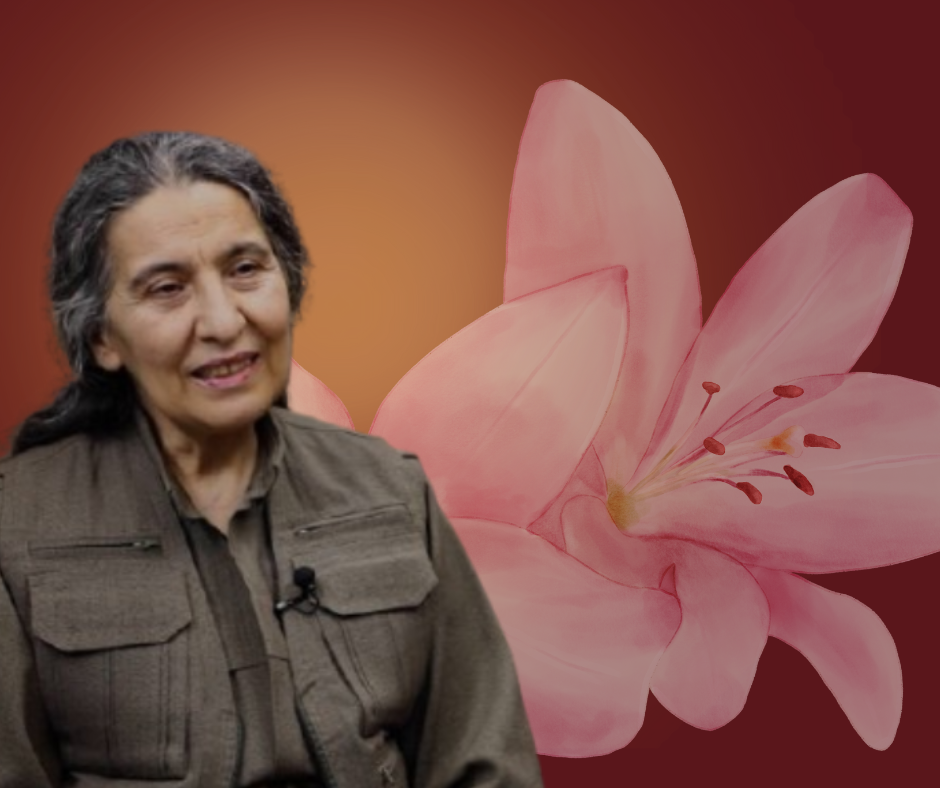
Ayten Dersîm, Mitglied der PAJK-Koordination, sagte, dass die Entscheidung des Volkes von Rojava, sich gegen die Angriffe zu wehren, sehr wichtig sei, und erklärte: „Heute müssen wir uns um die YPJ-Kämpferinnen und -Kämpfer, die unseren glorreichen Kampf anführen, und um den Widerstand des Volkes von Rojava vereinen und stärken.“
Ayten Dersîm nahm an der Sondersendung von Medya Haber TV teil und bewertete die Angriffe auf Rojava und den Kampf der Frauen.
Dersîm erklärte, dass die Angriffe der ISIS-HTS-Banden auf Rojava Teil eines internationalen Plans seien, mit dem man den Nahen Osten durch ISIS neu gestalten wolle. Trotz aller Angriffe habe das kurdische Volk großen Widerstand gezeigt, und das sei sehr wichtig; der Kampf müsse an allen Fronten intensiviert werden. Ayten Dersim, Mitglied der PAJK-Koordination, wies darauf hin, dass die heutigen Angriffe auf das kurdische Volk in Rojava sich morgen auf alle Völker ausweiten werden, und sagte, dass das kurdische Volk, insbesondere die Frauen, angesichts dieser barbarischen Angriffe nicht den Kopf beugen werden.
Die Einschätzungen von Ayten Dersim, Mitglied der PAJK-Koordination, lauten wie folgt:
Beginnend erneuern die Genossinnen Rojbin und Ronahî anlässlich des Jahrestages des Märtyrertodes der Genossin Sara ihr Versprechen, dass wir uns weiterhin für ihren Kampf einsetzen und diesen Kampf für die Freiheit bis zum Ende zum Sieg führen werden. Da die Genossin Sara eine der Vorreiterinnen der Freien Frauenbewegung war, sind ihre Linie und ihre Haltung in diesem Sinne prägend für unseren Kampf.
Die Brutalität dieses Jahres ist sowohl antisozial als auch frauenfeindlich. Das ist nicht nur eine Situation dieses Jahres, sondern schon seit Jahren so. Die herrschenden Kräfte, die Faschisten, fürchten Frauen am meisten und gehen brutal gegen sie vor. Denn die Präsenz der Frau in der Gesellschaft, ihre Autonomie und ihre soziale Rolle sind einer der wichtigsten bestimmenden Faktoren. In diesem Sinne haben wir dies auch in unseren Programmen der vergangenen Jahre wertgeschätzt. Aber mit dem Beginn dieses Jahres müssen wir die Realität von Rojava begreifen: In den vergangenen Jahren haben sie gegen die Brutalität des IS gekämpft, ihre eigenen Selbstverteidigungskräfte aufgebaut und die Völker des Nahen Ostens, die Menschheit weltweit und die Frauen wirklich geschützt und befreit. Dies ist ein Widerstand, der sich über die ganze Welt ausgebreitet hat; er wurde zu einer Haltung und einem Widerstand, von dem sich Frauen auf der ganzen Welt inspirieren lassen. Wir als Frauen haben dies auch erkannt: Wenn man sich organisiert und Widerstand leistet, wachsen auch die Kreise um einen herum.
Denn in Wahrheit wurde die moralische und politische Gemeinschaft nicht zerstört. Sie wurde unterdrückt und verleugnet. Das bedeutet, dass alle Frauen auf einen Funken, auf eine Bewegung und eine Organisation warten. Weil die Lage so schlimm ist, mangelt es an Vorreitern. Dies führte zur Entstehung der YPJ-Kräfte und -Kämpferinnen. Die YPJ-Kämpferinnen und -Kräfte waren die Kinder dieses Volkes. Sie sahen die Gefahr. Mit anderen Worten, es wurde der Welt wirklich gegeben, weil es auch im Rahmen eines vorbereiteten Plans entwickelt und gegen DAEŞ vorangetrieben wurde. Wenn wir uns dagegen organisieren, unsere Selbstverteidigung, unseren Kampf entwickeln, können wir uns selbst schützen, die Völker schützen. Und das haben sie in den Jahren des Kampfes gezeigt. Das heißt, alle Frauen, alle Völker sahen ihre eigene Existenz an ihrem eigenen Ort. Das ist der Beweis dafür: Schweigen, Passivität, sich der bestehenden Ordnung zu beugen, bedeutet Nicht-Existenz, bedeutet Sklaverei.
DIE MENSCHHEIT HAT IHRE BEFREIUNG IM KAMPF VON ROJAVA GEFUNDEN
Wenn wir von der Geschichte bis zur Gegenwart blicken, hat dieses Thema auf verschiedenen Ebenen existiert. Nun hat die Freiheitsbewegung, die Bewegung der freien Frauen, dies auf den Kopf gestellt. Das heißt, die Menschen und Frauen sind keine Sklaven. Mit anderen Worten, sie wurden versklavt, ohne Bewusstsein, ohne Willen zurückgelassen, und diese Situation wurde institutionalisiert. Nun ist diese Situation weder ein Schicksal noch etwas, das so sein muss. Sie wurde geschaffen, sie wurde aufgezwungen, und diese Dinge können überwunden werden. Dies wurde durch die Früchte eines jahrelangen Kampfes erreicht. Das heißt, dieser Widerstand, diese Verteidigung schützte die Menschen vor dieser Barbarei und vor DAISH, und Tausende wurden zu Märtyrern. Nun, dies ist ein sehr ehrenvoller Kampf. Die Menschheit hat in diesem Sinne ihren Platz um diesen Kampf herum eingenommen. Die Menschheit hat in diesem Sinne dort ihre eigene Befreiung gesehen. Die Menschheit hat in diesem Sinne erkannt: Wenn man sich organisiert, existiert man; wenn man sich nicht organisiert, existiert man nicht.
Nun, seit Anfang des Jahres hat dieses Monster seinen Namen geändert. Jemand hat die Verantwortung dafür übernommen; es wird Regierung genannt, es wird Präsidentschaft genannt, aber sein Fundament bleibt dasselbe. Seine Unterdrückungsmethoden sind dieselben, das Monster ist dasselbe. Auch dies ist ein Konzept, das die internationalen Mächte vorbereitet haben. Mit anderen Worten, es handelt sich um praktische Maßnahmen und Vorbereitungen für die Neugestaltung des Nahen Ostens. Wenn man nun normal denkt, fragt man sich: Das kurdische Volk und Kurdistan, die Menschen im Nordosten Syriens – denn dort leben viele Völker – sind ein Mosaik aus Völkern und Frauen. Aus jeder Sprache, jeder Konfession, jedem Glauben. Da dies für die Völker kein Problem darstellt, ist es auch für Frauen kein Problem. Sehen Sie, in Kobanî gibt es den Widerstand der Frauen, es gibt den Widerstand zum Schutz der Frauen, aber auch eine Frau aus Lateinamerika sieht sich hier wieder. Mit anderen Worten: Grenzen sind keine Barriere, Glaube ist keine Barriere, Religion ist keine Barriere, Sprache ist keine Barriere. Diejenigen, die diese Barrieren schaffen, sind die Staaten oder die herrschenden Mächte, die Hegemonialmächte.
Das heißt, in diesem Sinne sehen sie dieses Volk als Bedrohung für sich selbst an. Sie sehen dieses Volk als Bedrohung an und setzen, um es zu vernichten, ihre ganze Brutalität ein, was weder mit Menschlichkeit noch mit Moral, internationalen Normen oder dem Gesetz vereinbar ist. Die Realität ist, dass Völker, die sich verteidigen, sich nach ihrem eigenen Willen regieren, anderen Völkern keinen Schaden zufügen und sich insbesondere gegen Angriffe auf Frauen wehren. Denn DAISH hat Frauen auf sehr brutale Weise ermordet. Sie haben sie auf sehr brutale Weise gefangen genommen und wollten sie auf sehr brutale Weise missbrauchen. Jetzt haben die YPJ-Kräfte sie von dort befreit. Das Mosaik solcher Völker, die keiner Nation Schaden zufügen, ihr eigenes demokratisches System nach eigenem Willen frei verwalten, keine Region angreifen und keine begehren, ist eines der unschuldigsten Völker des Nahen Ostens: die Kurden. Auch mit Frauen hat es keine derartigen Probleme.
HTS-KRÄFTE VERHÄNGEN KOLLEKTIVE SKLAVEREI UND UNTERWERFUNG ÜBER DIE VÖLKER
Dies ist der Kampf für die Existenz der Menschen. Jetzt haben sie HTŞ ins Spiel gebracht, dessen Name geändert wurde, dessen Form geändert wurde, aber alle Kräfte der Banden, die früher Al-Nusra waren, die ISIS waren, entstanden mit Hunderten verschiedener Namen, die alle das Ziel verband, Völker mit freiem Willen auszulöschen und ihre Brutalität gegen die Massen fortzusetzen. Die Welt hat dies gesehen; es immer wieder zu wiederholen, ist vielleicht nicht angebracht. Wir sprechen von ISIS in einer anderen Gestalt; seine Grundlage und seine Methode sind dieselben: den Völkern Sklaverei, Unterwerfung und Machtlosigkeit aufzuzwingen und Gewalt anzuwenden. Das ist jetzt die Forderung des kurdischen Volkes und Kurdistans. Denn wir als Volk und als Frauen sind zu diesem Schluss gekommen: Wer auch immer das Volk sein mag, durch Dialog, Verhandlungen und Diskussionen kann jedes bestehende Problem sehr leicht gelöst werden.
Die Rêbertî führt diesen Kampf bereits in seiner Gesamtheit. Er sagt, dass Probleme nicht durch Krieg gelöst werden. Aber sie sind nicht zu diesem Schluss gekommen. Nach unseren Beobachtungen und Erkenntnissen haben sie, ohne zu einer allgemeinen Einigung, einem Dialog oder einer Diskussion zu kommen, alle Milizen in Aktion gesetzt. Es gibt eine Kraft, die dies von Anfang an organisiert und vorbereitet hat und nun erneut mit Brutalität angreift. Als Reaktion darauf gibt es eine Verschwörung, die die internationalen Hegemonialmächte seit Jahren gegen das kurdische Volk betreiben. Da sie die Existenz des kurdischen Volkes und Kurdistans nicht akzeptieren, sehen sie insbesondere den Kampf der Frauen innerhalb des kurdischen Volkes, der am dynamischsten ist, als Bedrohung für sich selbst an. Nun werden Angriffe dagegen gestartet. Wenn diese Angriffe gestartet werden, haben zweifellos alle unsere Völker, unsere Frauen, einen großen Kampf begonnen. Das ist eine glorreiche Haltung. Es ist eine Haltung, die den Kampf der Völker vereint.
Die Haltung der Menschen, die sich weigern, die Augen vor diesem Völkermord zu verschließen, ist ein Bekenntnis zur Freiheit. Sie muss zweifellos fortgesetzt werden. So wie unsere YPJ-Kräfte und unser ehrenwertes Volk gekämpft und die Menschen von DAISH befreit haben, sind wir auch heute entschlossen. Andernfalls wird DAISH überallhin vordringen. Mit seinem Völkermord wird es alles auslöschen. Jetzt wird sein Name geändert, aber seine Grundlage wird nicht geändert, seine Ideologie wird nicht geändert. Wir haben es in der Presse gesehen. Ehrenwerte YPJ-Kämpferinnen kämpften von Balkonen aus und wurden aus Gebäuden geworfen. Das ist keine Situation, die man übersehen darf. Das ist ein Akt der Rache. Es ist Ausdruck der Haltung „Wir haben sie vernichtet, jetzt vernichten wir auch euch“. In diesem Sinne ist der Kampf der YPJ-Kräfte heute genauso ruhmreich wie gestern. Sie kämpfen nicht nur für sich selbst, sondern für alle Völker und Frauen, die in dieser Region leben. Sie sind entschlossen in diesem Kampf, und das sehen wir deutlich. Die Welt darf angesichts dessen nicht schweigen. Das heißt, ohne zu schweigen, muss man sich dem auf sehr organisierte Weise stellen.
DIE PHILOSOPHIE DER FRAUEN, DES LEBENS, DER FREIHEIT IST DIE PHILOSOPHIE EINES WÜRDIGEN LEBENS
Auf der anderen Seite stehen der Iran und Rojava. Vor diesem Aufstand gab es die Bewegung „Jin Jiyan Azadî” (Frau, Leben, Freiheit). Die Philosophie von „Jin Jiyan Azadî” ist eine Philosophie der Freiheit, der Selbstbestimmung und eines würdigen Lebens und Kampfes. Nun muss diese Philosophie in der gesamten Menschheit präsent sein, insbesondere unter den Frauen. Nur weil sie in den Hegemonialmächten der Welt fehlt, bedeutet das nicht, dass sie nicht existieren kann. Dieser Widerstand dauerte tagelang. Auch heute noch, mit den Menschen und Frauen an vorderster Front, wird dort Unrecht begangen und Würde mit Füßen getreten.
Dies wird aufgezwungen. Nun haben auch diese Völker ihre Würde, ihr Bewusstsein und ihre eigene Wahrheit. Diese wird durch keine Macht und keine Grenzen beeinträchtigt. Als Reaktion darauf wurde das Internet tagelang abgeschaltet und die Stromversorgung unterbrochen. Das volle Ausmaß ist nicht bekannt, aber es wird gesagt, dass 59.000 bis 60.000 Menschen getötet wurden, darunter Frauen. Während sie noch am Leben sind, werden ihnen die inneren Organe entnommen, sie werden im Krankenhaus getötet.
SELBST WENN WIR STERBEN, TAUSENDE VON UNS WERDEN WIEDERGEBOREN
Die Menschheit dieser Welt darf angesichts der Massaker in Rojava nicht schweigen. Es ist wirklich schwer, das zu sagen. Leichen werden so übereinander gestapelt; wie Sie sagten, werden die Leichen von Frauen geschändet und die Kosten für die abgefeuerten Kugeln von ihren Familien verlangt. Welche Menschheit kann das übersehen? Nur weil es nicht in der Presse gezeigt wird, heißt das, dass es nicht existiert? Es ist ein Regime, das die Ereignisse in seinem eigenen Land vor der ganzen Welt geheim hält, das Völkermord begeht, unterdrückt und versucht, seine Herrschaft aufrechtzuerhalten. Das ist unmöglich. Kann das Volk akzeptieren, dass derjenige, der so viele Morde begangen hat, sie mit einem autoritären und unterdrückerischen Regime unterdrückt, geleugnet und verboten hat? Das ist nicht möglich. Der Wille des Volkes hat eine Wahrheit: Ja, man kann ihn eine Zeit lang unterdrücken, man kann ihn eine Zeit lang leugnen, aber auf Dauer ist das nicht aufrechtzuerhalten. Das sehen wir am Kampf der Völker unserer Region, am Kampf der Frauen auf der ganzen Welt.
Heute gibt es weltweit so viele Frauenrechtsaktivistinnen, Frauenbewegungen, Frauenorganisationen und -institutionen. Seit Jahren sind auch sie Folter, Inhaftierung, Unterdrückung und Vertreibung ausgesetzt. Das gilt nicht nur für diese Zeit: Sie zu beseitigen, sie auszulöschen? Das ist nicht möglich. Die Menschen erneuern sich ständig, wachsen und entwickeln sich weiter. Das ist ein Sozialisierungsprozess. Vor allem Frauen: Wenn eine Frau ihre eigene Existenz und Freiheit erlangt und ihr Bewusstsein entwickelt, kann keine Kraft sie aufhalten. Zweifellos ist dies eine Bedrohung für die herrschenden und hegemonialen Mächte. Denn ihre Existenz basiert darauf, die Gesellschaft und die Frauen zum Schweigen zu bringen. Das ist seit Tausenden von Jahren so. Aber wenn eine Frau diese Wahrheit erkennt, sich dessen bewusst wird und es berücksichtigt, denkt sie auch daran: Ihr könnt unsere Existenz nicht auslöschen, indem ihr uns tötet. Selbst wenn wir tausendmal sterben, werden Tausende geboren.
DAS KURDISCHE VOLK HAT DEUTLICH GEZEIGT, DASS ES SEINE WÜRDE NIEMANDEM ÜBERLASSEN WIRD
Dies ist eine Realität, die sich im Kampf für die Freiheit der Frauen zeigt. Wir sehen dies in Kurdistan und im Nahen Osten. Das ist wirklich so. Die Taliban kamen an die Macht, und wurden die Frauen dort zum Schweigen gebracht? DAISH kam, und die Frauen wurden zum Schweigen gebracht? Heute kam HTŞ, und die Frauen wurden zum Schweigen gebracht? Hat die Herrschaft der Macht auf der ganzen Welt, Unterdrückung und Tyrannei, über Jahrhunderte hinweg die Menschen zum Schweigen gebracht? Frauen zum Schweigen gebracht? Die Organisation von Frauen ausgerottet? In diesem Sinne müssen wir als Frauen all dies sehen. Heute müssen wir uns vereinen und stark werden, gemeinsam mit den YPJ-Kämpferinnen unseres glorreichen Kampfes, die uns wirklich zum Leben erwecken, uns wiederbeleben und zeigen, dass es möglich ist, in Freiheit zu leben, gemeinsam mit dem Widerstand des Volkes von Rojava. Denn sie haben nun ihre Entscheidung getroffen.
Wir geben unsere Existenz niemandem aus der Hand. Wir verteidigen unsere Menschlichkeit und unsere Ehre mit unserer Existenz, und wir werden dies auch weiterhin tun. Am Ende steht der Tod, steht Mord, aber wir geben unsere Ehre nicht auf. In den veröffentlichten Erklärungen hat das Volk seine Entscheidung klar zum Ausdruck gebracht. Das ist sehr wichtig. Denn das Volk entscheidet über seine eigene Existenz. Es wird immer gesagt, dies sei Druck, das sei Druck. All dies ist das Ergebnis des Spezialkrieges. Es handelt sich um schmutzige Propaganda, die den Widerstand des Volkes verhindern will. Das ist Propaganda, die den Widerstand der YPJ-Kämpferinnen und -Kämpfer schwarzmalen will. Wir haben sie gestern gesehen, und wir sehen sie heute. Wir haben uns durch diesen Kampf aufgebaut. In diesem Sinne geht es nicht nur um ein oder zwei Regime.
Heute gibt es in vielen Ländern sehr eindrucksvolle Beispiele dafür. Rêbertî sagt immer: Heute sagt ein Mann „Ich liebe dich“ und morgen zerreißt er dich in Stücke und steckt dich in einen Sack. Das wird im Fernsehen gezeigt. Sie werden aus einem mehrstöckigen Gebäude geworfen. Sie werden in Müllsäcke auf den Abfall geworfen. Als Frauen besteht unsere Befreiung darin, unser eigenes freies Leben aufzubauen. Unser eigenes freies Leben aufzubauen bedeutet, bewusst zu sein. Es bedeutet, sich selbst zu organisieren. Es bedeutet, uns immer zu verteidigen. Das wird die Macht heute oder morgen nicht beseitigen. Wenn ein Angriff erfolgt, müssen wir wissen, wie wir uns verteidigen können. Das ist Barbarei. Frauen werden, Eine nach der Anderen getötet.
Rêber Apo hat bis heute alle Völkermorde, Leugnungen und Barbareien auf genaueste Weise definiert. Niemand hat es gewagt, dies zu tun oder auch nur zu benennen, aber er hat es getan: Er hat es „kastischer Mord” genannt. Und für uns Frauen hat er uns die Perspektive gegeben, wie wir gemeinsam bewusst werden und uns organisieren können. Er hat diese Perspektive greifbar gemacht. Das sind nicht nur gewöhnliche Menschen. Das ist ein System. Das ist ein Regime. Es ist eine organisierte und hegemoniale Kraft. Es hat sich immer durch die Ermordung von Einzelpersonen, Völkern und Frauen etabliert. Rêbertî hat dies auf die Ebene der Clans übertragen. Durch die Zerschlagung des Clans hat es den Konflikt zwischen der Gemeinde und dem Staat in den Vordergrund gerückt und bis in die Gegenwart fortgesetzt. Wir kehren zur Geschichte zurück, bewerten, lesen und erforschen jeden Prozess einzeln und sehen von dort aus den heutigen Ausdruck.
WIR GEBEN UNS NICHT DER BEWAFFNETEN MACHT HIN
Selbstverteidigung ist kein Phänomen, das auf die Gegenwart beschränkt ist. Hegemoniale oder autoritäre Mächte, die um ihre eigene Existenz fürchten, stellen Selbstverteidigung so dar, als wäre sie ausschließlich eine militärische Organisation der Gegenwart. Diejenigen, die Angst in Gesellschaften verbreiten wollen, diejenigen, die eine Politik der Stellvertreterkriege gegen Gesellschaften verfolgen, sagen: „Seid ungeschützt, ich beschütze euch.“ Wir blicken auf unsere Geschichte zurück. Was uns in unserer Geschichte angetan wurde, wird heute unter anderen Namen wiederholt. Selbst in der Entstehungsphase der ersten menschlichen Gesellschaften entwickelten die Menschen immer einen Selbstverteidigungsreflex gegen Unterdrückung, Gewalt und Angriffe. Rêber Apo sagt, dass dies auch in der Natur existiert. Wenn wir uns die Ökologie ansehen, sehen wir dies. Es gibt Blumen, es gibt Bäume. Das Leben ist nicht nur die Gesellschaft, es ist die Natur selbst. Auch wir sind Teil dieser Natur, ein Teil davon, und wir existieren in ihr.
Auch wenn die Natur über einen eigene Selbstverteidigung verfügt, reagiert ihre Blüte reflexartig, wenn jemand einen ihrer Zweige bricht; wir sind Menschen. Menschen haben Gedanken, Willen, Körperlichkeit, Existenz. Dies ist keine natürliche Steigerung, sondern Ausdruck seiner eigenen sozialen Existenz. Wir definieren dies als zweite Natur. Wie kann es dann keine Selbstverteidigung geben? Selbstverteidigung ist die Idee, die eigene Existenz unter allen Umständen zu schützen; sie ist ein Schutzreflex, ein Kampf um Schutz, Schutzbewusstsein und Organisation. Wo auch immer wir sind, wenn wir mit Waffen angegriffen werden, verteidigen wir uns. Wir ergeben uns nicht der Waffengewalt. Aber wir wissen, dass eine Waffe keine Erlösung für die Menschheit ist. Trotzdem werden wir uns nicht von Waffen abwenden, noch werden wir kapitulieren. Das gilt für alle Völker.
Warum haben Staaten Armeen? Warum haben sie interne Sicherheitssysteme, Polizei? Dann fragen wir uns: Ist das nur gegen externe Kräfte? Die Menschheit existierte ohne Staaten. Die Gesellschaft existierte ohne Staaten. Dennoch verteidigte sie sich. Diese Verteidigung erfolgte abwechselnd, sie wurde auf verschiedene Weise durchgeführt. Unter den Bedingungen des Dritten Weltkriegs, der heute in der Welt geführt wird, in dem der Nahe Osten neu gezeichnet wird, der Wille der Menschen zerstört wird und heftige Angriffe auf den Kampf der Frauen geführt werden, wie können wir als Frauen ohne Selbstverteidigung sein? Auch ihre Haare wurden abgeschnitten und sie wurden gedemütigt. Die Frauen der Welt, die sagen „Ich bin eine Frau, ich bin ein Volk, ich bin ein Mensch“, müssen diese Brutalität sehen. Sie werden getötet, ihre Köpfe werden abgeschlagen, und das nennt man HTŞ, das nennt man eine Regierung. Sie schneiden den YPJ-Kämpferinnen die Bärte ab und posieren damit. Ja, die Frauen haben angesichts dessen nicht geschwiegen. Aber damit werden wir uns nicht zufrieden geben. Das ist eine würdevolle Haltung, aber sie reicht nicht aus.
JEDE FRAU MUSS IHREN KAMPF INTENSIVIEREN
Eine Frau hat ihr Haar, sie hat alles. Wenn einer Frau solche Dinge angetan werden, werden wir dann nachgeben? Nein. Wir müssen dagegen ankämpfen. Wir müssen unsere Ehre schützen. Wir müssen uns organisieren. Wir müssen uns groß machen. In diesem Sinne gibt es ein ernsthaftes Erwachen unter den Frauen dieser Welt. Aber dieses Erwachen muss zu einem starken Willen werden. Es muss zu einer starken Organisation werden. Es muss zu einem starken Widerstand werden. Jeder muss seinen Kampf erweitern. Rêbertî hat uns immer so ausgebildet. Wenn eine Frau ermordet wird, weißt du, dass du es bist, dass ihr es seid. Eine Frau hat dieses Gefühl. Eine Frau hat dieses Bewusstsein.
Das liegt an ihrer Geselligkeit, an ihrer Offenheit, an ihrer Sanftheit, an ihrer Sensibilität. Es umfasst all das. Wir werden ihr Haar nicht vergessen, wir werden unsere Kämpferin nicht vergessen, die von den Gebäuden geworfen wurde, und wir werden dieses brutale Massaker an uns nicht vergessen. Nicht heute, nicht morgen und auch nicht an irgendeinem anderen Tag. Die Brutalität von heute hat die Menschheit erneut erschüttert. Sie hat uns erneut zum Kampf angespornt. In diesem Sinne sind wir heute wie gestern zuversichtlich in unserem Widerstand. Unser Kampf definiert unseren Widerstand. Unser Kampf definiert unsere Organisation. Unsere Organisation definiert unsere Einheit. All dies sind Notwendigkeiten, um eine Gesellschaft zu sein.
Die Notwendigkeiten des Menschseins. Die Notwendigkeiten des Frau-Seins. Aus diesem Grund ist unter diesen Bedingungen die Selbstverteidigung nie verschwunden. Das ist die Politik eines besonderen Krieges, der Selbstverteidigung als etwas Passives, Liberales und universell Unterwürfiges darstellt. In den digitalen Medien wird sie innerhalb von Institutionen auf diese Weise propagiert. Aber es geht um mehr als das. Sie zwingen Ihnen durch verschiedene Argumente die Sklaverei auf. In diesem Sinne müssen wir uns verteidigen. Wir müssen unsere Verteidigung stärken. Aber gleichzeitig müssen wir auch unsere Verteidigung ausweiten.
Die Aussage von Rêber Apo, der sagt: „Ich definiere diese Ära als die Ära des Heldentums der Frauen“, ist in Wirklichkeit ein Ansatz der Führung, der den Kampf, den wir leben, anerkennt und definiert. Wir sind die kurdische Bewegung der freien Frauen, aber sie ist gewachsen. Sie hat die Kurden und Kurdistan überschritten und ist global geworden. Wir müssen als Frauenbewegungen weltweit unserem Kampf eine klare Identität geben. In dem Widerstand, den wir leisten, in dem Kampf, den wir führen, in der Organisation, die wir aufbauen, in der Einheit, die wir schmieden, ist all dies ein Epos des Heldentums. Heldentum ist immer ein Konzept, das uns aufgezwungen wird oder das immer wieder erzählt wird. Du gehst, wirst zum Märtyrer und wirst zum Helden. Zweifellos ist auch das Heldentum. Aber wahres Heldentum bedeutet, es zum Leben zu erwecken, es in den Kampf zu tragen und es mit Ausdauer, Entschlossenheit und einem unerschütterlichen Willen zu stärken.
Heute hat unser Kampf tatsächlich ein solches Stadium erreicht. Heute schließen sich Frauen aus Asien, Lateinamerika und vielen europäischen Ländern diesem Kampf an. Es geht nicht um die Größe. Es geht nicht um die Quantität, sondern um die Qualität. Bei Freiheit geht es um Qualität. All das ist Kampf, ist Heldentum. Es ist ein Kampf, nicht aufzugeben, den Kopf nicht zu senken, nicht passiv zu sein, sich mit historischer Soziologie zu bilden, seinen Horizont mit Jineologie zu erweitern, sich mit der eigenen Geschichte auseinanderzusetzen und diese Geschichte in die Gegenwart zu holen. Was wird der Gesellschaft aufgezwungen? Vergiss deine Geschichte, wird uns gesagt. Aber die Geschichte, die sie schreiben, ist Verleugnung, Auslöschung, Liberalismus und eine Geschichte, die den menschlichen Körper fragmentiert und verkauft. Geschichte ist nicht nur das. Auch heute ist es nicht nur das.
Wenn wir es durch die Geschichte der Herrscher betrachten, ist es das, was wir sehen. Aber es gibt auch eine ungeschriebene Geschichte. Der Kampf der Frauen, der Kampf der Völker bringt diese ungeschriebene Geschichte ans Licht. Deshalb wurde die Jineologie entwickelt. Die Geschichte der Frauen wurde ohne Unterbrechung bis in die Gegenwart fortgeführt. Es gab immer einen Kampf der Frauen im Laufe der Geschichte, aber dieser Kampf wurde entweder ausgelöscht oder verzerrt. Aus diesem Grund muss der Widerstand in der Geschichte geweckt, heute richtig gelesen und eine richtige Zukunft geschmiedet werden. Heldentum wird neu definiert. Durch die Frau erhält es eine neue Bedeutung. Dafür wurden Tausende von Körpern geopfert, Tausende von Helden geopfert, Tausende von Epen geschrieben und Tausende von Widerständen demonstriert. Die Menschen vereinen sich dafür und schöpfen daraus Inspiration.
WIR SIND EINE BEWEGUNG, DIE NICHT AUFGIBT
Dieser Widerstand wurde schon immer gelebt. Gegen Brutalität wurde schon immer eine rebellische Haltung gezeigt. Dieser Aufstand ist nicht nur eine momentane Wut, sondern die beständige Haltung eines Kampfes. Zweifellos ist es heldenhaft, den Preis dafür zu zahlen. In der gesamten Geschichte unseres Kampfes gab es immer dieses Verständnis: Der Tod fürchtet uns, wir fürchten den Tod nicht. Denn wir wissen, was der Tod ist. Wir sind eine kämpferische Einheit. Dieser Kampf hat uns durchdrungen und andere Frauen erreicht. Auch unsere Mütter sagen: „Wir sind größer als der Tod.“ Das hat eine Geschichte und ein Vermächtnis. Darauf beziehen sie sich. Weil wir ihre Kinder sind. Wir sind keine Bewegung, die den Kopf senkt. Wir sind die Bewegung, die seit Jahren kämpft und durch diesen Kampf die Bedeutung von Freiheit gelernt hat. Diese Bewegung ist breit gefächert. Sie umfasst alle Frauenbewegungen. Denn sie ist der kollektive Ausdruck des gesamten bestehenden Kampfes der Frauen.
Heute sind wir es, die in Europa ermordet werden. Unabhängig von Identität, Religion oder Rasse haben wir diese Grenzen überschritten. Die Universalität ist unsere Perspektive. Durch unseren Kampf haben wir dieses Bewusstsein erreicht. In Europa werden viele Frauen ermordet. Der Nahe Osten will durch IS neu gestaltet werden. Sie wollen durch Völkermord Unterwerfung erzwingen. Dies wird sich auch auf andere Völker ausbreiten. Dieses Regime hat davor keine Angst. Deshalb ist unser Kampf die Stimme aller Frauen. Wo immer eine Frau ermordet wird, müssen wir ihren Kampf fortsetzen. Der Kampf ist nicht nur ein Marsch, nicht nur eine Erklärung. Natürlich sind diese Dinge Teil davon, aber mit seinem Wachstum wachsen auch die Mittel des Kampfes, seine Bedürfnisse und sein Umfang. Deshalb dürfen wir niemanden ungestraft lassen. Unser Ziel muss es sein, dieser Gewalt ein Ende zu setzen. Dieses Gemetzel muss beendet werden. Wir müssen dies tun, indem wir unseren Kampf intensivieren.
Rêber Apo hat uns dies immer gesagt, und wir sehen dessen Grundlage in all seinen Manifesten. Es heißt: Wenn ihr wächst, müsst ihr die Bedrohungen gegen euch überwinden, nicht immer durch Widerstand, sondern durch die Stärkung eurer eigenen Dynamik. Diese allgemeine Sichtweise drückt dies aus: Selbstverteidigung war gestern notwendig, und sie ist heute notwendig. Solange die Menschheit existiert, solange Völker existieren und bis sie ihr eigenes demokratisches System, ihr freies und lebendiges Leben etabliert haben, wird Selbstverteidigung immer notwendig sein. Das ist eine Garantie. Und es gibt auch eine innere Wahrheit. Wir sprechen nicht nur von einem äußeren Feind. Es gibt auch einen tief verwurzelten Sexismus im Inneren. Es gibt häusliche Gewalt. Es gibt eine Missachtung und Verweigerung der Anerkennung des Willens einer Frau. Es gibt ein System, das eine Frau zu Hause wie eine Sklavin arbeiten lässt, ihr erlaubt, außerhalb zu arbeiten, und so den Eindruck vermittelt, sie habe wirtschaftliche Freiheit, aber in Wirklichkeit versucht, ihr ihre Freiheit zu nehmen. All dies ist Ablenkung, Täuschung. Denn das Bewusstsein der Frau ist das Bewusstsein der Gesellschaft. Wir sind nicht von der Gesellschaft getrennt.
Dazu gehören Nationalismus, religiöser Fanatismus, Chauvinismus und Sexismus. Das ist die gesamte kapitalistische Moderne. Es ist ein System, das die Gesellschaft von ihrem Fundament entfernt. Wir sehen, wie verschiedene Menschen zu Monstern gemacht werden. Kann man diese ISIS-Mitglieder noch als Menschen bezeichnen? Diese Kreaturen haben die Menschlichkeit hinter sich gelassen. Sie sind keine Menschen. Was werden wir also angesichts dieser Grausamkeit tun? Wir werden unsere Menschlichkeit verteidigen. Wir werden unsere Menschlichkeit vergrößern. Denn das ist keine Menschlichkeit. Menschlichkeit bedeutet nicht, sich gegenseitig zu töten, sie bedeutet nicht Verleugnung, sie bedeutet nicht Vernichtung. Deshalb wird die Wahrheit unseres Kampfes einmal mehr deutlich. Selbstverteidigung ist neben Organisation das Streben der ganzen Welt nach kollektiver Sicherheit. Es ist die Kraft, sich gegen Angriffe von innen und außen zu verteidigen.
Es gibt einen jahrelangen Kampf und eine Bewegung, die sich weltweit ausgebreitet hat. Wenn beispielsweise Frauen in Lateinamerika diesen Kampf sehen, organisieren sie sich selbst. Niemand geht hin und organisiert sie. Haben nicht die Frauen in Afghanistan bei dem ersten Angriff die YPJ um Hilfe gebeten? Sie sagen: „Kommt und beschützt uns, kommt und bildet uns aus.“ Heute gibt es in Sweida Massaker; wenn die Menschen dort die YPJ und die YPG um Hilfe bitten, ist das nicht so? War es nicht der Ruf der Alawiten? Wir sind keine einheitliche Stimme. Wir sind keine abstrakte Stimme. Wir haben diesen Punkt unter großen Aufopferungen und durch immense Schwierigkeiten erreicht. Faschismus, hegemoniale Kräfte, Staatsmacht und männliche Gewalt haben sich gegen uns gestellt. Deshalb habe ich zu Beginn gesagt: Es gibt Frauen, die man nicht vernichten kann. Es gibt Völker, die man nicht vernichten kann. Aber wie geht es ihnen? Sie existieren mit ihrer Identität, mit ihrer Würde, mit ihrer Kultur, mit ihrer Ideologie, mit ihrer Moral, mit ihrer Geografie und ihrer Natur.
Wenn Frauen dies in ihrem eigenen Land, in ihren Familien, in ihrem Umfeld, in ihren Schulen, in ihren Bundesstaaten sehen, werden sie täglich Zeuginnen von Gewalt. Sie sehen Gewalt, die unsichtbar bleibt, die trivialisiert und normalisiert wird. Sie sehen, dass ihr Wille nicht anerkannt wird. All das ist Gewalt. Gewalt ist nicht nur direkte Gewaltanwendung. Wenn sie das sehen, fragen sie sich: Wie wehren sich diese Frauen? Mit welchem Bewusstsein, mit welcher Idee, mit welchem Argument? Die Antwort ist klar: durch Organisation. Zwei Frauen müssen sich zusammentun. Fünf Frauen müssen sich zusammentun. Wir sehen im Fernsehen drei Männer, die eine Frau angreifen. Sie greifen mit einem Messer, mit einer Pistole an. Wenn eine Frau organisiert ist, wenn sie wachsam ist, sind die Reflexe und die Willenskraft einer organisierten und wachsamen Frau sehr stark. Das sind keine normalen Situationen.
Warum weinst du? Antworte mir. Weil dir körperliche Gewalt angetan wird; sie werden dich töten. Warum setzt du dich dem Tod aus? Ist das der Grund, warum unsere Wut wächst? Weil Frauen wachsam sein müssen. Sie dürfen sich nicht von jedem süßen Wort eines Mannes täuschen lassen. Heute sagt er, dass er dich liebt, morgen tötet er dich. Definieren wir also Liebe richtig. Liebe ist die Anerkennung des Willens des anderen. Es ist die Anerkennung der Menschlichkeit. Liebe ist keine Dominanz. Gewalt hat viele Facetten. Keine Frau sollte dies für sich selbst als würdig erachten. Es gibt keine Frau, die dies akzeptiert. Aber es gibt Frauen, die nicht organisiert sind und ihre Macht nicht zeigen können. Es gibt so viele Frauenbewegungen, Institutionen und Organisationen auf der Welt; Frauen sind nicht allein. Die Wissenschaft dafür existiert: Jineologie. Jeder muss sich der Wissenschaft der Frauen zuwenden und dies verstehen. Warum ist eine solche Wissenschaft notwendig? Weil ohne Hinterfragen die richtige Antwort nicht gefunden werden kann.
FRAUEN SIND VEREINIGT, UM DEN ENTSCHLOSSEN, GEWALT UND SEXISMUS ZU ÜBERWINDEN
Wir sind keine Gefangenen dieser Welt. Wir leben in dieser Welt, aber wir sind keine Gefangenen. Wir können unsere eigene Welt aufbauen. Jeden Tag kämpfen wir, und je mehr wir kämpfen, desto höher wächst unsere Moral, desto größer wird unser Glaube und desto mehr wächst unser Erfolg. Diese Idee hat in der Geschichte unseres Kampfes schon immer existiert und ist nun global geworden. Es handelt sich nicht um eine einzelne Idee, sondern um eine Struktur. Die Demokratische Konföderation der Frauen der Welt ist ein Beispiel dafür. Vor zwei oder drei Jahren versammelten sich Hunderte von Frauen in Berlin und wurden zu einer Inspiration für alle Frauen. Jede Frau kam mit ihrer eigenen Farbe, ihrer eigenen Idee und ihren eigenen Kämpfen. Es entstand ein gemeinsames Bewusstsein. Es entstand ein gemeinsames Bewusstsein der Frauen und die Grundlage für einen gemeinsamen Kampf.
Je mehr Frauen sich zusammenschließen, desto größer ist ihr Wille, Gewalt und Sexismus zu überwinden. Wenn sich Hunderte zusammenschließen, werden es morgen Tausende sein. Wo auch immer sie sind, lassen sie sich organisieren. In Kurdistan, wo Soldaten, Polizei und Gendarmerie Frauen angreifen, hat die Bevölkerung reagiert und sich verteidigt. Das ist Selbstverteidigung. Niemand kann ihnen einfach widersprechen oder Hand an sie legen. Deshalb muss das Volk sensibler und organisierter reagieren, mit einem Bewusstsein für Selbstverteidigung. Ein Soldat mag im Dienst sein, aber das gibt ihm nicht das Recht, Hand an eine Frau oder ein Kind zu legen. Diese Gewalt versucht, sich zu reproduzieren. Auch wir müssen uns dagegen wehren und unsere Würde bewahren. Wir werden nicht aufgeben. Unser Kampf hat dies bewiesen. Wenn heute die HTS-Banden angreifen, wenn heute das iranische Regime Menschen tötet, wird dies nicht toleriert werden. Die Menschen vergessen nicht, was sie am Leben gehalten hat.
Die Geschichte des kurdischen Volkes wurde nicht nach dem Willen des Volkes geschrieben. Auch die Geschichte der Frauen wurde nicht in der Sprache der Frauen geschrieben. Aber es gibt Tausende von Schriftstellerinnen. Wir müssen über die Dinge schreiben, die wir erlebt haben. Denn Rêber Apo sagte: Die Geschichte der Sklaverei wurde geschrieben, die Geschichte der Freiheit wartet darauf, geschrieben zu werden. Das ist das Ergebnis dieses Kampfes. Aus diesem Grund ist dieses Jahrhundert das Jahrhundert des Heldentums der Frauen. Dieses Heldentum zu schreiben, ist die Aufgabe der Frauen. Alle Frauen, die kämpfen, sind Heldinnen. Die Frauen, die in „Jin Jiyan Azadî” Widerstand leisten, sind Heldinnen. Alle Frauen, die sich der Unterdrückung nicht beugen, sind Heldinnen. Mit Einheit im Geist, Einheit im Denken und Einheit im Kampf müssen wir uns gegenseitig in unserem Kampf stärken, wo immer wir auch sind.
Rêbertî definierte dieses Jahrhundert als das Jahrhundert des Kampfes der Frauen und sagte, dass die Welt von Frauen gerettet werden würde. Gestern haben wir daran geglaubt, und heute glauben wir immer noch daran. Lasst uns an unseren Kampf glauben und ihn groß machen. Lasst uns an unsere Organisation glauben und sie groß machen. Lasst uns an unserem Bewusstsein arbeiten. Frauen werden uninformiert gehalten. Lasst uns an Soziologie, Jineologie und Philosophie arbeiten. Lasst uns das 21. Jahrhundert zum Jahrhundert des Kampfes der Frauen machen. Lasst uns die Welt unter der Vorreiterschaft der Frauen befreien.
JIN, JIYAN, AZADÎ
FRAU, LEBEN, FREIHEIT
-
AYTEN DERSÎM: WE MUST UNITE AROUND THE RESISTANCE OF THE PEOPLE OF ROJAVA
Ayten Dersîm, member of the PAJK Coordination, said that the decision of the people of Rojava to defend themselves against the attacks was very important, stating: ‘Today, we must unite and strengthen the YPJ fighters who are leading our glorious struggle and the resistance of the people of Rojava.’
Ayten Dersim joined the Special Program on Medya Haber TV and evaluated the attacks on Rojava and the struggle of women.
Dersim stated that the attacks by ISIS-HTS gangs on Rojava are an international plan and said that through ISIS, they want to redesign the Middle East. Despite all the attacks, the Kurdish people have shown a great resistance, and this is very important; the struggle must be intensified on all fronts. PAJK Coordination Member Ayten Dersim emphasized that today’s attacks on the Kurdish people in Rojava will spread to all peoples tomorrow, and stated that the Kurdish people, especially women, will not bow their heads in the face of these barbaric attacks.
The assessments of PAJK Coordination Member Ayten Dersim are as follows:
First, on the occasion of the anniversary of the martyrdom of comrade Sara, comrade Rojbin, and comrade Ronahi, we renew our promise to remain committed to their struggle and to bring this struggle for freedom to victory until the end. Because comrade Sara was one of the pioneers of the Free Women’s Movement. In that sense, her line, her stance, is defining our struggle.
The brutality of this year is both against society and against women. This is not just a situation of this year; it has been this way for years. The dominant forces, the ruling powers, the fascist forces fear women the most and commit brutality against them. Because a woman’s presence in society, her autonomy, and her social role are one of the most important defining factors. In that sense, we have also valued this in our programs throughout all previous years. But with this year’s arrival, we must grasp the reality of Rojava: in previous years, they fought against the brutality of ISIS, developed their own self-defense forces, and truly protected and liberated the peoples of the Middle East, humanity, and women. This is a resistance that spread across the world; it became a stance and a resistance from which women around the world draw inspiration. We as women saw this too; that is, if you organize yourself and resist, the circles around you also grow.
Because a reality like this truly exists; the moral and political society has not been destroyed. It has been suppressed and denied. All women are waiting for a spark. They are waiting for a movement and for organization. Because of such a difficult situation, there is a lack of pioneers. This gave rise to the YPJ forces and fighters. The YPJ fighters and forces were the children of that people. They saw the danger. In other words, it was truly offered to the world, because it was also developed within the framework of a prepared plan and advanced against ISIS. If we organize ourselves against this, advance our self-defense and our struggle, we can protect ourselves and protect the peoples. And they demonstrated this in the years-long struggle. That is to say, all women, all peoples saw their own existence in their own place. This is proof of that; remaining silent, being passive, bowing one’s head to the existing order, is non-existence, it is slavery.
HUMANITY FOUND ITS LIBERATION IN THE STRUGGLE OF ROJAVA
When we look from history to the present, this issue has existed at different levels. Now the Freedom Movement, the Free Women’s Movement, has overturned this. That is to say, the people and women are not slaves.
In other words, they were enslaved, kept uninformed, kept without will, and this situation was institutionalized. Now, this situation is neither a destiny nor something that has to be. It was created, it was imposed, and these things can be overcome. This was achieved through the results of years of struggle. That is, this resistance, this defense, protected the people from this brutality and from ISIS, and thousands were martyred. Now, this is a very honorable struggle. Humanity, in this sense, has taken its place around this struggle. Humanity, in this sense, saw its own salvation there. Humanity, in this sense, saw this: if you organize yourself, you exist; if you don’t, you don’t.
Now, since the beginning of the year, this monster has changed its name. Someone has come to its head; it’s called a government, it’s called a presidency, but its foundation is the same. Its methods of imposition are the same; the monster is the same. This is also a concept prepared by the international powers. In other words, they are the practical implementation and preparations for the redesign of the Middle East. Now, when you think normally, you ask: the Kurdish people and Kurdistan, the people of Northeast Syria—because many peoples live there—are a mosaic of peoples and women. From every language, every sect, every belief. Because this is not a problem for the peoples, it is not a problem for women either. Notice, in Kobanî there is also a women’s resistance, a resistance for the protection of women, but a woman from Latin America also sees herself here. In other words, borders are not an obstacle, faith is not an obstacle, religion is not an obstacle, language is not an obstacle. Those who make this an obstacle are states or ruling powers, the hegemons.
In that sense, they see this people as a threat to themselves, They see this people as a threat and to destroy them, they unleash all their brutality, and this is not humane, not moral, not in accordance with international norms, and not in accordance with the law. The reality is that there are peoples who defend themselves, govern themselves by their own will, do no harm to any other people, and especially stand up against attacks on women. Because ISIS truly murdered women in a very brutal way. They captured them in a very brutal way and wanted to use them in a very brutal way. Now the YPJ forces have liberated them from there. The mosaic of such peoples, without harming any nation and freely governing itself with its own free will, attacking no region and coveting none, is one of the most innocent peoples of the Middle East: the Kurds. It also has no such problems or issues with women.
HTS FORCES COLLECTIVE SLAVERY AND SUBMISSION ON THE PEOPLES
This is the struggle for human existence. Now they brought in HTS, its name was changed, its form was changed, but all the gangster forces, which were formerly Al-Nusra, became ISIS, hundreds of different names have emerged, all of them with the common goal of eliminating peoples with free will and continuing their brutality against the masses. The world has seen this; to repeat it again and again may not be appropriate. We are talking about ISIS in a different suit; its foundation and ideology are the same, imposing slavery, subjugation, and willlessness on peoples and using violence. Now, this is the demand of the Kurdish people and Kurdistan. Because we, as a people and as women, have come to this conclusion: no matter who the people are, any problem can be solved very easily through dialogue, negotiation, and discussion.
The leadership itself is waging this struggle in its entirety. It says that problems are not solved through war. But they did not come to this. According to what we have observed and seen, without coming to any general agreement, dialogue, or discussion, they put all their militant forces into action. There is a force that has been organizing and preparing this from the beginning, and is once again attacking with brutality. In opposition to this, there is a conspiracy that international hegemonic powers have been carrying out against the Kurdish people for years. Because they do not accept the existence of the Kurdish people and Kurdistan, they have particularly seen the struggle of women within the Kurdish people, which is the most dynamic, as a threat to themselves. Now, attacks are being launched against this. When these attacks occurred, without a doubt, all our peoples, our women, launched a great struggle. This is a dignified stance. It is a stance that unites the struggle of the peoples.
This stance of the peoples who do not want to turn a blind eye to this genocide is a stance for freedom. This must undoubtedly continue. Just as our YPJ forces and our heroic people fought and liberated the people from ISIS, today there is the same determination. Otherwise, ISIS will go everywhere. With its genocide, it will wipe everything out. Now its name is being changed, but its foundation is not being changed, its ideology is not being changed.
We saw it in the press. Honorable YPJ fighters were fighting from balconies, throwing people from buildings. This is not a situation to be taken lightly. This is an act of revenge. This is an expression of the understanding of ‘we destroyed her, now we will destroy you too.’ In that sense, the struggle of the YPJ forces is honorable, as it was yesterday, so it is today. They are not fighting just for themselves, but for all the peoples and women who live in that geography. They are determined in this struggle, and we see this clearly. The world must not remain silent in the face of this. That is, without silence, it must be stopped in a very organized manner.
THE PHILOSOPHY OF WOMAN, LIFE, FREEDOM IS THE PHILOSOPHY OF A DIGNIFIED LIFE
On the other hand, there is Iran and Rojhilat. Before this Jin, Jiazyan, Azadî uprising, there was the philosophy. The Jin, Jiyan, Azadî philosophy is the philosophy of freedom, the philosophy of self-being, the philosophy of a dignified life and struggle. Now, this philosophy must exist in all of humanity, and especially among women. Just because it is absent from the world’s hegemonic powers doesn’t mean it shouldn’t exist. This resistance lasted for days. Even today, with the people and women in the lead, an injustice is being committed there, and dignity is being trampled.
This is being imposed. Now these peoples also have their dignity, their consciousness, and their own truth. This is not harmed by any force or borders. In response to this, the internet was shut down for days, the electricity was cut. The full extent is not known, but it is said that fifty-nine to sixty thousand people were killed, women were killed. While they are still alive, their internal organs are removed and they are killed in the hospital.
EVEN IF WE DIE, THOUSANDS ARE BORN AGAIN
The world’s humanity must not remain silent in the face of the massacres in Rojava. It’s truly difficult to even say this. Corpses are just thrown on top of each other like this, as you said, the bodies of women are desecrated, and the families are extorted for the cost of the bullets. What kind of humanity can ignore this? Now, just because it’s not being reported in the press, does that mean it doesn’t exist? This is a regime that keeps what happens in its own country closed off from the entire world’s public, committing genocide, suppressing it, and trying to perpetuate its regime. This is impossible. Can the people accept that which was so brutally murdered, suppressed by a ruling and oppressive regime, denied, banned? It is not possible. The will of the people has a truth like this: Yes, you can suppress it for a time, you can deny it for a time, but in the long run, this cannot be sustained. We see this from the struggle of the peoples of our geography, from the struggle of women around the world.
Today, there are so many women’s advocates, women’s movements, and women’s institutions and organizations in the world. For years, they too have been subjected to torture, imprisonment, oppression, and exclusion. This is not just for this era, but to eliminate them? To wipe them out? It’s not possible. The people always renew themselves, grow, and advance. This is a process of socialization. Especially women; when a woman achieves her own existence of freedom and builds her consciousness, no force can stop her. Of course, for the ruling and hegemonic powers, this is a threat. Because their existence is based on silencing society and women. It has been this way for thousands of years. But when a woman sees this truth, becomes aware, and understands this: You cannot eliminate our existence by killing us. Even if we die once, thousands are born.
THE PEOPLE OF ROJAVA CLEARLY DEMONSTRATED THAT THEY WILL NOT SURRENDER THEIR HONOUR TO ANYONE
This is a reality seen in the struggle for women’s freedom. We see this in Kurdistan, too, in the Middle East. This is truly how it is. The Taliban came to power; were the women there silenced? They brought ISIS; were women silenced? Today, they brought Hay’at Tahrir al-Sham; were women silenced? For centuries, has the rule of power spread across the world, silencing the people? Silencing women? Eradicating the organization of women? In that sense, we as women must see all of this. Today, we must unite and become strong around the YPJ fighters of their glorious struggle, who truly bring us to life, awaken us anew, and show that one can live with freedom. We must rally around the resistance of the people of Rojava. Because they have now made their decision.
We do not surrender our existence to anyone. We defend our humanity and our dignity with our existence, and we will continue to do so. At the end of this, there is death, there is killing, but we do not surrender our dignity. In the statements that have been issued, the people have clearly communicated their decision. This is very important. Because the people themselves make the decision about their own existence. It’s always said, “This is pressure,” “That is pressure.” All of this is the product of a special war. These are dirty propagandas that want to stop the people’s resistance. These are the propaganda efforts that want to blacken the resistance of the YPJ fighters. We saw them yesterday, and we see them today. We built ourselves through this struggle. In that sense, the issue is not just about one or two regimes.
Today, there are very interesting examples in many countries. Rêber Apo always says this: Today a man says, “I love you,” and tomorrow he tears you to pieces and puts you in a bag. This is shown on television. She is thrown from a multi-story building. They are thrown into trash bags. In other words, as women, our liberation is to build our own free life. Building our own free life is awareness. It is self-organization. It is constantly defending ourselves. This will not eliminate today’s and tomorrow’s power structures. When an attack is made, we must know how to defend ourselves. This is barbarism. Women are being killed one by one.
Rêbertî has, until now, most accurately defined all genocides, denials, and barbarisms. No one has dared to, or even put a name to it, but he named it: casic killer. And for women, he gave us the perspective of how to be collectively aware and how to organize ourselves. He made this perspective tangible. These are not just ordinary people. This is a system. This is a regime. This is an organized and hegemonic force. It has always built itself on the killing of individuals, the people, and women. Rêber Apo has taken this to the clan level. By breaking the clan, it brought the conflict between the commune and the state to the forefront and has carried it to the present day.
We return to history, evaluate all the processes one by one, read, research, and see today’s expression from there.
WE DO NOT SURRENDER TO ARMED FORCE
Self-defense is not a phenomenon that belongs only to today. Hegemonic or ruling powers, powers that fear their own nonexistence, portray self-defense as a purely military organization of the present day. Those who want to spread fear among societies, those who carry out the policy of a special war on societies, say, “Be unprotected; I am protecting you.” We look at our history. What was done to us in our history is being done today under different names. Even in the stage of the first human societies’ formation, people always developed a self-defense reflex against oppression, violence, and attacks. Rêber Apo says this also exists in nature. When we look at ecology, we see this. There are flowers, there are trees. Living existence is not just society; it is nature itself. We too are part of this nature, a part of it, with it.
Even if nature itself has a means of self-defense, when someone breaks its branch or crushes its flower, it reacts. We are human. Humans have their own consciousness, their own will, their own physicality, their own existence. This is not a natural exaltation; it is an expression of its own social existence. We define this as a second nature. How then can there be no self-defense? Self-defense is the idea of protecting one’s existence under any circumstances; it is a protective reflex, a struggle for protection, protective consciousness, and organization. Wherever we are, we defend ourselves when we are attacked with weapons. We do not surrender to armed force. But we know that guns are no salvation for humanity. Despite this, we will not turn away from guns, nor will we surrender. This applies to all peoples.
Why do states have armies? Why are there internal security systems, police? Then let us ask: Is this only against external forces? Humanity existed without states. Society existed without states. But it protected itself. This protection took turns, this protection took different forms. In the conditions of the Third World War being waged in the world today, where the Middle East is being redrawn, the will of the people is being destroyed, and very fierce attacks are being made on the struggle of women, how can we as women be without self-defense? Their hair has also been cut and exposed. The women of the world, who say “I am a woman, I am the people, I am human,” must see this brutality. They are being killed, their heads are being cut off, and this is called ISIS, this is called a government. They cut the hair of the YPJ fighters and pose with it. Yes, women have not remained silent in the face of this. But we must not be complacent. This is a dignified stance, but it is not enough.
EVERY WOMAN MUST ESCALATE HER STRUGGLE
A woman has her hair, she has everything. If these things are being done to a woman, will we surrender? No. We must fight against this. We must protect our dignity. We must organize ourselves. We must make ourselves strong. In that sense, there is a serious awakening among the women of the world. But this awakening must become a strong will. It must become a strong organization. It must become a strong resistance. Everyone must magnify their struggle. Rêbertî has always educated us this way. If a woman is murdered, she knows it is her, it is you, it is us. A woman has such a feeling. A woman has such an awareness.
It is because of its sociality, because of its expansiveness, because of its softness, because of its sensitivity. It encompasses all of this. We will not forget her hair, we will not forget our warrior thrown from the building, nor will we forget this brutal massacre being committed against us. Not today, not tomorrow, nor any other day. Today’s brutality has once again shaken humanity. It has once again spurred the struggle. In that sense, today, as we did yesterday, we are confident in our resistance. Our struggle defines our resistance. Our struggle defines our organization. Our organization defines our unity. All of these are necessities for us to be a society.
The necessities of being human. The necessities of being women. For this reason, under these conditions, self-defense has never disappeared. These are the politics of a special war that present self-defense as something passive, liberal, and submissive to everything. In digital media, it is propagated among institutions in this way. But this is more than that. They impose slavery on you with various arguments. In that sense, we must protect ourselves. We must strengthen our defense. But at the same time, we must also expand our defense.
The statement of Leader Apo, who says, “I define this era as the era of women’s heroism,” is truly a approach of leadership that recognizes and defines the struggle we are living. We are the Kurdish Free Women’s Movement, but it has grown. It has surpassed the Kurds and Kurdistan and become global. We must bring our struggle to a clear identity as movements of women worldwide. In the resistance we wage, in the struggle we wage, in the organization we build, in the unity we build, all of this is a heroic saga. Heroism is always a concept imposed on us, or one that is told and retold about us. You go, you become a martyr, and you become a hero. Of course, that is also heroism. But true heroism is to bring it to life, to bring it to the struggle, and to grow it with perseverance, determination, and a constant claim.
Today, our struggle has truly reached such a level. Today, women from Asia, from Latin America, from many European countries are joining this struggle. It’s not about the size. It’s not about the quantity; it’s about the quality. Freedom is about quality. All of this is struggle, it is heroism. Not surrendering, not bowing their heads, not being passive, educating themselves with historical sociology, broadening their horizons with jineology, connecting with their history, and bringing that history to the present day—this is such a struggle. What is being imposed on society? “Forget your history,” they say, “we are writing history today.” But the history they write is denial, erasure, liberalism, and a history that fragments and sells the human body. History is not just this. Today is not just this either.
If we look at history through the lens of the rulers, this is what we see. But there is also an unwritten history. The struggle of women, the struggle of peoples brings this unwritten history to light. That is why Jineology was developed. To advance the history of women, which until now has been suppressed. There has always been a women’s struggle throughout history, but this struggle was either erased or distorted. For this reason, the resistance in history must be awakened, read correctly today, and properly shaped for the future. Heroism is being redefined. Through the woman, it takes on a new meaning. For this, thousands of bodies were sacrificed, thousands of heroes were sacrificed, thousands of epics were written, and thousands of resistances were demonstrated. This is why the people unite, and this is why they are inspired.
WE ARE A MOVEMENT THAT BOWS TO NO ONE
This resistance has always been lived. Against brutality, a rebellious stance has always been taken. This rebellion is not just a momentary rage; it is a constant, ongoing struggle. Undoubtedly, paying the price is heroism. In our struggle’s history, there has always been this understanding: Death is afraid of us, we are not afraid of death. Because we know what death is. We are such a fighting unity. This struggle has passed through us and reached other women. Our mothers also say, “We are greater than death.” This has a history and a legacy. That is what they are talking about. Because we are their children. We are not a movement that bows its head. We are the movement that has struggled for years and has learned the meaning of freedom through this struggle. This movement is broad. It includes all women’s movements. Because it is the collective expression of the entire existing women’s struggle.
Today, the woman being murdered in Europe is us. Regardless of identity, religion, or race, we have transcended these boundaries. Universalization is our perspective. We have reached this consciousness through struggle. Many women are being murdered in Europe. The Middle East wants to be redrawn through ISIS. They want to force submission through genocide. This will spread to other peoples as well. This regime is not afraid of this. That is why our struggle is the voice of all women. Wherever a woman is murdered, we must carry on her struggle. The struggle is not just a march, not just a statement. Of course, these are part of it, but as it grows, so do its tools, its needs, and its scope. For this reason, we must not leave anyone unaccountable. Our account must be the stopping of this violence. This massacre must be stopped. We must do this by intensifying our struggle.
Rêber Apo has always told us this, and we see the basis for it in all of his statements. It says: As you grow, you must overcome the dangers against you, not always through opposition, but by strengthening your own dynamics. This general perspective expresses this; self-defense was necessary yesterday, and it is necessary today. As long as humanity exists, as long as peoples exist, as long as they do not build their own democratic system, their own free and vibrant life, self-defense will always be necessary. This is a guarantee. And there is also an internal truth. We are not just talking about an external enemy. There is also a deep-seated sexism within. There is domestic violence. There is a disregard for and denial of a woman’s will. There is a system that makes a woman work like a slave at home, allows her to work outside, and thus gives the impression that she has economic freedom, but in reality, seeks to keep her from her own freedom. This is all a distraction, a deception. Because a woman’s consciousness is the consciousness of society. We are not separate from society.
In the midst of this, there is also nationalism, religiosity, chauvinism, and sexism. This is all the capitalist modernity. It’s a system that distances society from its very foundation. We see how different people are being turned into monsters. Can one now call these ISIS members human? These are creatures that have fallen from humanity. They are not human. So what will we do against this savagery? We will protect our humanity. We will magnify our humanity. Because this is not humanity. Humanity is not killing one another, it is not denial, it is not annihilation. This is why the truth of our struggle comes to light once again. Self-defense, along with organization, is the quest for the entire world to collectively find its security. It is the power to defend oneself against attacks from both within and without.
There is a years-long struggle and a movement that has become global. For example, women in Latin America see this struggle and organize themselves. No one goes and organizes them. Didn’t the women in Afghanistan call on the YPJ during the first attack? They say, “Come protect us, come educate us.” Today in Sweida, there are massacres; when the people there call on the YPJ and YPG, is it not so? Wasn’t it the Alawites who called? We are not a single voice. We are not an abstract voice. We have reached this point with great sacrifices and great hardships. Fascism, hegemonic forces, state power, and male violence have stood against us. That is why I said at the beginning: There are women, you cannot destroy them. There is a people, you cannot destroy them. But how are they? They exist with their identity, with their dignity, with their culture, with their thought, with their morality, with their geography and their nature.
When women see this, they look at their country, their family, their surroundings, their schools, their states. They see the daily violence. They see the violence that is not seen, the subtle, normalized violence. They see that her will is not recognized. All of this is violence. Violence is not only direct force. When they see this, they ask: How do these women struggle? With what consciousness, with what idea, with what argument? The answer is clear: Through organization. Two women must come together. Five women must come together. We see on television, three men attacking one woman. They attack with a knife, with a gun. If a woman organizes herself, becomes aware, the reflexes and willpower of an organized and aware woman are very strong. These are not normal situations.
Why are you crying? Answer. Because physical violence is being committed against you, they are going to kill you. Why do you expose yourself to death? Is this why our anger grows? Because women must be vigilant. They must not be fooled by every sweet word from a man. Today he says, “I love you,” tomorrow he kills you. Then let’s define love correctly. Love is the recognition of each other’s will. It is the recognition of humanity. Love is not power. Violence is multifaceted. No woman should consider this worthy of herself. There is no woman who accepts it. But there are women who are not organized and cannot show their power.
There are so many women’s movements, institutions, and organizations in the world; women are not alone. There is a science for this: Jineology. Everyone must turn to the science of women and understand this. Why is such a science necessary? Because without questioning, the right answer cannot be found.
WOMEN ARE UNITED IN THEIR WILL TO OVERCOME VIOLENCE AND SEXISM
We are not prisoners of this world. We live in this world, but we are not its prisoners. We can build our own world. Every day we struggle, and the more we struggle, the more our morale grows, our belief grows, and our success grows. This idea has always existed in the history of our struggle and has now become global. It is not a single idea, it is a structure. The Democratic Confederation of Women of the World is one example of this. Two or three years ago in Berlin, hundreds of women came together and became an inspiration for all women. Every woman came with her own color, her own idea, and her own struggles. A shared consciousness emerged. A shared consciousness of women and the basis for a joint struggle emerged.
The more women unite, the more they have the will to overcome violence and sexism. If hundreds come together, tomorrow thousands will. Wherever they are, let them organize. In Kurdistan, where soldiers, police, and gendarmerie attack women, the people reacted and defended themselves. This is self-defense. No one can easily talk trash or lay a hand on them. Therefore, the people must respond more sensitively and organized with a self-defense consciousness. A soldier may be on duty, but this does not give them permission to lay a hand on a woman or a child. This violence seeks to reproduce itself. We too must resist this and grow our existence and dignity through struggle. We will not surrender. Our struggle has proven this. Today, if HTS gangs attack, if the Iranian regime kills people, this will not stand. The people do not forget the things that have brought them to life.
The history of the Kurdish people has not been written by the will of the peoples. The history of women has not been written in the language of women either. But there are thousands of female writers. We must write about the things we have lived through. Because Rêber Apo said: The history of slavery has been written, the history of freedom is waiting to be written. This is the result of this struggle. That is why this century is the century of female heroism. Writing this heroism is the task of women. All women who struggle are heroes. Women who resist in “Woman, Life, Freedom” are heroes. All women who do not bow their heads to oppression are heroes. With unity of spirit, unity of thought, and unity of struggle, we must everywhere strengthen each other’s struggle.
Rêbertî defined this century as the century of women’s struggle and said that the world will be saved by women. Yesterday we believed in this, and today we still believe. Let us believe in our struggle and make our struggle great. Let us believe in our organization and make our organization great. Let us work on consciousness. Women are kept uninformed. Let us work on sociology, on jineology, on philosophy. Let us make the twenty-first century the century of the women’s struggle. Let us liberate the world with women’s leadership.
JIN, JIYAN, AZADÎ
WOMEN, LIFE, FREEDOM
-
Last Words of commander Sîdar Efrîn
Sîdar Efrîn was a warm-hearted YPJ commander and a sincere defender of the democratic nation. When the HTS–ISIS gangs affiliated with Damascus recklessly attacked Tabqa, ourcommander Sîdar Efrîn fought to the very endagainst the gangs and was martyred on 18 January.
Her last words she dedicated to the internationalist women’s struggle:
“As fighters of the YPG and YPJ, we introduced the Rojava Revolution to the world. Numerous revolutions and uprisings have occurred globally, with many taking place in the Middle East. However, examples like the Rojava Revolution and the resistance of the YPG and YPJ are rare. No one could have imagined that such a step would be taken in Western Kurdistan, with the youth of Rojava, both men and women, joining the revolution and rising up.
This message is directed to all our friends, as well as our enemies who are observing us.
Throughout history, women have endured great cruelty and hardship. Their suffering continues to this day. The thoughts and wisdom of women have been thoroughly corrupted. To this day, women’s history remains distorted. Likewise, their bodies are exploited. In light of this, the emergence of the YPJ and their participation in the revolution serves as a significant message. The Rojava Revolution has sent a clear message to the entire world — to both our friends and our enemies. Our allies understand the philosophy and principles upon which our revolution is founded. Our enemies, too, are well aware of the threat we pose to them.
We are united by our strength, our ideas, and our lives. The people of Rojava are an educated people — followers of Rêber Apo (Abdullah Öcalan). Rêber Apo has been preparing the revolution here for the past 20 years. His contribution to Rojava is immeasurable. Every achievement of this revolution is a direct result of Rêber Apo’s efforts. Rêber Apo has gone from house to house in Rojava, introducing himself and his organisation to the people. One in three of our people has met Rêber Apo and been introduced to his teachings. We were well-prepared for this revolution, and countless sacrifices have been made in service of this cause.
The Syrian regime has oppressed and persecuted our people. The suffering inflicted by the regime on the people has been immense. The unity of the people and their vanguard role in the revolution is a clear message to the regime. This people has endured tremendous hardship. Many nations, communities, and faiths have shared this pain. However, through the Rojava Revolution, the people of Rojava came together and united around a shared philosophy, a shared idea. Historically, these diverse communities were often enemies, and many lost their lives to one another. The aim of this revolution is for the people of Rojava and Syria — women, children, and all people — to rebuild this land together.
In this revolution, the democratic nation has empowered not only the Kurdish people but all the components of society, enabling them to govern and defend themselves. They now govern themselves in every respect, and all the achievements in Rojava belong to the people. We are the cadres of the democratic nation. Our demand is not limited to the Kurdish people; we also stand for the rights of all other peoples and faiths. There are difficulties and hardships, as the state has incited division among the people.
Many people have come here from other countries, embraced this revolution, and the democratic nation. They have arrived from various nations, turned to Rojava, and sacrificed their souls for this land. This proves that the democratic nation is for all peoples. Rêber Apo ideas and philosophy have firmly taken root within society, and people are wholeheartedly embracing them. The four parts of Kurdistan and the diaspora are also embracing these ideas.
We are prepared for the changes and transformations that lie ahead. We ready ourselves through the thoughts and philosophy of Rêber Apo, for the duties we will undertake, particularly in the democratic process of taking responsibility for the revolution.
Our studies at the academy present a great opportunity. They help us prepare for what lies ahead. Whatever the nature of the attack or whichever enemy we face, we must be ready. When you are prepared for change and transformation, you are also prepared for the enemy.
We prepare for change and transformation so that we may be ready for war. Whatever form that war may take — whether physical, ideological, or propagandist — we are ready to wage it and to defend ourselves.”
-

Poem: Emotional body
A poem dedicated to the heart of the revolution – Rojava
Like uprooted plants
Corroded rocks
Tension pulses
Inside the stomachOn the face
Tears burn
The wounds inflicted
How can the storm of violence be stopped?Between the bones
Anger and fear
dialogue frantically
Understand, react
Who can I be?Feel the movement
between the muscles
Be an exploding volcano
A drop in the desert
Water that evaporates
Until the wind blows you awayFrom the lips
I would like justice and peace to spread
To instil harmony
To calm the painIn the heart
Memories protect
Overwhelming love resists Sacrificing blood pulsesIt’s cold
On the skin
And I don’t close my eyes
Hold tight
to the sigh of freedom—original—
-Corpo emotivo-
Come piante sradicate
roccia corrosa
la tensione pulsa
dentro lo stomacoSul viso
Le lacrime bruciano
Le ferite inflitte
Come si può fermare la bufera del potere?Tra le ossa
Rabbia e paura
Dialogano freneticamente
Capire, reagire
Chi posso essere?Sentire il movimento
Tra i muscoli
Essere vulcano che esplode
Goccia nel deserto
Acqua che evapora
Fino a vento che soffiaDalle labbra
Vorrei dilagasse giustizia e pace
Infondesse armonia
Calmasse i doloriNel cuore
I ricordi proteggono
Resiste l’amore stravolgente
Pulsa il sangue che sacrificaFa freddo
Sulla pelle
E non chiudo gli occhi
Tenere stretto
il sospiro della libertà -
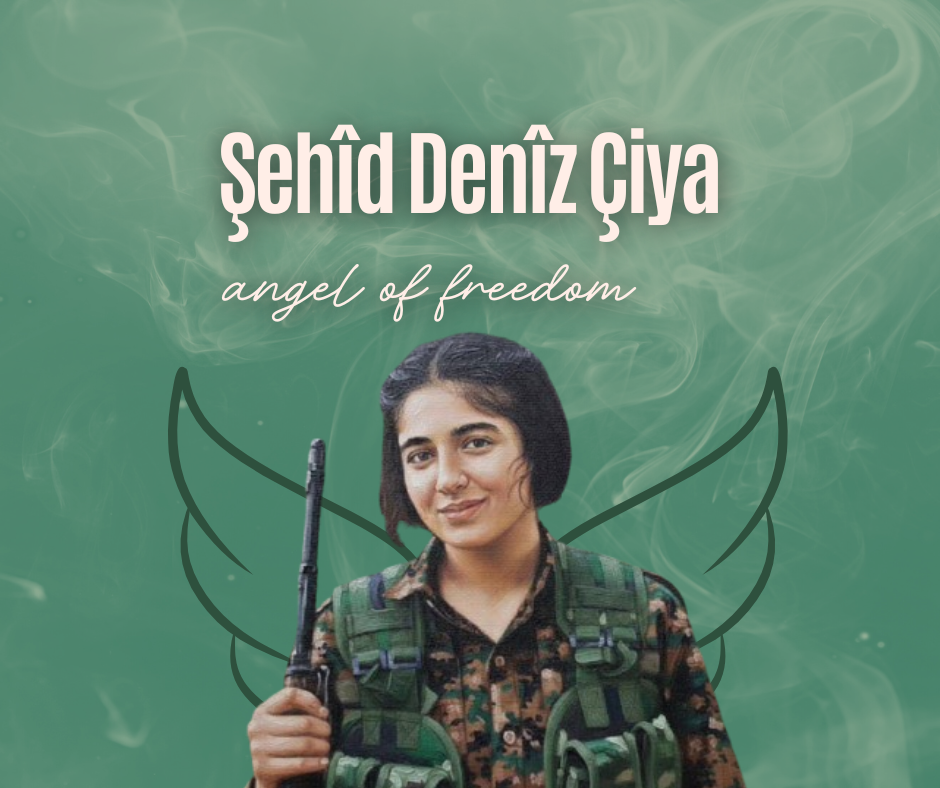
She is an angel of freedom: Şehîd Denîz Çiya
Şehîd Denîz Çiya was a young woman from Afrîn who fought in the resistance of Sheikh Maqsoud and Ashrafieh. For three days, she alone defended a building against hundreds of heavily armoured jihadists. After killing 53 of them, she was thrown from the building, and a video desecrating her body was circulated. In response, the society of Rojava shared images of her flying away from the building as an angel. In this statement, Sozdar Avesta, KCK Executive Council Member, evaluated the brave actions of Şehîd Denîz and its meaning for women all over the world.
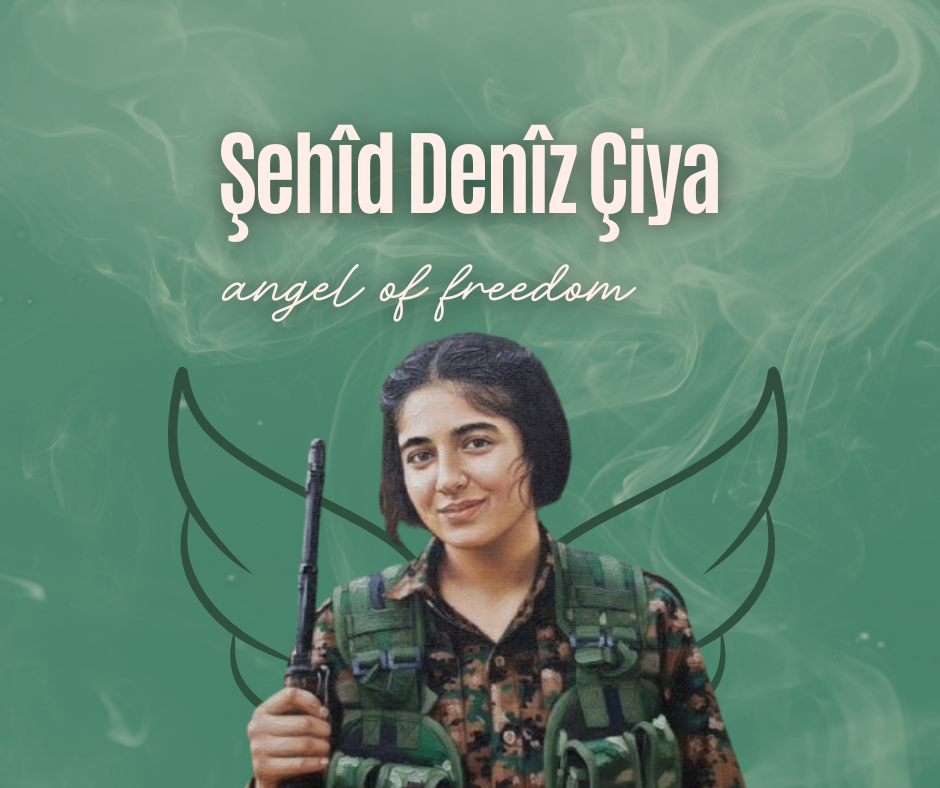
She is an angel of freedom. She is a goddess. I honor her with respect and gratitude. It wasn’t just this comrade who was thrown down; it was the conscience of humanity. There is nothing more to say about this; no words can describe it. This is a message [from the jihadists] for all women who want freedom, and it should make women around the world afraid.
For freedom-seekers, it is a message of revenge and a warning to women not to raise their heads against the “Casteist Killer”* system. The “Casteist Killer” portrays the history in this way: “I am the casteist killer I came about in this way. In heaven there is God, on earth there is the state, and I am the ruler, and you are under my command”. The Casteist Killer wants to impose this philosophy everywhere. But this doesn’t demonstrate the system’s strength; it demonstrates its fear. What succeeded there [in Sheikh Maqsoud] was the spirit of the free woman, the dignity of the Kurdish people, and the dignity of the people of Kurdistan and all the people and women of the world. Everyone should know that this dignified comrade is the goddess of freedom for all women.
Saddam Hussein did not succeed in hanging Leyla Qasim. In 1974, we saw Saddam Hussein hang women to intimidate them. In the resistance of Sheikh Maqsoud and Ashrafieh, another Leyla Qasim emerged. In Iran, they tried to protect themselves from collapse by executing Şîrîn Elemhûlî, but today millions of Şîrîn Elemhûlîs are on the streets. This has been proven thousands of times. Neither murdering women like Seve, Pakize, and Fatma nor vanguards of the freedom struggle like Sara, Rojbîn, Leyla, and Evîn will stop us. The more they insist on these practices, the more determined we will be in our struggle.
ISIS is responsible for this. ISIS is seeking revenge. This is why the people of Kurdistan, the women of North and East Syria, and all the women of Syria should be aware of the following: According to al-Jolani’s constitution, women will be nothing more than servants and slaves. In the March 10 contract, he didn’t give them any space. He took revenge on those women who are fighting back. They say to us: ” You are opening the eyes of women, giving them knowledge and willpower.” They are taking revenge. We saw the women of Arab society. We saw Minbic. We saw what they did to women working in democratic institutions. We saw Derazor.
This mentality is widespread and oppressive. But this does not show their strength; on the contrary, it shows how small and weak they are. In Kurdish, there is a saying, “Bê çare ne,” which means “they are helpless.” This is what they show. They want to strengthen our fear in this way. But they should know this very well. They will never be an obstacle to women’s freedom. This mentality has oppressed women for thousands of years. Women have formed organizations with thoughts and a philosophy; they have become a force of protection.
All women must take responsibility for the situation in Aleppo and strengthen their defense. They must strengthen their legitimate defense, organization, and unity. They must become politically active. They must learn how to defend themselves. No being can exist without defense. In Sheikh Maqsoud and Ashrafieh, they defended themselves and their people. They only had individual light weapons. To defend their people, they chose dignified resistance. This is why women need to learn self-defense. Not just in North and East Syria—women all over the world need self-defense. From Venezuela to Ukraine to Palestine. Who has been harmed in all these wars? Women. Millions of women have been massacred. This is why Rêber Apo developed these thoughts and philosophy. This is why they want to take revenge on us. The Kurdistan Women’s Freedom Movement plays the vanguard role in ideology, system, organization, strength, and so on. This is why they attack us so brutally; they want to oppress us. But they will never succeed. The outcome is resistance and rebellion. History has proven this.
*In the new “Manifesto of peace and democratic society”, Rêber Apo describes men who organized themselves to impose oppression on society as the “Casteist Killer”.
-
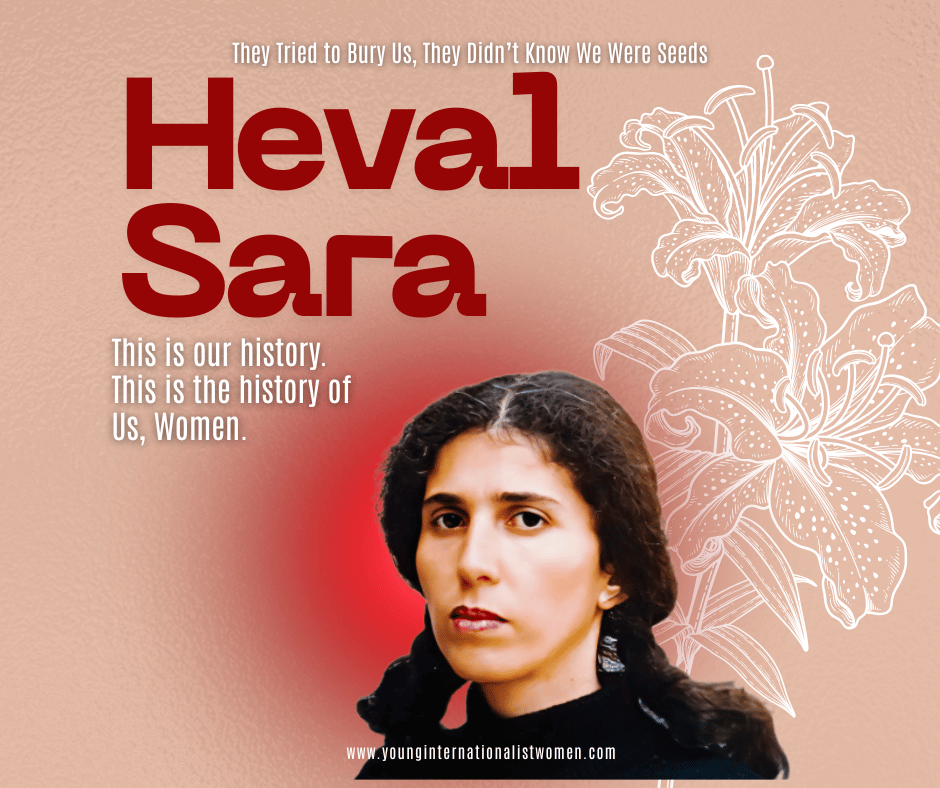
Heval Sara is the spirit of life, love and struggle.
Thirteen years ago, on 9 January 2013, the world stopped in Paris. Sakine Cansiz (known as heval Sara) was assassinated. She and her comrades Fidan Doğan (Rojbin) and Leyla Şaylemez (Ronahi) fell as martyrs following an attack — because they were women, because they were revolutionaries, because they were bearers of values, because they were free, beautiful and fighting.
These were three political femicides, but despite overwhelming evidence, the defendants were not brought to trial.
On 23 December 2022, three years ago, in the same way, at the same time, again in the French capital, Emine Kara (known as heval Evîn, one of the leaders of the Kurdish women’s movement) and two other comrades, Mir Perwer and Abdurrahman Kizil, were martyred.
After 10 years, this was a clear signal from the enemies of the movement to break hope and silence the struggle for a free society, with the vanguardship of women.
Sakine represents the resistance of her people: faced with the denial of their existence, language, culture and life, she imagines the resurrection of society. And she begins to ask herself, ‘Where to start, how to achieve freedom?’
Heval Sara’s whole life has been a struggle, as she herself writes in her autobiography.
She was born in 1958 in Dersim in winter, into a Kurdish Alevi family. In Dersim, before her birth, the Turkish state killed, massacred and displaced thousands of Kurds who rebelled against assimilation, so much so that the rivers were stained red with blood.
As a young woman, she understood what it meant to be a woman in her social reality: she chose to break with the system and not to adapt to compromise. She chose to create life, to be revolutionary.
Her search for a just existence never stopped. First she joined Turkish socialist left-wing groups, then she met the Apoist movement. She began organising in the 1970s, under difficult conditions, in secret, against the ferocity of the Turkish state and against the prejudices of the time, which saw women as destined to be mothers and wives.
Present since the first congress of the Kurdistan Workers’ Party on 27 November 1978 in the village of Fis, in Amed, she was one of the first female comrades and paved the way for millions of others.
Her courage gave rise to the movement of free Kurdish women.
Her soul is wise. Her determination, her humanity and her questions have inspired and continue to inspire.
Sakine was arrested in May 1979, along with many other comrades. Despite being tortured, she did not once say a single word to the enemy. During her 11 years in prison, faced with atrocious physical and psychological attacks, severe torture, oppression and betrayal, she resisted with her head held high.
One day, the highest-ranking prison official asked her:
‘What is your name?’
‘Sakine.’
‘Are you Turkish or Kurdish?’
‘I am Kurdish.’
He slapped her and asked again: ‘Are you Turkish or Kurdish?’
Sakine replied: ‘I am above all a revolutionary. In the revolution, origin is not so important, but I am Kurdish. If I were Turkish, I would certainly admit it.’
This was the fighting spirit she propagated.
She organised all the women in the women’s sections around her, led hunger strikes, and spread hope and ideas to those around her.
She always tried to find solutions to problems. The slogan she carried with her, ‘Surrender leads to betrayal, resistance leads to victory,’ showed that the only possible way to confront fascism was through rebellion and organisation.
After years of imprisonment, she travelled to Damascus, Syria, to attend the academies of Reber Apo (Abdullah Ocalan). She was really surprised when she saw her picture in Reber Apo’s room: this was an expression of Reber Apo’s respect towards her struggle and determination.
She then spent several years in the mountains. Here she travelled from mountain to mountain, climbing peaks and crossing rivers. She became a strong and tireless guerrilla fighter, who never stopped thinking, questioning, committing herself and taking responsibility.
In her own words: “Strength is often misjudged. For example, strength means to start something new in life, to create something from nothing and make life more beautiful. Strength means to write poetry in the mountains. Strength means seeing and hearing the water. Even living with the beauty of nature is strength.”
For her, life, struggle, and love are inseparable from one another; in fact, she states, ‘I wanted to love in the struggle. I wanted to love as I fought.’
A life other than a revolutionary one was unthinkable for her. The struggle she fought was for the liberation of women. And as she herself states: ‘Liberation knows no borders but means a constant search, a continuous aspiration to beauty.’
Heval Sara sowed the first seeds, now it is up to us to continue sowing and reaping the fruits. What does Sara teach us? Which aspects of her personality can inspire us? How can we embody her beauty?
These questions, especially today, can accompany us and lead us to reflect.
During the attack in Paris, the goal was to kill courageous women who were fighting for freedom. But the spirit of these three women will never fade. Martyrs never die.
We can follow in their steps through our daily actions aimed at the building of a just and communal life.
Sara Rojbin Ronahi
Jin jiyan azadi.
Woman, life, freedom
-
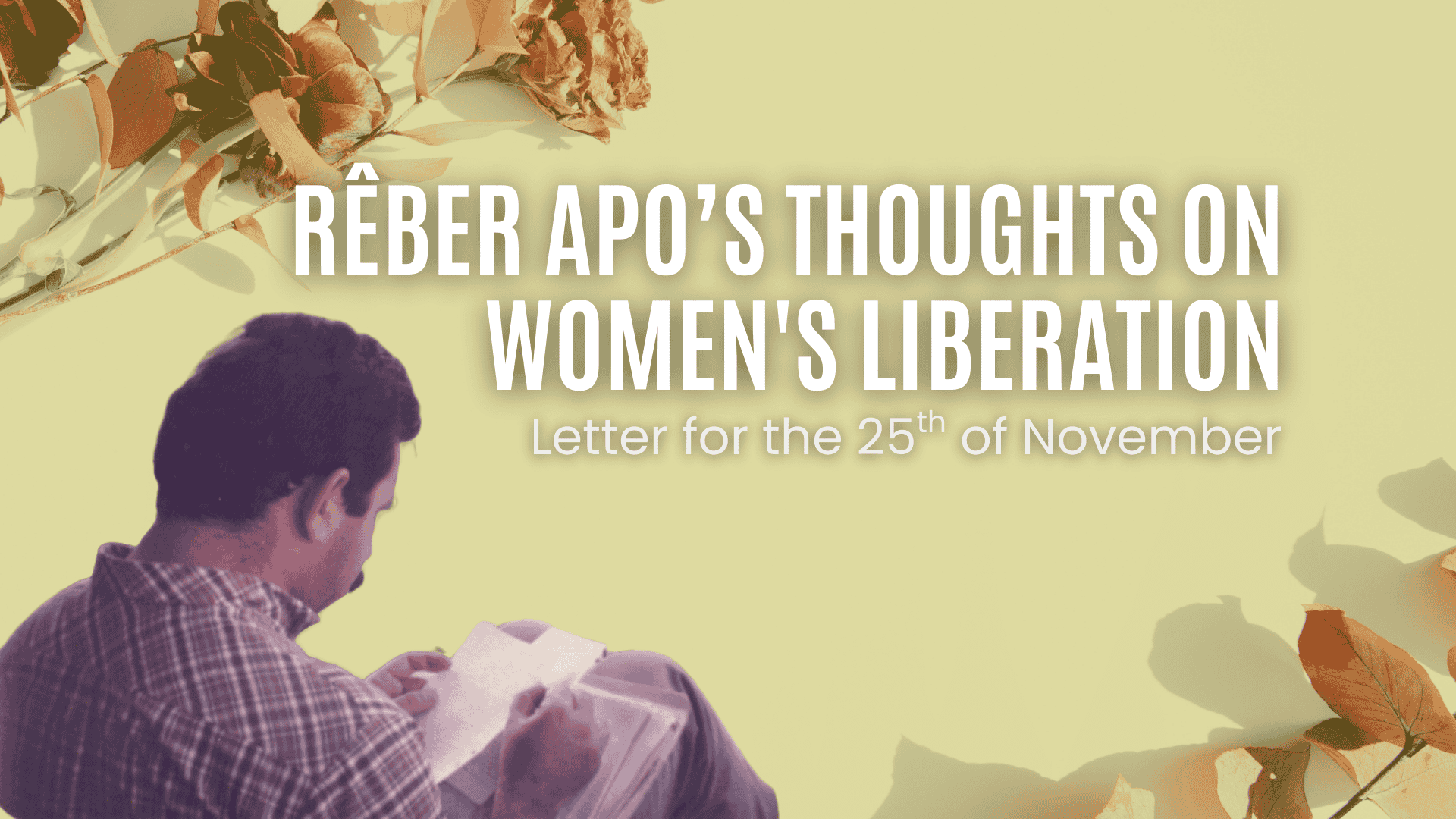
Letter for the 25th of November
Rêber Apo’s thoughts on women’s liberation
“Society is not a single-layered class structure but a multi-layered, historical, gender-based battlefield. Humanity’s first and greatest problem is the counter-revolution that began with the enslavement of women and has targeted the sociality formed around women. The domestic violence, femicides and patriarchal oppression experienced today are all contemporary reflections of this historical attack. The caste-like structure that attacked women’s sociality and communalism later transformed into the assembly of gods in Mesopotamia, then into Sumerian priests, and from there into pharaohs and kings, making patriarchal oppression over society continuous.
Today, the woman is the most valuable raw material of capitalism. Her body is marketed, her personality is turned into an object of marketing. Even her spirit has been invaded—invaded by men. Woman lives with the dagger of bondage that patriarchal mentality has driven into her back. The male-dominated social hierarchy created by thousands of years of civilizational struggle produces hierarchy, violence and conflict. The state-based male civilization has taken away women’s language, production, bodies, and then the entire society. Without seeing this reality, no step toward freedom can be taken.
The problems imposed on women by the male-dominated system must be understood and resolved. Considering femicides, domestic violence, violence against women, discrimination and exploitation, the level of enslavement is far deeper than imagined. Woman has been completely degraded. Her reality has been distorted. The well-known anklets women wear as ornaments, the nose rings—these are all signs and traces of slavery passed down from history to today. In capitalist modernity, women’s bondage has been further deepened; the system has turned women into objects of decoration and marketing. To break free from this systematized enslavement and attain liberation, deep reflection and organization are needed.
No movement for social freedom that does not place women’s freedom at its center can be a real revolution. I find current male-female relations horrifying. We addressed relations by placing women’s freedom at the center. A large part of our work consists of women’s work. Resolving the relationships and contradictions between men and women is important. We have thoroughly analyzed male domination, which blocks women’s freedom and enslaves women in every way. We developed a sociology of freedom. It is clear that being a woman is difficult and liberation is not easy, but women must dare. They must take the lead in removing the dagger of male domination embedded in humanity’s back and in building an equal, free and democratic life.”