Category: Articles

  • AYTEN DERSÎM: WE MUST UNITE AROUND THE RESISTANCE OF THE PEOPLE OF ROJAVA

    AYTEN DERSÎM: WE MUST UNITE AROUND THE RESISTANCE OF THE PEOPLE OF ROJAVA

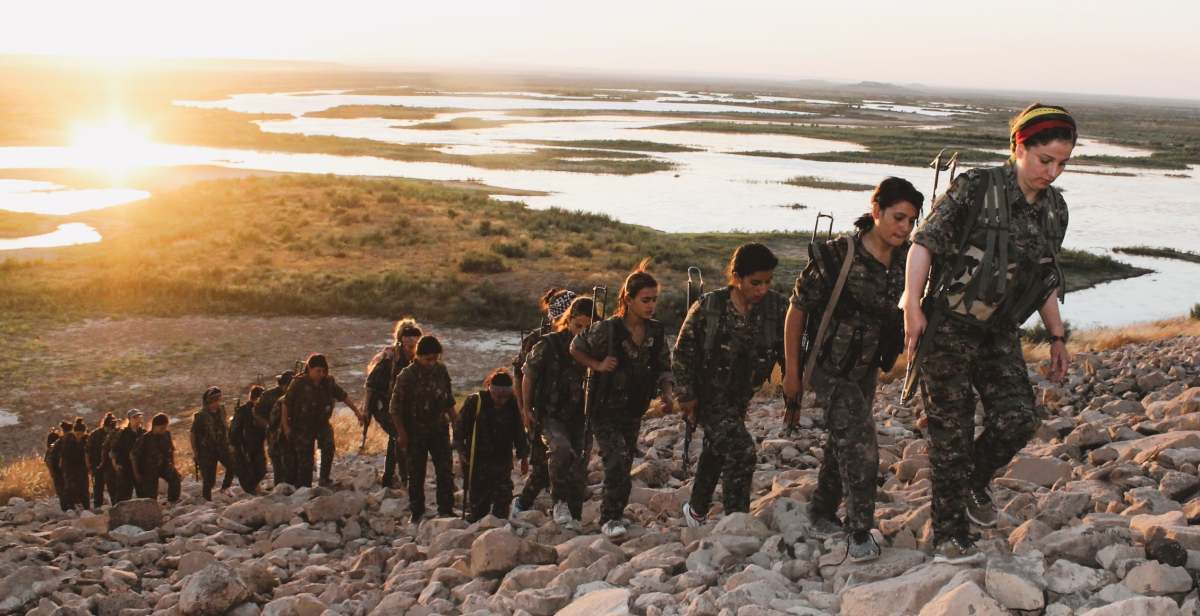
    Ayten Dersîm, member of the PAJK Coordination, said that the decision of the people of Rojava to defend themselves against the attacks was very important, stating: ‘Today, we must unite and strengthen the YPJ fighters who are leading our glorious struggle and the resistance of the people of Rojava.’

    Ayten Dersim joined the Special Program on Medya Haber TV and evaluated the attacks on Rojava and the struggle of women.

    Dersim stated that the attacks by ISIS-HTS gangs on Rojava are an international plan and said that through ISIS, they want to redesign the Middle East. Despite all the attacks, the Kurdish people have shown a great resistance, and this is very important; the struggle must be intensified on all fronts. PAJK Coordination Member Ayten Dersim emphasized that today’s attacks on the Kurdish people in Rojava will spread to all peoples tomorrow, and stated that the Kurdish people, especially women, will not bow their heads in the face of these barbaric attacks.

    The assessments of PAJK Coordination Member Ayten Dersim are as follows:

    First, on the occasion of the anniversary of the martyrdom of comrade Sara, comrade Rojbin, and comrade Ronahi, we renew our promise to remain committed to their struggle and to bring this struggle for freedom to victory until the end. Because comrade Sara was one of the pioneers of the Free Women’s Movement. In that sense, her line, her stance, is defining our struggle.

    The brutality of this year is both against society and against women. This is not just a situation of this year; it has been this way for years. The dominant forces, the ruling powers, the fascist forces fear women the most and commit brutality against them. Because a woman’s presence in society, her autonomy, and her social role are one of the most important defining factors. In that sense, we have also valued this in our programs throughout all previous years. But with this year’s arrival, we must grasp the reality of Rojava: in previous years, they fought against the brutality of ISIS, developed their own self-defense forces, and truly protected and liberated the peoples of the Middle East, humanity, and women. This is a resistance that spread across the world; it became a stance and a resistance from which women around the world draw inspiration. We as women saw this too; that is, if you organize yourself and resist, the circles around you also grow.

    Because a reality like this truly exists; the moral and political society has not been destroyed. It has been suppressed and denied. All women are waiting for a spark. They are waiting for a movement and for organization. Because of such a difficult situation, there is a lack of pioneers. This gave rise to the YPJ forces and fighters. The YPJ fighters and forces were the children of that people. They saw the danger. In other words, it was truly offered to the world, because it was also developed within the framework of a prepared plan and advanced against ISIS. If we organize ourselves against this, advance our self-defense and our struggle, we can protect ourselves and protect the peoples. And they demonstrated this in the years-long struggle. That is to say, all women, all peoples saw their own existence in their own place. This is proof of that; remaining silent, being passive, bowing one’s head to the existing order, is non-existence, it is slavery.

    HUMANITY FOUND ITS LIBERATION IN THE STRUGGLE OF ROJAVA

    When we look from history to the present, this issue has existed at different levels. Now the Freedom Movement, the Free Women’s Movement, has overturned this. That is to say, the people and women are not slaves.

    In other words, they were enslaved, kept uninformed, kept without will, and this situation was institutionalized. Now, this situation is neither a destiny nor something that has to be. It was created, it was imposed, and these things can be overcome. This was achieved through the results of years of struggle. That is, this resistance, this defense, protected the people from this brutality and from ISIS, and thousands were martyred. Now, this is a very honorable struggle. Humanity, in this sense, has taken its place around this struggle. Humanity, in this sense, saw its own salvation there. Humanity, in this sense, saw this: if you organize yourself, you exist; if you don’t, you don’t.

    Now, since the beginning of the year, this monster has changed its name. Someone has come to its head; it’s called a government, it’s called a presidency, but its foundation is the same. Its methods of imposition are the same; the monster is the same. This is also a concept prepared by the international powers. In other words, they are the practical implementation and preparations for the redesign of the Middle East. Now, when you think normally, you ask: the Kurdish people and Kurdistan, the people of Northeast Syria—because many peoples live there—are a mosaic of peoples and women. From every language, every sect, every belief. Because this is not a problem for the peoples, it is not a problem for women either. Notice, in Kobanî there is also a women’s resistance, a resistance for the protection of women, but a woman from Latin America also sees herself here. In other words, borders are not an obstacle, faith is not an obstacle, religion is not an obstacle, language is not an obstacle. Those who make this an obstacle are states or ruling powers, the hegemons.

    In that sense, they see this people as a threat to themselves, They see this people as a threat and to destroy them, they unleash all their brutality, and this is not humane, not moral, not in accordance with international norms, and not in accordance with the law. The reality is that there are peoples who defend themselves, govern themselves by their own will, do no harm to any other people, and especially stand up against attacks on women. Because ISIS truly murdered women in a very brutal way. They captured them in a very brutal way and wanted to use them in a very brutal way. Now the YPJ forces have liberated them from there. The mosaic of such peoples, without harming any nation and freely governing itself with its own free will, attacking no region and coveting none, is one of the most innocent peoples of the Middle East: the Kurds. It also has no such problems or issues with women.

    HTS FORCES COLLECTIVE SLAVERY AND SUBMISSION ON THE PEOPLES

    This is the struggle for human existence. Now they brought in HTS, its name was changed, its form was changed, but all the gangster forces, which were formerly Al-Nusra, became ISIS, hundreds of different names have emerged, all of them with the common goal of eliminating peoples with free will and continuing their brutality against the masses. The world has seen this; to repeat it again and again may not be appropriate. We are talking about ISIS in a different suit; its foundation and ideology are the same, imposing slavery, subjugation, and willlessness on peoples and using violence. Now, this is the demand of the Kurdish people and Kurdistan. Because we, as a people and as women, have come to this conclusion: no matter who the people are, any problem can be solved very easily through dialogue, negotiation, and discussion.

    The leadership itself is waging this struggle in its entirety. It says that problems are not solved through war. But they did not come to this. According to what we have observed and seen, without coming to any general agreement, dialogue, or discussion, they put all their militant forces into action. There is a force that has been organizing and preparing this from the beginning, and is once again attacking with brutality. In opposition to this, there is a conspiracy that international hegemonic powers have been carrying out against the Kurdish people for years. Because they do not accept the existence of the Kurdish people and Kurdistan, they have particularly seen the struggle of women within the Kurdish people, which is the most dynamic, as a threat to themselves. Now, attacks are being launched against this. When these attacks occurred, without a doubt, all our peoples, our women, launched a great struggle. This is a dignified stance. It is a stance that unites the struggle of the peoples.

    This stance of the peoples who do not want to turn a blind eye to this genocide is a stance for freedom. This must undoubtedly continue. Just as our YPJ forces and our heroic people fought and liberated the people from ISIS, today there is the same determination. Otherwise, ISIS will go everywhere. With its genocide, it will wipe everything out. Now its name is being changed, but its foundation is not being changed, its ideology is not being changed.

    We saw it in the press. Honorable YPJ fighters were fighting from balconies, throwing people from buildings. This is not a situation to be taken lightly. This is an act of revenge. This is an expression of the understanding of ‘we destroyed her, now we will destroy you too.’ In that sense, the struggle of the YPJ forces is honorable, as it was yesterday, so it is today. They are not fighting just for themselves, but for all the peoples and women who live in that geography. They are determined in this struggle, and we see this clearly. The world must not remain silent in the face of this. That is, without silence, it must be stopped in a very organized manner.

    THE PHILOSOPHY OF WOMAN, LIFE, FREEDOM IS THE PHILOSOPHY OF A DIGNIFIED LIFE

    On the other hand, there is Iran and Rojhilat. Before this Jin, Jiazyan, Azadî uprising, there was the philosophy. The Jin, Jiyan, Azadî philosophy is the philosophy of freedom, the philosophy of self-being, the philosophy of a dignified life and struggle. Now, this philosophy must exist in all of humanity, and especially among women. Just because it is absent from the world’s hegemonic powers doesn’t mean it shouldn’t exist. This resistance lasted for days. Even today, with the people and women in the lead, an injustice is being committed there, and dignity is being trampled.

    This is being imposed. Now these peoples also have their dignity, their consciousness, and their own truth. This is not harmed by any force or borders. In response to this, the internet was shut down for days, the electricity was cut. The full extent is not known, but it is said that fifty-nine to sixty thousand people were killed, women were killed. While they are still alive, their internal organs are removed and they are killed in the hospital.

    EVEN IF WE DIE, THOUSANDS ARE BORN AGAIN

    The world’s humanity must not remain silent in the face of the massacres in Rojava. It’s truly difficult to even say this. Corpses are just thrown on top of each other like this, as you said, the bodies of women are desecrated, and the families are extorted for the cost of the bullets. What kind of humanity can ignore this? Now, just because it’s not being reported in the press, does that mean it doesn’t exist? This is a regime that keeps what happens in its own country closed off from the entire world’s public, committing genocide, suppressing it, and trying to perpetuate its regime. This is impossible. Can the people accept that which was so brutally murdered, suppressed by a ruling and oppressive regime, denied, banned? It is not possible. The will of the people has a truth like this: Yes, you can suppress it for a time, you can deny it for a time, but in the long run, this cannot be sustained. We see this from the struggle of the peoples of our geography, from the struggle of women around the world.

    Today, there are so many women’s advocates, women’s movements, and women’s institutions and organizations in the world. For years, they too have been subjected to torture, imprisonment, oppression, and exclusion. This is not just for this era, but to eliminate them? To wipe them out? It’s not possible. The people always renew themselves, grow, and advance. This is a process of socialization. Especially women; when a woman achieves her own existence of freedom and builds her consciousness, no force can stop her. Of course, for the ruling and hegemonic powers, this is a threat. Because their existence is based on silencing society and women. It has been this way for thousands of years. But when a woman sees this truth, becomes aware, and understands this: You cannot eliminate our existence by killing us. Even if we die once, thousands are born.

    THE PEOPLE OF ROJAVA CLEARLY DEMONSTRATED THAT THEY WILL NOT SURRENDER THEIR HONOUR TO ANYONE

    This is a reality seen in the struggle for women’s freedom. We see this in Kurdistan, too, in the Middle East. This is truly how it is. The Taliban came to power; were the women there silenced? They brought ISIS; were women silenced? Today, they brought Hay’at Tahrir al-Sham; were women silenced? For centuries, has the rule of power spread across the world, silencing the people? Silencing women? Eradicating the organization of women? In that sense, we as women must see all of this. Today, we must unite and become strong around the YPJ fighters of their glorious struggle, who truly bring us to life, awaken us anew, and show that one can live with freedom. We must rally around the resistance of the people of Rojava. Because they have now made their decision.

    We do not surrender our existence to anyone. We defend our humanity and our dignity with our existence, and we will continue to do so. At the end of this, there is death, there is killing, but we do not surrender our dignity. In the statements that have been issued, the people have clearly communicated their decision. This is very important. Because the people themselves make the decision about their own existence. It’s always said, “This is pressure,” “That is pressure.” All of this is the product of a special war. These are dirty propagandas that want to stop the people’s resistance. These are the propaganda efforts that want to blacken the resistance of the YPJ fighters. We saw them yesterday, and we see them today. We built ourselves through this struggle. In that sense, the issue is not just about one or two regimes.

    Today, there are very interesting examples in many countries. Rêber Apo always says this: Today a man says, “I love you,” and tomorrow he tears you to pieces and puts you in a bag. This is shown on television. She is thrown from a multi-story building. They are thrown into trash bags. In other words, as women, our liberation is to build our own free life. Building our own free life is awareness. It is self-organization. It is constantly defending ourselves. This will not eliminate today’s and tomorrow’s power structures. When an attack is made, we must know how to defend ourselves. This is barbarism. Women are being killed one by one.

    Rêbertî has, until now, most accurately defined all genocides, denials, and barbarisms. No one has dared to, or even put a name to it, but he named it: casic killer. And for women, he gave us the perspective of how to be collectively aware and how to organize ourselves. He made this perspective tangible. These are not just ordinary people. This is a system. This is a regime. This is an organized and hegemonic force. It has always built itself on the killing of individuals, the people, and women. Rêber Apo has taken this to the clan level. By breaking the clan, it brought the conflict between the commune and the state to the forefront and has carried it to the present day.

    We return to history, evaluate all the processes one by one, read, research, and see today’s expression from there.

    WE DO NOT SURRENDER TO ARMED FORCE

    Self-defense is not a phenomenon that belongs only to today. Hegemonic or ruling powers, powers that fear their own nonexistence, portray self-defense as a purely military organization of the present day. Those who want to spread fear among societies, those who carry out the policy of a special war on societies, say, “Be unprotected; I am protecting you.” We look at our history. What was done to us in our history is being done today under different names. Even in the stage of the first human societies’ formation, people always developed a self-defense reflex against oppression, violence, and attacks. Rêber Apo says this also exists in nature. When we look at ecology, we see this. There are flowers, there are trees. Living existence is not just society; it is nature itself. We too are part of this nature, a part of it, with it.

    Even if nature itself has a means of self-defense, when someone breaks its branch or crushes its flower, it reacts. We are human. Humans have their own consciousness, their own will, their own physicality, their own existence. This is not a natural exaltation; it is an expression of its own social existence. We define this as a second nature. How then can there be no self-defense? Self-defense is the idea of protecting one’s existence under any circumstances; it is a protective reflex, a struggle for protection, protective consciousness, and organization. Wherever we are, we defend ourselves when we are attacked with weapons. We do not surrender to armed force. But we know that guns are no salvation for humanity. Despite this, we will not turn away from guns, nor will we surrender. This applies to all peoples.

    Why do states have armies? Why are there internal security systems, police? Then let us ask: Is this only against external forces? Humanity existed without states. Society existed without states. But it protected itself. This protection took turns, this protection took different forms. In the conditions of the Third World War being waged in the world today, where the Middle East is being redrawn, the will of the people is being destroyed, and very fierce attacks are being made on the struggle of women, how can we as women be without self-defense? Their hair has also been cut and exposed. The women of the world, who say “I am a woman, I am the people, I am human,” must see this brutality. They are being killed, their heads are being cut off, and this is called ISIS, this is called a government. They cut the hair of the YPJ fighters and pose with it. Yes, women have not remained silent in the face of this. But we must not be complacent. This is a dignified stance, but it is not enough.

    EVERY WOMAN MUST ESCALATE HER STRUGGLE

    A woman has her hair, she has everything. If these things are being done to a woman, will we surrender? No. We must fight against this. We must protect our dignity. We must organize ourselves. We must make ourselves strong. In that sense, there is a serious awakening among the women of the world. But this awakening must become a strong will. It must become a strong organization. It must become a strong resistance. Everyone must magnify their struggle. Rêbertî has always educated us this way. If a woman is murdered, she knows it is her, it is you, it is us. A woman has such a feeling. A woman has such an awareness.

    It is because of its sociality, because of its expansiveness, because of its softness, because of its sensitivity. It encompasses all of this. We will not forget her hair, we will not forget our warrior thrown from the building, nor will we forget this brutal massacre being committed against us. Not today, not tomorrow, nor any other day. Today’s brutality has once again shaken humanity. It has once again spurred the struggle. In that sense, today, as we did yesterday, we are confident in our resistance. Our struggle defines our resistance. Our struggle defines our organization. Our organization defines our unity. All of these are necessities for us to be a society.

    The necessities of being human. The necessities of being women. For this reason, under these conditions, self-defense has never disappeared. These are the politics of a special war that present self-defense as something passive, liberal, and submissive to everything. In digital media, it is propagated among institutions in this way. But this is more than that. They impose slavery on you with various arguments. In that sense, we must protect ourselves. We must strengthen our defense. But at the same time, we must also expand our defense.

    The statement of Leader Apo, who says, “I define this era as the era of women’s heroism,” is truly a approach of leadership that recognizes and defines the struggle we are living. We are the Kurdish Free Women’s Movement, but it has grown. It has surpassed the Kurds and Kurdistan and become global. We must bring our struggle to a clear identity as movements of women worldwide. In the resistance we wage, in the struggle we wage, in the organization we build, in the unity we build, all of this is a heroic saga. Heroism is always a concept imposed on us, or one that is told and retold about us. You go, you become a martyr, and you become a hero. Of course, that is also heroism. But true heroism is to bring it to life, to bring it to the struggle, and to grow it with perseverance, determination, and a constant claim.

    Today, our struggle has truly reached such a level. Today, women from Asia, from Latin America, from many European countries are joining this struggle. It’s not about the size. It’s not about the quantity; it’s about the quality. Freedom is about quality. All of this is struggle, it is heroism. Not surrendering, not bowing their heads, not being passive, educating themselves with historical sociology, broadening their horizons with jineology, connecting with their history, and bringing that history to the present day—this is such a struggle. What is being imposed on society? “Forget your history,” they say, “we are writing history today.” But the history they write is denial, erasure, liberalism, and a history that fragments and sells the human body. History is not just this. Today is not just this either.

    If we look at history through the lens of the rulers, this is what we see. But there is also an unwritten history. The struggle of women, the struggle of peoples brings this unwritten history to light. That is why Jineology was developed. To advance the history of women, which until now has been suppressed. There has always been a women’s struggle throughout history, but this struggle was either erased or distorted. For this reason, the resistance in history must be awakened, read correctly today, and properly shaped for the future. Heroism is being redefined. Through the woman, it takes on a new meaning. For this, thousands of bodies were sacrificed, thousands of heroes were sacrificed, thousands of epics were written, and thousands of resistances were demonstrated. This is why the people unite, and this is why they are inspired.

    WE ARE A MOVEMENT THAT BOWS TO NO ONE

    This resistance has always been lived. Against brutality, a rebellious stance has always been taken. This rebellion is not just a momentary rage; it is a constant, ongoing struggle. Undoubtedly, paying the price is heroism. In our struggle’s history, there has always been this understanding: Death is afraid of us, we are not afraid of death. Because we know what death is. We are such a fighting unity. This struggle has passed through us and reached other women. Our mothers also say, “We are greater than death.” This has a history and a legacy. That is what they are talking about. Because we are their children. We are not a movement that bows its head. We are the movement that has struggled for years and has learned the meaning of freedom through this struggle. This movement is broad. It includes all women’s movements. Because it is the collective expression of the entire existing women’s struggle.

    Today, the woman being murdered in Europe is us. Regardless of identity, religion, or race, we have transcended these boundaries. Universalization is our perspective. We have reached this consciousness through struggle. Many women are being murdered in Europe. The Middle East wants to be redrawn through ISIS. They want to force submission through genocide. This will spread to other peoples as well. This regime is not afraid of this. That is why our struggle is the voice of all women. Wherever a woman is murdered, we must carry on her struggle. The struggle is not just a march, not just a statement. Of course, these are part of it, but as it grows, so do its tools, its needs, and its scope. For this reason, we must not leave anyone unaccountable. Our account must be the stopping of this violence. This massacre must be stopped. We must do this by intensifying our struggle.

    Rêber Apo has always told us this, and we see the basis for it in all of his statements. It says: As you grow, you must overcome the dangers against you, not always through opposition, but by strengthening your own dynamics. This general perspective expresses this; self-defense was necessary yesterday, and it is necessary today. As long as humanity exists, as long as peoples exist, as long as they do not build their own democratic system, their own free and vibrant life, self-defense will always be necessary. This is a guarantee. And there is also an internal truth. We are not just talking about an external enemy. There is also a deep-seated sexism within. There is domestic violence. There is a disregard for and denial of a woman’s will. There is a system that makes a woman work like a slave at home, allows her to work outside, and thus gives the impression that she has economic freedom, but in reality, seeks to keep her from her own freedom. This is all a distraction, a deception. Because a woman’s consciousness is the consciousness of society. We are not separate from society.

    In the midst of this, there is also nationalism, religiosity, chauvinism, and sexism. This is all the capitalist modernity. It’s a system that distances society from its very foundation. We see how different people are being turned into monsters. Can one now call these ISIS members human? These are creatures that have fallen from humanity. They are not human. So what will we do against this savagery? We will protect our humanity. We will magnify our humanity. Because this is not humanity. Humanity is not killing one another, it is not denial, it is not annihilation. This is why the truth of our struggle comes to light once again. Self-defense, along with organization, is the quest for the entire world to collectively find its security. It is the power to defend oneself against attacks from both within and without.

    There is a years-long struggle and a movement that has become global. For example, women in Latin America see this struggle and organize themselves. No one goes and organizes them. Didn’t the women in Afghanistan call on the YPJ during the first attack? They say, “Come protect us, come educate us.” Today in Sweida, there are massacres; when the people there call on the YPJ and YPG, is it not so? Wasn’t it the Alawites who called? We are not a single voice. We are not an abstract voice. We have reached this point with great sacrifices and great hardships. Fascism, hegemonic forces, state power, and male violence have stood against us. That is why I said at the beginning: There are women, you cannot destroy them. There is a people, you cannot destroy them. But how are they? They exist with their identity, with their dignity, with their culture, with their thought, with their morality, with their geography and their nature.

    When women see this, they look at their country, their family, their surroundings, their schools, their states. They see the daily violence. They see the violence that is not seen, the subtle, normalized violence. They see that her will is not recognized. All of this is violence. Violence is not only direct force. When they see this, they ask: How do these women struggle? With what consciousness, with what idea, with what argument? The answer is clear: Through organization. Two women must come together. Five women must come together. We see on television, three men attacking one woman. They attack with a knife, with a gun. If a woman organizes herself, becomes aware, the reflexes and willpower of an organized and aware woman are very strong. These are not normal situations.

    Why are you crying? Answer. Because physical violence is being committed against you, they are going to kill you. Why do you expose yourself to death? Is this why our anger grows? Because women must be vigilant. They must not be fooled by every sweet word from a man. Today he says, “I love you,” tomorrow he kills you. Then let’s define love correctly. Love is the recognition of each other’s will. It is the recognition of humanity. Love is not power. Violence is multifaceted. No woman should consider this worthy of herself. There is no woman who accepts it. But there are women who are not organized and cannot show their power.

    There are so many women’s movements, institutions, and organizations in the world; women are not alone. There is a science for this: Jineology. Everyone must turn to the science of women and understand this. Why is such a science necessary? Because without questioning, the right answer cannot be found.

    WOMEN ARE UNITED IN THEIR WILL TO OVERCOME VIOLENCE AND SEXISM

    We are not prisoners of this world. We live in this world, but we are not its prisoners. We can build our own world. Every day we struggle, and the more we struggle, the more our morale grows, our belief grows, and our success grows. This idea has always existed in the history of our struggle and has now become global. It is not a single idea, it is a structure. The Democratic Confederation of Women of the World is one example of this. Two or three years ago in Berlin, hundreds of women came together and became an inspiration for all women. Every woman came with her own color, her own idea, and her own struggles. A shared consciousness emerged. A shared consciousness of women and the basis for a joint struggle emerged.

    The more women unite, the more they have the will to overcome violence and sexism. If hundreds come together, tomorrow thousands will. Wherever they are, let them organize. In Kurdistan, where soldiers, police, and gendarmerie attack women, the people reacted and defended themselves. This is self-defense. No one can easily talk trash or lay a hand on them. Therefore, the people must respond more sensitively and organized with a self-defense consciousness. A soldier may be on duty, but this does not give them permission to lay a hand on a woman or a child. This violence seeks to reproduce itself. We too must resist this and grow our existence and dignity through struggle. We will not surrender. Our struggle has proven this. Today, if HTS gangs attack, if the Iranian regime kills people, this will not stand. The people do not forget the things that have brought them to life.

    The history of the Kurdish people has not been written by the will of the peoples. The history of women has not been written in the language of women either. But there are thousands of female writers. We must write about the things we have lived through. Because Rêber Apo said: The history of slavery has been written, the history of freedom is waiting to be written. This is the result of this struggle. That is why this century is the century of female heroism. Writing this heroism is the task of women. All women who struggle are heroes. Women who resist in “Woman, Life, Freedom” are heroes. All women who do not bow their heads to oppression are heroes. With unity of spirit, unity of thought, and unity of struggle, we must everywhere strengthen each other’s struggle.

    Rêbertî defined this century as the century of women’s struggle and said that the world will be saved by women. Yesterday we believed in this, and today we still believe. Let us believe in our struggle and make our struggle great. Let us believe in our organization and make our organization great. Let us work on consciousness. Women are kept uninformed. Let us work on sociology, on jineology, on philosophy. Let us make the twenty-first century the century of the women’s struggle. Let us liberate the world with women’s leadership.

    JIN, JIYAN, AZADÎ

    WOMEN, LIFE, FREEDOM
  • Last Words of commander Sîdar Efrîn

    Last Words of commander Sîdar Efrîn

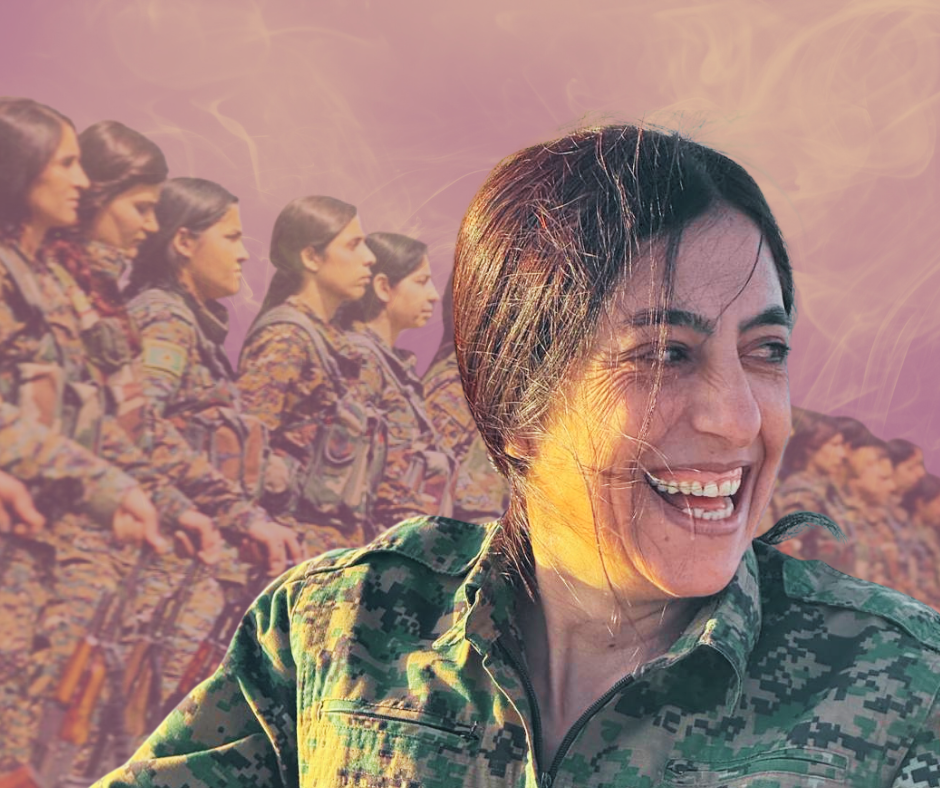
    Sîdar Efrîn was a warm-hearted YPJ commander and a sincere defender of the democratic nation. When the HTS–ISIS gangs affiliated with Damascus recklessly attacked Tabqa, ourcommander Sîdar Efrîn fought to the very endagainst the gangs and was martyred on 18 January.

    Her last words she dedicated to the internationalist women’s struggle:

    “As fighters of the YPG and YPJ, we introduced the Rojava Revolution to the world. Numerous revolutions and uprisings have occurred globally, with many taking place in the Middle East. However, examples like the Rojava Revolution and the resistance of the YPG and YPJ are rare. No one could have imagined that such a step would be taken in Western Kurdistan, with the youth of Rojava, both men and women, joining the revolution and rising up.

    This message is directed to all our friends, as well as our enemies who are observing us.

    Throughout history, women have endured great cruelty and hardship. Their suffering continues to this day. The thoughts and wisdom of women have been thoroughly corrupted. To this day, women’s history remains distorted. Likewise, their bodies are exploited. In light of this, the emergence of the YPJ and their participation in the revolution serves as a significant message. The Rojava Revolution has sent a clear message to the entire world — to both our friends and our enemies. Our allies understand the philosophy and principles upon which our revolution is founded. Our enemies, too, are well aware of the threat we pose to them.

    We are united by our strength, our ideas, and our lives. The people of Rojava are an educated people — followers of Rêber Apo (Abdullah Öcalan). Rêber Apo has been preparing the revolution here for the past 20 years. His contribution to Rojava is immeasurable. Every achievement of this revolution is a direct result of Rêber Apo’s efforts. Rêber Apo has gone from house to house in Rojava, introducing himself and his organisation to the people. One in three of our people has met Rêber Apo and been introduced to his teachings. We were well-prepared for this revolution, and countless sacrifices have been made in service of this cause.

    The Syrian regime has oppressed and persecuted our people. The suffering inflicted by the regime on the people has been immense. The unity of the people and their vanguard role in the revolution is a clear message to the regime. This people has endured tremendous hardship. Many nations, communities, and faiths have shared this pain. However, through the Rojava Revolution, the people of Rojava came together and united around a shared philosophy, a shared idea. Historically, these diverse communities were often enemies, and many lost their lives to one another. The aim of this revolution is for the people of Rojava and Syria — women, children, and all people — to rebuild this land together.

    In this revolution, the democratic nation has empowered not only the Kurdish people but all the components of society, enabling them to govern and defend themselves. They now govern themselves in every respect, and all the achievements in Rojava belong to the people. We are the cadres of the democratic nation. Our demand is not limited to the Kurdish people; we also stand for the rights of all other peoples and faiths. There are difficulties and hardships, as the state has incited division among the people.

    Many people have come here from other countries, embraced this revolution, and the democratic nation. They have arrived from various nations, turned to Rojava, and sacrificed their souls for this land. This proves that the democratic nation is for all peoples. Rêber Apo ideas and philosophy have firmly taken root within society, and people are wholeheartedly embracing them. The four parts of Kurdistan and the diaspora are also embracing these ideas.

    We are prepared for the changes and transformations that lie ahead. We ready ourselves through the thoughts and philosophy of Rêber Apo, for the duties we will undertake, particularly in the democratic process of taking responsibility for the revolution.

    Our studies at the academy present a great opportunity. They help us prepare for what lies ahead. Whatever the nature of the attack or whichever enemy we face, we must be ready. When you are prepared for change and transformation, you are also prepared for the enemy.

    We prepare for change and transformation so that we may be ready for war. Whatever form that war may take — whether physical, ideological, or propagandist — we are ready to wage it and to defend ourselves.”

  • Poem: Emotional body

    Poem: Emotional body

    A poem dedicated to the heart of the revolution – Rojava

    Like uprooted plants
    Corroded rocks
    Tension pulses
    Inside the stomach

    On the face
    Tears burn
    The wounds inflicted
    How can the storm of violence be stopped?

    Between the bones
    Anger and fear
    dialogue frantically
    Understand, react
    Who can I be?

    Feel the movement
    between the muscles
    Be an exploding volcano
    A drop in the desert
    Water that evaporates
    Until the wind blows you away

    From the lips
    I would like justice and peace to spread
    To instil harmony
    To calm the pain

    In the heart
    Memories protect
    Overwhelming love resists Sacrificing blood pulses

    It’s cold
    On the skin
    And I don’t close my eyes
    Hold tight
    to the sigh of freedom

    —original—

    -Corpo emotivo-

    Come piante sradicate
    roccia corrosa
    la tensione pulsa
    dentro lo stomaco

    Sul viso
    Le lacrime bruciano
    Le ferite inflitte
    Come si può fermare la bufera del potere?

    Tra le ossa
    Rabbia e paura
    Dialogano freneticamente
    Capire, reagire
    Chi posso essere?

    Sentire il movimento
    Tra i muscoli
    Essere vulcano che esplode
    Goccia nel deserto
    Acqua che evapora
    Fino a vento che soffia

    Dalle labbra
    Vorrei dilagasse giustizia e pace
    Infondesse armonia
    Calmasse i dolori

    Nel cuore
    I ricordi proteggono
    Resiste l’amore stravolgente
    Pulsa il sangue che sacrifica

    Fa freddo
    Sulla pelle
    E non chiudo gli occhi
    Tenere stretto
    il sospiro della libertà

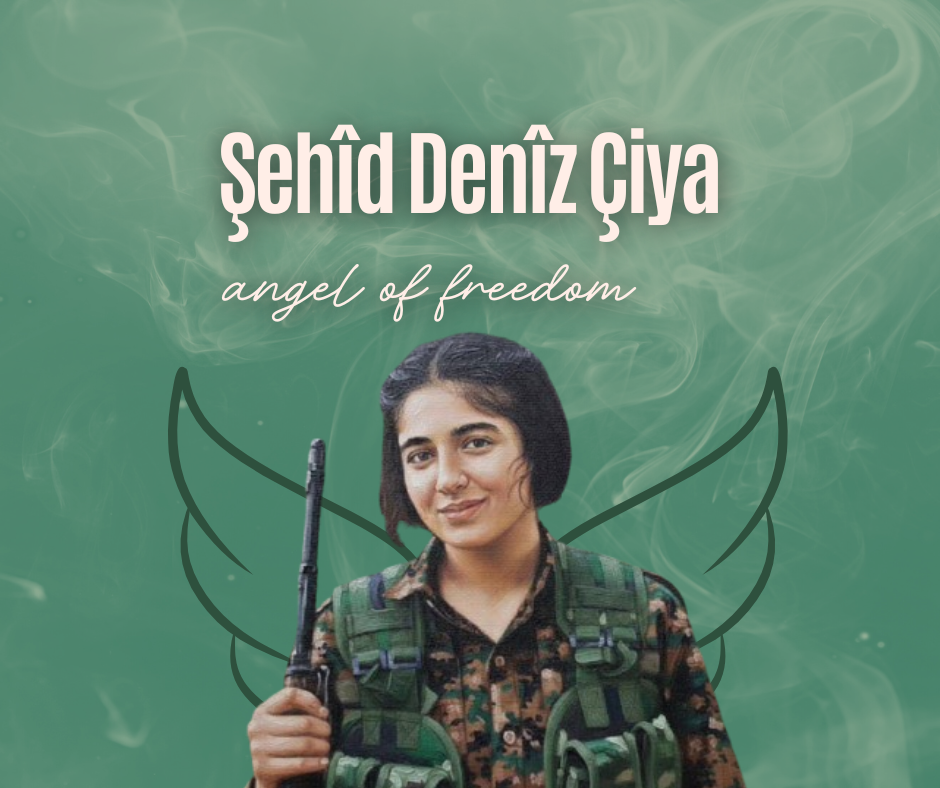
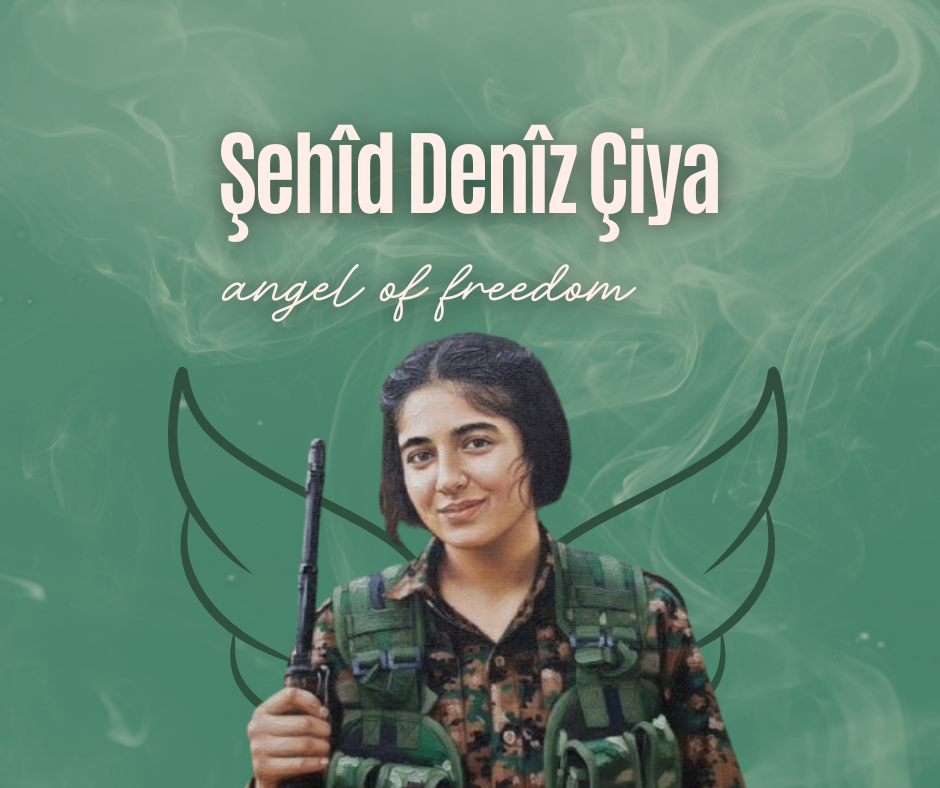
  • She is an angel of freedom: Şehîd Denîz Çiya

    She is an angel of freedom: Şehîd Denîz Çiya

    Şehîd Denîz Çiya was a young woman from Afrîn who fought in the resistance of Sheikh Maqsoud and Ashrafieh. For three days, she alone defended a building against hundreds of heavily armoured jihadists. After killing 53 of them, she was thrown from the building, and a video desecrating her body was circulated. In response, the society of Rojava shared images of her flying away from the building as an angel. In this statement, Sozdar Avesta, KCK Executive Council Member, evaluated the brave actions of Şehîd Denîz and its meaning for women all over the world.

    She is an angel of freedom. She is a goddess. I honor her with respect and gratitude. It wasn’t just this comrade who was thrown down; it was the conscience of humanity. There is nothing more to say about this; no words can describe it. This is a message [from the jihadists] for all women who want freedom, and it should make women around the world afraid.

    For freedom-seekers, it is a message of revenge and a warning to women not to raise their heads against the “Casteist Killer”* system. The “Casteist Killer” portrays the history in this way: “I am the casteist killer I came about in this way. In heaven there is God, on earth there is the state, and I am the ruler, and you are under my command”. The Casteist Killer wants to impose this philosophy everywhere. But this doesn’t demonstrate the system’s strength; it demonstrates its fear. What succeeded there [in Sheikh Maqsoud] was the spirit of the free woman, the dignity of the Kurdish people, and the dignity of the people of Kurdistan and all the people and women of the world. Everyone should know that this dignified comrade is the goddess of freedom for all women.

    Saddam Hussein did not succeed in hanging Leyla Qasim. In 1974, we saw Saddam Hussein hang women to intimidate them. In the resistance of Sheikh Maqsoud and Ashrafieh, another Leyla Qasim emerged. In Iran, they tried to protect themselves from collapse by executing Şîrîn Elemhûlî, but today millions of Şîrîn Elemhûlîs are on the streets. This has been proven thousands of times. Neither murdering women like Seve, Pakize, and Fatma nor vanguards of the freedom struggle like Sara, Rojbîn, Leyla, and Evîn will stop us. The more they insist on these practices, the more determined we will be in our struggle.

    ISIS is responsible for this. ISIS is seeking revenge. This is why the people of Kurdistan, the women of North and East Syria, and all the women of Syria should be aware of the following: According to al-Jolani’s constitution, women will be nothing more than servants and slaves. In the March 10 contract, he didn’t give them any space. He took revenge on those women who are fighting back. They say to us: ” You are opening the eyes of women, giving them knowledge and willpower.” They are taking revenge. We saw the women of Arab society. We saw Minbic. We saw what they did to women working in democratic institutions. We saw Derazor.

    This mentality is widespread and oppressive. But this does not show their strength; on the contrary, it shows how small and weak they are. In Kurdish, there is a saying, “Bê çare ne,” which means “they are helpless.” This is what they show. They want to strengthen our fear in this way. But they should know this very well. They will never be an obstacle to women’s freedom. This mentality has oppressed women for thousands of years. Women have formed organizations with thoughts and a philosophy; they have become a force of protection.

    All women must take responsibility for the situation in Aleppo and strengthen their defense. They must strengthen their legitimate defense, organization, and unity. They must become politically active. They must learn how to defend themselves. No being can exist without defense. In Sheikh Maqsoud and Ashrafieh, they defended themselves and their people. They only had individual light weapons. To defend their people, they chose dignified resistance. This is why women need to learn self-defense. Not just in North and East Syria—women all over the world need self-defense. From Venezuela to Ukraine to Palestine. Who has been harmed in all these wars? Women. Millions of women have been massacred. This is why Rêber Apo developed these thoughts and philosophy. This is why they want to take revenge on us. The Kurdistan Women’s Freedom Movement plays the vanguard role in ideology, system, organization, strength, and so on. This is why they attack us so brutally; they want to oppress us. But they will never succeed. The outcome is resistance and rebellion. History has proven this.

    *In the new “Manifesto of peace and democratic society”, Rêber Apo describes men who organized themselves to impose oppression on society as the “Casteist Killer”.

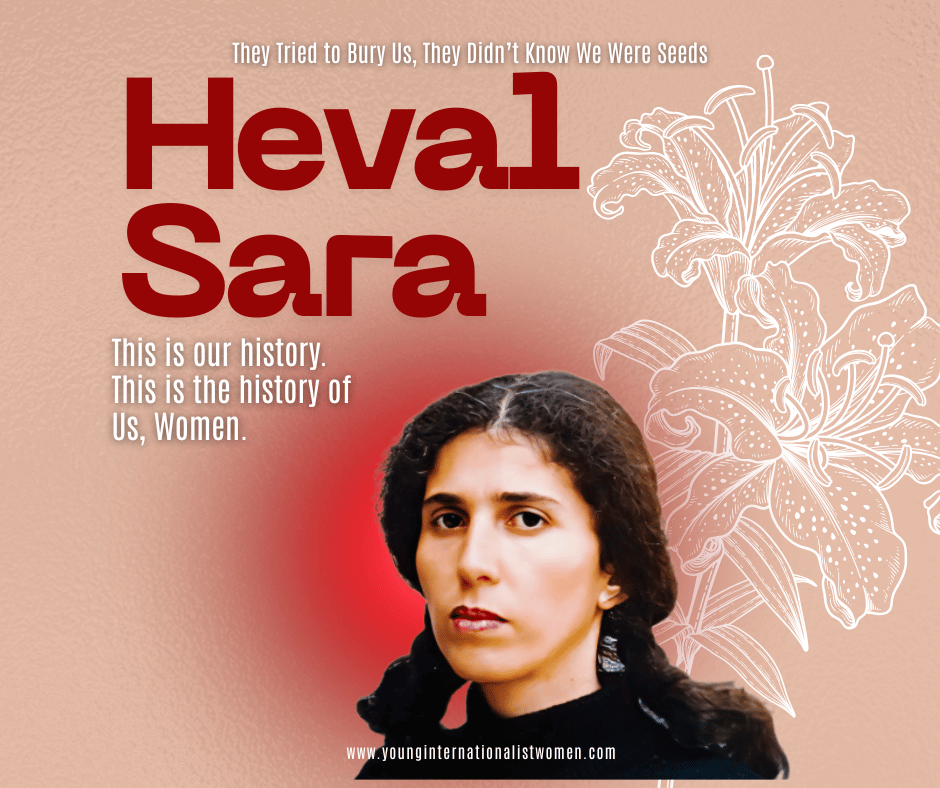
  • Heval Sara is the spirit of life, love and struggle.

    Heval Sara is the spirit of life, love and struggle.

    Thirteen years ago, on 9 January 2013, the world stopped in Paris. Sakine Cansiz (known as heval Sara) was assassinated. She and her comrades Fidan Doğan (Rojbin) and Leyla Şaylemez (Ronahi) fell as martyrs following an attack — because they were women, because they were revolutionaries, because they were bearers of values, because they were free, beautiful and fighting.

    These were three political femicides, but despite overwhelming evidence, the defendants were not brought to trial.

    On 23 December 2022, three years ago, in the same way, at the same time, again in the French capital, Emine Kara (known as heval Evîn, one of the leaders of the Kurdish women’s movement) and two other comrades, Mir Perwer and Abdurrahman Kizil, were martyred.

    After 10 years, this was a clear signal from the enemies of the movement to break hope and silence the struggle for a free society, with the vanguardship of women.

    Sakine represents the resistance of her people: faced with the denial of their existence, language, culture and life, she imagines the resurrection of society. And she begins to ask herself, ‘Where to start, how to achieve freedom?’

    Heval Sara’s whole life has been a struggle, as she herself writes in her autobiography.

    She was born in 1958 in Dersim in winter, into a Kurdish Alevi family. In Dersim, before her birth, the Turkish state killed, massacred and displaced thousands of Kurds who rebelled against assimilation, so much so that the rivers were stained red with blood.

    As a young woman, she understood what it meant to be a woman in her social reality: she chose to break with the system and not to adapt to compromise. She chose to create life, to be revolutionary.

    Her search for a just existence never stopped. First she joined Turkish socialist left-wing groups, then she met the Apoist movement. She began organising in the 1970s, under difficult conditions, in secret, against the ferocity of the Turkish state and against the prejudices of the time, which saw women as destined to be mothers and wives.

    Present since the first congress of the Kurdistan Workers’ Party on 27 November 1978 in the village of Fis, in Amed, she was one of the first female comrades and paved the way for millions of others.

    Her courage gave rise to the movement of free Kurdish women.

    Her soul is wise. Her determination, her humanity and her questions have inspired and continue to inspire.

    Sakine was arrested in May 1979, along with many other comrades. Despite being tortured, she did not once say a single word to the enemy. During her 11 years in prison, faced with atrocious physical and psychological attacks, severe torture, oppression and betrayal, she resisted with her head held high.

    One day, the highest-ranking prison official asked her:

    ‘What is your name?’

    ‘Sakine.’

    ‘Are you Turkish or Kurdish?’

    ‘I am Kurdish.’

    He slapped her and asked again: ‘Are you Turkish or Kurdish?’

    Sakine replied: ‘I am above all a revolutionary. In the revolution, origin is not so important, but I am Kurdish. If I were Turkish, I would certainly admit it.’

    This was the fighting spirit she propagated.

    She organised all the women in the women’s sections around her, led hunger strikes, and spread hope and ideas to those around her.

    She always tried to find solutions to problems. The slogan she carried with her, ‘Surrender leads to betrayal, resistance leads to victory,’ showed that the only possible way to confront fascism was through rebellion and organisation.

    After years of imprisonment, she travelled to Damascus, Syria, to attend the academies of Reber Apo (Abdullah Ocalan). She was really surprised when she saw her picture in Reber Apo’s room: this was an expression of Reber Apo’s respect towards her struggle and determination.

    She then spent several years in the mountains. Here she travelled from mountain to mountain, climbing peaks and crossing rivers. She became a strong and tireless guerrilla fighter, who never stopped thinking, questioning, committing herself and taking responsibility.

    In her own words: “Strength is often misjudged. For example, strength means to start something new in life, to create something from nothing and make life more beautiful. Strength means to write poetry in the mountains. Strength means seeing and hearing the water. Even living with the beauty of nature is strength.”

    For her, life, struggle, and love are inseparable from one another; in fact, she states, ‘I wanted to love in the struggle. I wanted to love as I fought.’

    A life other than a revolutionary one was unthinkable for her. The struggle she fought was for the liberation of women. And as she herself states: ‘Liberation knows no borders but means a constant search, a continuous aspiration to beauty.’

    Heval Sara sowed the first seeds, now it is up to us to continue sowing and reaping the fruits. What does Sara teach us? Which aspects of her personality can inspire us? How can we embody her beauty?

    These questions, especially today, can accompany us and lead us to reflect.

    During the attack in Paris, the goal was to kill courageous women who were fighting for freedom. But the spirit of these three women will never fade. Martyrs never die.

    We can follow in their steps through our daily actions aimed at the building of a just and communal life.

    Sara Rojbin Ronahi

    Jin jiyan azadi.

    Woman, life, freedom

  • Letter for the 25th of November

    Letter for the 25th of November

    Rêber Apo’s thoughts on women’s liberation

    “Society is not a single-layered class structure but a multi-layered, historical, gender-based battlefield. Humanity’s first and greatest problem is the counter-revolution that began with the enslavement of women and has targeted the sociality formed around women. The domestic violence, femicides and patriarchal oppression experienced today are all contemporary reflections of this historical attack. The caste-like structure that attacked women’s sociality and communalism later transformed into the assembly of gods in Mesopotamia, then into Sumerian priests, and from there into pharaohs and kings, making patriarchal oppression over society continuous.

    Today, the woman is the most valuable raw material of capitalism. Her body is marketed, her personality is turned into an object of marketing. Even her spirit has been invaded—invaded by men. Woman lives with the dagger of bondage that patriarchal mentality has driven into her back. The male-dominated social hierarchy created by thousands of years of civilizational struggle produces hierarchy, violence and conflict. The state-based male civilization has taken away women’s language, production, bodies, and then the entire society. Without seeing this reality, no step toward freedom can be taken.

    The problems imposed on women by the male-dominated system must be understood and resolved. Considering femicides, domestic violence, violence against women, discrimination and exploitation, the level of enslavement is far deeper than imagined. Woman has been completely degraded. Her reality has been distorted. The well-known anklets women wear as ornaments, the nose rings—these are all signs and traces of slavery passed down from history to today. In capitalist modernity, women’s bondage has been further deepened; the system has turned women into objects of decoration and marketing. To break free from this systematized enslavement and attain liberation, deep reflection and organization are needed.

    No movement for social freedom that does not place women’s freedom at its center can be a real revolution. I find current male-female relations horrifying. We addressed relations by placing women’s freedom at the center. A large part of our work consists of women’s work. Resolving the relationships and contradictions between men and women is important. We have thoroughly analyzed male domination, which blocks women’s freedom and enslaves women in every way. We developed a sociology of freedom. It is clear that being a woman is difficult and liberation is not easy, but women must dare. They must take the lead in removing the dagger of male domination embedded in humanity’s back and in building an equal, free and democratic life.”

  • us, women – Ulrike Meinhof

    us, women – Ulrike Meinhof

    Jumping into the Unknown

    West Berlin, May 14, 1970, 9:45 a.m. Ulrike Meinhof is sitting in the reading room of the German Central Institute for German Issues. The political prisoner Andreas Baader enters, handcuffed and accompanied by two guards. For 75 minutes, he will speak about a book project with journalist Ulrike Meinhof. They read magazines and take notes. At around 11 am, three armed comrades storm the institute shouting «Hands up or we`ll shoot». Shots are fired from both sides. Andreas Baader and Ulrike Meinhof and everybody else who took part in the action jump out of a window at 1,5 m height and run to an Alfa Romeo waiting at the corner. The Red Army Fraction is born. Decades later, we will find out that Ulrike Meinhof jumped spontaneously. She was supposed to stay behind and report on the action later, without having to go underground herself.

    What drives a successful journalist and mother to abandon her entire life in an instant?

    Or maybe: what could have kept her from jumping? There was no other option. Where would she even have returned to? She had filled pages with relentless critiques on imperialist war-mongering, the half-hearted confrontation with Germany’s genocidal past and the twofold exploitation of the woman as a worker and a mother. And yet she remained part of it; still an isolated mother, still an exploited worker, still part of the murderous system.

    There was no other way, what she had endured until now became unbearable. She saw cops shooting, she saw her friends jumping.

    In this moment, with this jump, she gave a promise to herself; a promise she could not have broken easily without betraying her values. And even though she certainly could not have known what expected her, she dared to jump into the unkown. She woke herself up to stay alive. This one jump forward was not just about leaving something behind. May 14, 1970 was not only the day Andreas Baader was freed, not only the birth of RAF. This jump was cutting with the system to open everyone’s eyes.

    Lets jump back. West Germany, October 7, 1934. Ulrike Meinhof is born in Oldenburg. She was a child during the first world war. Through her texts we see how deeply she disapproved the war Germany had waged and the fact that life just continued while Nazis were still doing the same jobs, only in different clothes.

    She grew up during the Second World War and lived her youth in the post-war period. The whole German nation was crushed about having lost:Both about having lost the war and about having lost so much of its humanity that a fascist extermination system could emerge. She was way too small during the war, she herself has certainly not caused any injustice directly related to the extermination of millions of people. But fascist ideology permeates society — if you do not defend yourself against it, you will be shaped by it. Her own father was a NSDAP1 member and even if they did not spend a lot of time together, that must have been frightening. The indifference of this time was overwhelming and the unwillingness to end German fascism or at least to confront it was paralyzing. But she did not see herself as separate from history. German fascism did not come overnight. Still, the majorty of the society just accepted it. The German society had seen the posters that read «Jew, die» and still continued to vote for Hitler.

    In the post-war period, Ulrike started doing political works to dismantle the war machine. She was connected to the peoples. She went to Jordan2 for a boot camp, wrote for the people of Iran, spoke up for the people of Vietnam. For her, her generation had a direct responsibility. She insisted that her generation is innocent of genocide, of course, but cannot remain content with that.

    She carried a heaviness within her. Our past is weighing heavily on our shoulders and fascism is threatening to take away the air we breathe. Ulrike Meinhof writes at a time Kiesinger3 was the German chancellor. He pushed law changes, so NS-criminals who were his long time party comrades, would not be judged in court. This heaviness and suffering drove her to act, based on a feeling of injustice and on a simple rational thought: what do we need right now?

    Ulrike Meinhof had two small daughters. Being a mother meant a lot to her. She strongly rejected authoritarian education and took her daughters out of state school. She talked about what it meant to be a single mother. Her articles on the situation of working women and mothers are scientifically sound and well researched. She understood the situation of women and fought for them in many ways, writing a lot and giving lectures. When women were unaware of their situation, it made her really angry.

    She did not act without considering her own reality or becoming blind to her own situation. When she sent her children to Sicily so that they would not have to live with their father, it was a difficult decision for her. She struggled with herself, but considered the need to take radical steps to be greater than her family’s happiness. It was certainly difficult for her children, and therefore for her too, because she loved them. Being a single mother and working in politics is difficult, incredibly difficult, she says.

    “So the problem for all women working in politics, myself included, is that on the one hand they do socially necessary work, their heads are full of the right ideas, they may even be able to talk, write, and agitate effectively, but on the other hand they sit there with their children just as helplessly as all other women.”

    She was the leader of a campaign that fought against the situation of children in orphanages in the 1960s. She was particularly moved by the situation of young women. In her writings, we see the situation of women through her eyes. These orphanages were not homes for these young women, but prisons. Raising children and working, working politically, is incredibly difficult. She looks at her own children and all the children in the world and turns her anger into revenge. She has never seen her own life as a mother separate from the global situation of all mothers and women .

    “If you like, this is the central oppression of women, that their private lives are contrasted with some kind of political life. On the other hand, one could say that if political work has nothing to do with private life, it is not right, because it is not sustainable in the long term.”

    She saw it as her responsibility to act. As Ulrike Meinhof said, one day they will ask about Mr. Strauss4 just as we now ask our parents about Hitler. We are continuing on her path. When future generations ask about Trump, Merz, Erdoğan, Netanyahu, what will we have to say in response?

    When future generations ask us what we did to continue the work of these revolutionaries – what do we do to avenge the death of Ulrike Meinhof, who was tortured and murdered by the German state precisely because she remained resistant, and especially because she was a woman?

    What will we say then? Will we jump?

    “Protest is when I say that I don’t like this or that. Resistance is when I make sure that what I don’t like no longer happens. Protest is when I say I’m not going along with it anymore. Resistance is when I make sure that everyone else stops going along with it too.”

    1. Hitler’s far-right political party in Germany, active between 1920 and 1945. ↩︎
    2. In 1970, the PLO (Palestinian Liberation Organization) organized itself in Jordan. The PLO fought in the Jordanian Civil War with allied revolutionary groups against the Jordanian regime. At that time, the Middle East was generally an internationalist center. Many revolutionaries from all over the world learned from the movements overthere. ↩︎
    3. Kurt Georg Kiesinger was a German politician. He was an active member of the Nazi Party from 1933 and became deputy director of the Reich’s external radio propaganda, being in this capacity one of the main censors of the regime. ↩︎
    4. A German conservative politician who was a Wehrmacht soldier during the Second World War and who participated in several massacres against jews. ↩︎
  • The free woman is the fundament of democratic socialism

    The free woman is the fundament of democratic socialism

    To all the young women all over the world,

    we start this perspective by commemorating the great effort that many women throughout our history gave in order for us to live and continue the struggle for women’s liberation, freedom and social justice. The women who became martyr in the struggle for women’s liberation dedicated their life to the socialist cause, to the building of a free and equal society for us all. We dedicate this perspective on socialism to them.

    First of all, this month marks the beginning of the international conspiracy against Rêber Apo. The 9th of October of twenty-seven years ago Rêber Apo, under enormous political pressure, was forced to leave Syria heading to Europe in order to avoid a military conflict in the region and protect the Kurdish Freedom Movement. In this way began his long journey across Greece, Italy and Russia searching for a political alliance within the international community. At the end on the 15th of February 1999 was captured by the secret services of Israel and Britain in Kenya and was brought in isolation into the prison island of Imrali, in Turkey. This attack, in which all the imperialist powers took part, especially aimed the defeat of the resistance of the people of Middle East against imperialism and the destruction of the struggle for a new world system based on the paradigm of women’s liberation, social ecology and democracy. Since that moment until now Israel, United States, Turkey, Britain and all the other members of the NATO, continued their brutal attempts to stop the resistance of the Kurdish people and of all the other peoples that live in the region. Especially now with the genocide in Palestine, the attacks against Lebanon, the war in Iran and the violent conflict and crisis in Syria and in Kurdistan, we bring again the attention on Rêber Apo and on the necessity of his physical liberation in order to stop the war and bring a political solution in Middle East.

    We address this perspective to you.

    It might be that while you read this perspective you are in the car listening to music, and every song is talking about women as a trophy or property, as an object to own together with money and weapons, or maybe they refer to us just as sexual desires meant to fill up the deep void that the system creates in human beings. Or maybe you are walking on the street going to meet some friends or going to school and in every corner there is an advertisement with a woman, most of the times half naked, pictured together with some material for cleaning the house, food, cars or any kind of goods that can be sold in the market. Or let’s say that you are going back home after a nice night together with your friends and in every step you take you hope to not find any man on the way, so that you won’t have to change the side of the street and walk faster, or take the house keys in your hand ready to use them to defend yourself and hold the breath until he is gone. Or maybe while you read this perspective you are not in any of these situations, but you know that you will go through them tomorrow, because this is the reality in which we as women are forced to live in everyday by the sexist capitalist system. So, we address this perspective to you, whether you are in school or at the university, whether you are starting new to study economics, social sciences or perhaps physics. Or, on the other hand, you might have had no other choice than to work. Maybe as a waitress in a restaurant, or as a care worker, or in the logistic sector of some company that most of the times is not intended to give you any job security but leaves you in precarious and uncertain conditions. Not to mention the salary, that if you are lucky it is enough to get you at the end of the month and, anyway, cannot repay the value of your time and work. Whether you live in a family that expects you to have a man by your side and wants to convince you that you just have to wait for the right one, or to make an effort to love a man or to change who you are for a man. Whatever your situation is, we address this perspective to all of you; to all the young women that are resisting and fighting, in many different ways, for the liberation of us all.

    At this point in your life, you may ask yourself, “Who will I become?” or perhaps more importantly, “What will I do?”. We want to try to give an answer to these questions in the next few lines.

    About democratic socialism.

    We as young women find ourselves in a dramatic situation. In front of the systemic attacks that we receive everyday, for us the solution can be nothing less than the construction of a new world system that radically rejects sexist rules and focuses on the freedom of the whole society based on woman’s freedom. We call this system a socialist system. When we refer to socialism here we don’t refer to a system of domination or to some utopian reality; this has nothing to do with the reality of democratic socialism developed by Rêber Apo. Democratic socialism is not a construct imposed on society, nor is it a concept alienated from the social nature of human beings. It is a concrete way of life based on freedom, communality, and diversity. It stands in contrast to capitalism, which is based on exploitation and violence, and also to liberalism, which focuses on individual and false freedom. In the socialist understanding, both the individual and the collective play a role in the society and are in organic balance with each other. Democratic socialism is of central importance, especially for us as young women, because it is interwoven within our history and is part of our identities.

    How did we get to today?

    In the mid-19th century, the work of Karl Marx and Friedrich Engels led to the development of a new form of socialism called scientific socialism. They understood the reality of society in the present and in history in terms of the struggle between classes with opposing interests, namely the proletariat and the bourgeoisie. The basis of these analyses and the goals of social construction is the material situation of society, in particular the relations of production. These insights were groundbreaking and led to historically significant steps. But the solution based on Marx’s ideas only scratched the surface but was never able to really solve the fundamental social contradiction. In fact, the oppression of women was neither destroyed nor resolved in real socialism. Yes, the situation of women improved, abortion rights were introduced, but even the Russian revolutionaries themselves were aware of the problem: relations between men and women were so sexist that they even undermined class consciousness. At that time, class consciousness was seen as the basis for the common struggle; history has shown to us that this does not touch the root of the problem.
    As Alexandra Kollontai analyzed herself:

    “The interests of the working class demand that new, comradely, and equal relationships be established between members of the working class, male and female workers. [For example] Prostitution prevents this. A man who has bought a woman’s affection can never see her as a ‘comrade’. It follows that prostitution destroys the development and growth of solidarity among members of the working class, and therefore the new communist morality can only condemn prostitution.”1

    Alexandra Kollontai, like also Clara Zetkin and Rosa Luxemburg, took important steps. They came closer to the truth of socialism. Beyond the contradiction of classes, they understood the relationship between genders as the main problem. In doing so, they always encountered resistance from the dominant male mentality. Before the October Revolution in Russia, women were seen as appendages to men, not as revolutionary personalities, even though they were the driving force of the society. For example, the strike waged by women demanding for bread on International Women’s Day in 1917 in Saint Petersburg was ultimately the starting point of the October Revolution, and it was women who became the driving force of the Russian Revolution.

    The Feminist Movements of the 1960s and 1970s also made significant steps on the topic. Already at that time they were able to spread in the society that “the personal is political”. Everything we experience, every injustice, every oppression and violence is not just something individual, or occasional, but the same injustice is experienced by thousands of young women every day.

    How do we build democratic socialism?

    Rêber Apo writes in his letter for the 8th of March 2025:

    “Unless the rape culture is overcome, social reality cannot be revealed in the fields of philosophy, science, aesthetics, ethics and religion. As Marxism proves, the achievement of socialism will not be possible unless the new era destroys the male-dominated culture deeply embedded in society. Socialism can be achieved through women’s liberation. One cannot be a socialist without women’s freedom. There can be no socialism. One cannot go for socialism without democracy.”2

    The understandings that Rêber Apo reached now days prove that what many revolutionary women tried to explain in the past centuries was right. The social problem that Alexandra Kollontai brought to light a century ago about prostitution have reached today all levels and fields of society in the most brutal form. It is especially in the era of digital media and financial capitalism that the young women are hyper-aesthetized and hyper-sexualized the most. We are constantly led to conform to or respond to aesthetic and social canons that are based on sexism and rape culture. For this reason the first step to build democratic socialism is to build in ourselves a strong socialist personality that is able to create around itself an organized society through the building of communes, cooperatives, councils and any other form of autonomous organization that firmly reject sexism. Insisting on the moral values of humanity is at the same time creating a democratic and socialist culture and as young women, we carry these values particularly strongly within us. These principles though, do not only apply to us women, in fact, they are also of fundamental importance for men. As Rêber Apo says “A man can only call himself a socialist if he is able to live properly with women.”3

    Commune is society, and sociability is socialism.

    We have mentioned the commune as a form of organization of the society, but it is not just this; it plays a central role in the building of democratic socialism. In the early 1800s archaeological researches made new discoveries about the origin of democratic societies and systems. At that time Marx and Engels were not yet able to take these discoveries into account in their theories about socialism and communism. They themselves recognized this.4 It was only later that the insights gained from the Paris Commune of 1871 and archaeological research shedding light on communal life at the time of natural society made it clear to humanity that the commune is a central guideline for understanding democratic history. Towards the end of his life, Marx also understood this. The commune is the most natural and fundamental form of organization of the democratic socialist society. It can exist as a youth commune, or even a children commune, a women neighborhood commune or a student commune. Inside of the commune, each part of the society can become political and so develop the ability to organize autonomously, take decision and develop a system of life based on the necessities of each group or community. Also, it can develop the capacity to defend itself from physical, psychological, economical and any kind of attacks that are waged by the state and the system.

    The revolutionary must move among the masses like a fish in water.” – Mao Ze-Dong

    Now it comes to us, what can we do?

    Also for us young women the commune is the first structure in which we can organize ourselves. That is, in which we can become ourselves, discover our identity, build sisterhood, support each other, create the fundament for a democratic socialist system and most importantly, defend ourselves. If we want to become socialists and build up the way out of the actual world crisis, we have to think ourselves as a unity, as a commune; that means, we have to see ourselves as one. When a woman does not believe in herself, or does not see herself has valuable, it is also our responsibility to build this trust together with her. When a woman struggles with the question of whether she has enough strength or courage to be a revolutionary, we have to see ourselves in that question and together overcome any fear or obstacle. When a woman is harassed by a man on the street, or faces domestic violence in the family or in her workplace, we must feel this violence as it was against our own self. Now we know that when they attack one of us, they attack the identity of the woman as a whole and so they attack all of us. And so, the next time that we will hear a sexist song on the radio or we will see an advertisement on the street that portrays us as an object to sell on the market, we can find in ourselves and in our sisters the strength to reject this culture, reject this system; change the radio station, destroy that advertisement and organize together with other young women our own system, our own self defense. The world is changing, the youth is rising up everywhere and we are not alone anymore, there is a whole organization of women that has our backs and is ready to fight side by side with us for the building of a free society based on democratic socialism.

    The next time that we will ask “Who will I become?” we have all the tools that are necessary to give the right answer to ourselves. As Fred Hampton, revolutionary leader of the Black Panther Party, once said: “if you are scared of socialism then you are scared of yourself”.

    1Alexandra Kollontai, Letter to the Working Youth, 1922.

    2Rêber Apo, Letter on March 8, 2025.

    3Rêber Apo, Letter to the Jineolojî Academy.

    4Engels, in the first footnote to the 1888 edition of the Communist Manifesto, 30 years after its first publication.

  • Rêber Apo’s thoughts on Women’s Liberation

    Rêber Apo’s thoughts on Women’s Liberation

    The first of these operations was to make women the original house slave. This process involved terrible intimidation, oppression, rape, insults, and massacres. The role assigned to women was to reproduce the “offspring” required by the property-based system. Dynastic rule was very much bound to offspring. In this system, women were rendered absolute property. They were the property of and an honor for their owner to such a degree that they were not even allowed to show their faces to others.

    Second, women were turned into sex objects. In all of nature, sexuality is related to reproduction. Its purpose is the continuation of life. Especially with the captivity of women, and most predominantly during the process of civilization, the main role given to men was sex and the distorted development and explosion of sexual desire. While the mating season for animals is quite limited (often once a year), men strive to extend it to a twenty-four-hour-a-day preoccupation in humans. Nowadays, women have been turned into an instrument of sex and sexual desire and a locus where the exercise of power is constantly tested on. The separation between homes, whether private or public (the brothel), has become pointless, because every place is considered a home and brothel, and each woman a private and public woman.

    Third, women have been reduced to unpaid and unreciprocated laborers. They are made to do all the heavy work. Their reward is being obliged to become a little more “inadequate.” They have been humiliated so much that they have actually accepted their extreme “inadequacy” in comparison to men. They therefore wholeheartedly embrace the male hand and male domination.

    Fourth, women have been turned into the most refined of commodities. Marx calls money “the queen of commodities.” In fact, under capitalism, it is women who play this role. In the capitalist system the real queen of commodities is the woman. There is not a single relationship in which women are not on offer nor an area where they are not used. One difference is that although every commodity has an accepted remuneration, the remuneration women receive consists of nothing more than complete disrespect, including that brazen lack of shame called “love” and the nonsense that a “mother’s work can never be repaid.”

    Taken from the book Sociology of Freedom

Young Internationalist Women