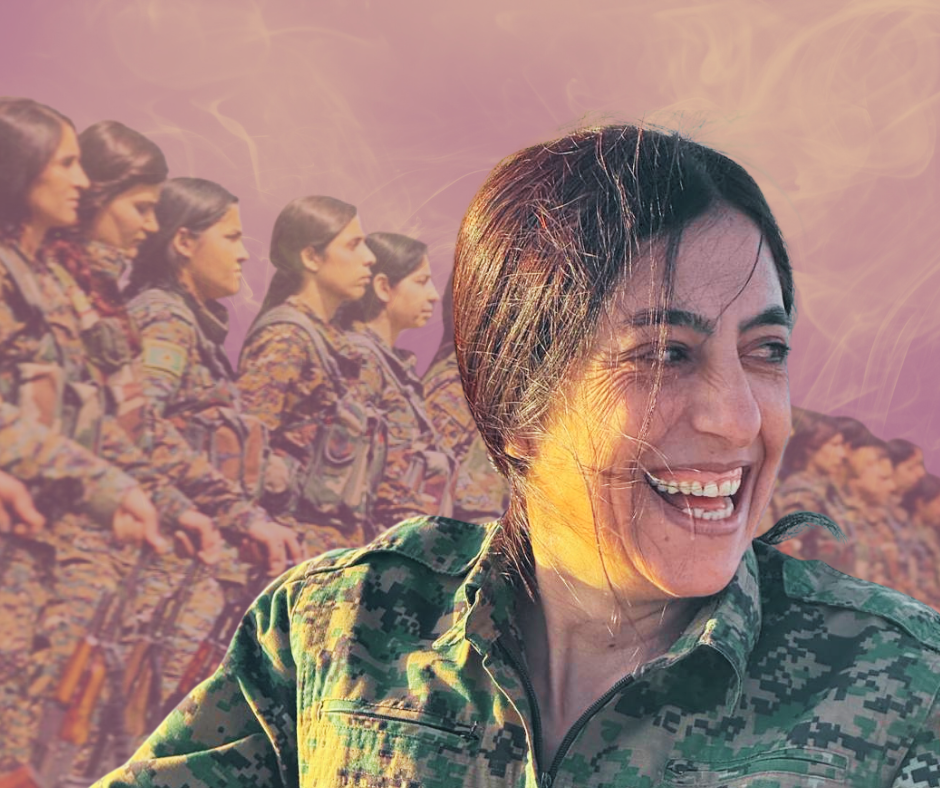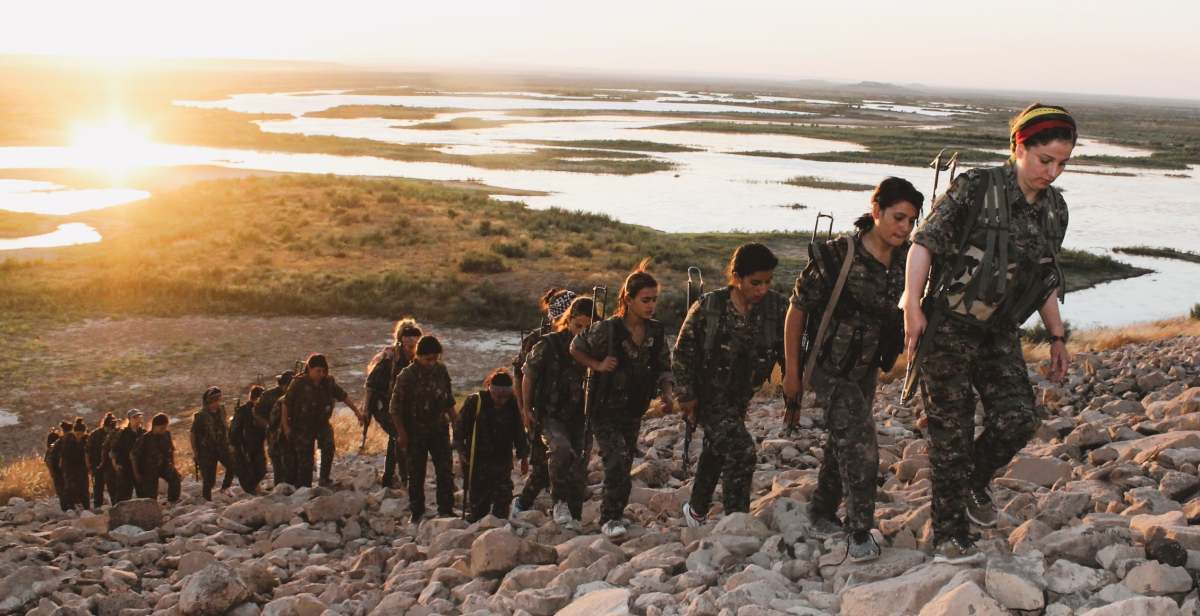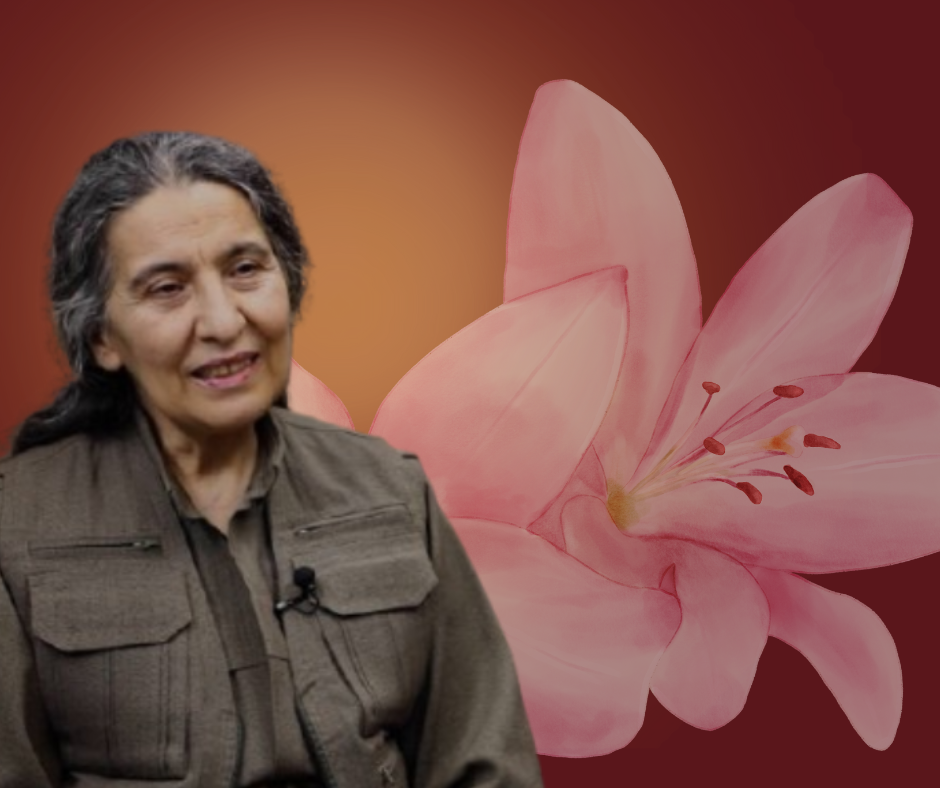
Ayten Dersîm, member of the PAJK Coordination, said that the decision of the people of Rojava to defend themselves against the attacks was very important, stating: ‘Today, we must unite and strengthen the YPJ fighters who are leading our glorious struggle and the resistance of the people of Rojava.’
Ayten Dersim joined the Special Program on Medya Haber TV and evaluated the attacks on Rojava and the struggle of women.
Dersim stated that the attacks by ISIS-HTS gangs on Rojava are an international plan and said that through ISIS, they want to redesign the Middle East. Despite all the attacks, the Kurdish people have shown a great resistance, and this is very important; the struggle must be intensified on all fronts. PAJK Coordination Member Ayten Dersim emphasized that today’s attacks on the Kurdish people in Rojava will spread to all peoples tomorrow, and stated that the Kurdish people, especially women, will not bow their heads in the face of these barbaric attacks.
The assessments of PAJK Coordination Member Ayten Dersim are as follows:
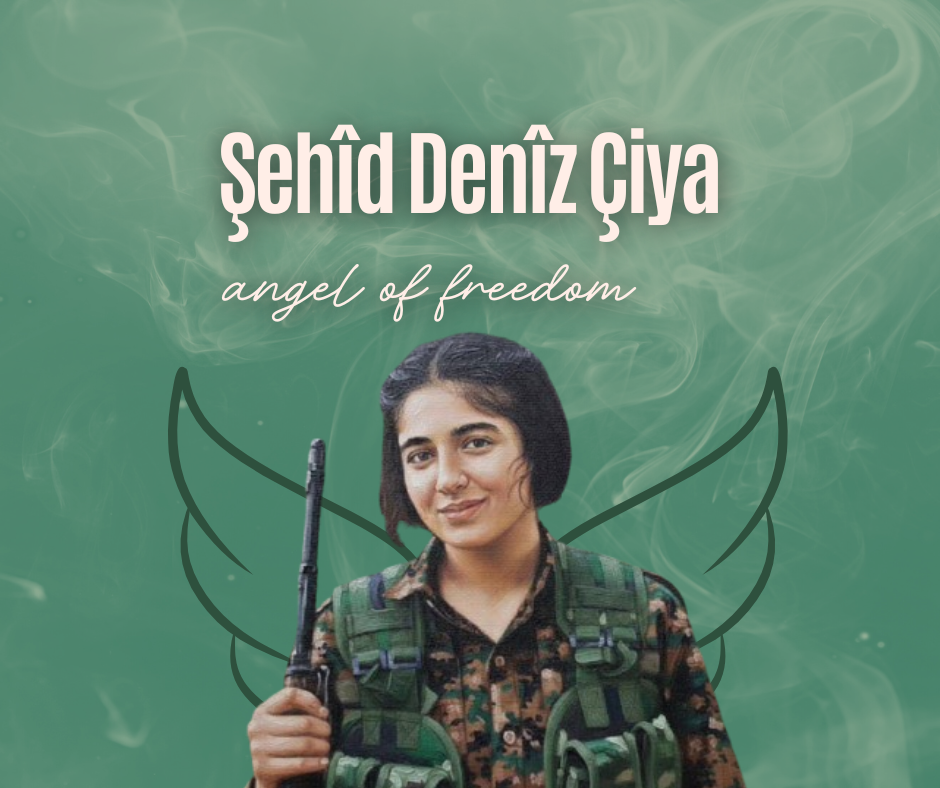
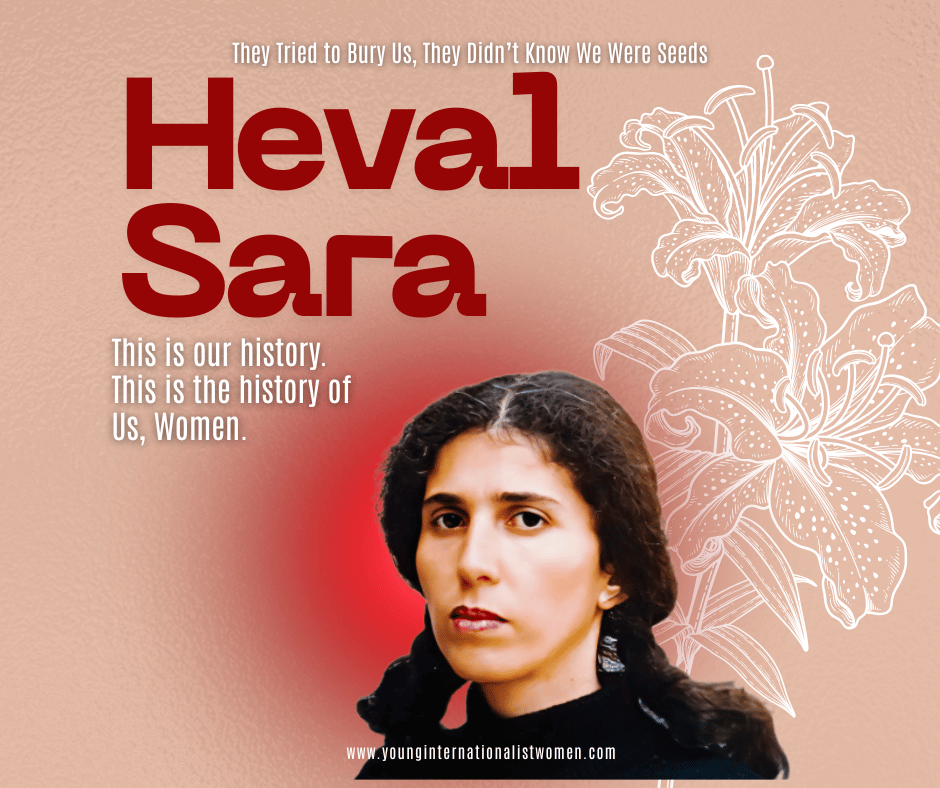
First, on the occasion of the anniversary of the martyrdom of comrade Sara, comrade Rojbin, and comrade Ronahi, we renew our promise to remain committed to their struggle and to bring this struggle for freedom to victory until the end. Because comrade Sara was one of the pioneers of the Free Women’s Movement. In that sense, her line, her stance, is defining our struggle.
The brutality of this year is both against society and against women. This is not just a situation of this year; it has been this way for years. The dominant forces, the ruling powers, the fascist forces fear women the most and commit brutality against them. Because a woman’s presence in society, her autonomy, and her social role are one of the most important defining factors. In that sense, we have also valued this in our programs throughout all previous years. But with this year’s arrival, we must grasp the reality of Rojava: in previous years, they fought against the brutality of ISIS, developed their own self-defense forces, and truly protected and liberated the peoples of the Middle East, humanity, and women. This is a resistance that spread across the world; it became a stance and a resistance from which women around the world draw inspiration. We as women saw this too; that is, if you organize yourself and resist, the circles around you also grow.
Because a reality like this truly exists; the moral and political society has not been destroyed. It has been suppressed and denied. All women are waiting for a spark. They are waiting for a movement and for organization. Because of such a difficult situation, there is a lack of pioneers. This gave rise to the YPJ forces and fighters. The YPJ fighters and forces were the children of that people. They saw the danger. In other words, it was truly offered to the world, because it was also developed within the framework of a prepared plan and advanced against ISIS. If we organize ourselves against this, advance our self-defense and our struggle, we can protect ourselves and protect the peoples. And they demonstrated this in the years-long struggle. That is to say, all women, all peoples saw their own existence in their own place. This is proof of that; remaining silent, being passive, bowing one’s head to the existing order, is non-existence, it is slavery.
HUMANITY FOUND ITS LIBERATION IN THE STRUGGLE OF ROJAVA
When we look from history to the present, this issue has existed at different levels. Now the Freedom Movement, the Free Women’s Movement, has overturned this. That is to say, the people and women are not slaves.
In other words, they were enslaved, kept uninformed, kept without will, and this situation was institutionalized. Now, this situation is neither a destiny nor something that has to be. It was created, it was imposed, and these things can be overcome. This was achieved through the results of years of struggle. That is, this resistance, this defense, protected the people from this brutality and from ISIS, and thousands were martyred. Now, this is a very honorable struggle. Humanity, in this sense, has taken its place around this struggle. Humanity, in this sense, saw its own salvation there. Humanity, in this sense, saw this: if you organize yourself, you exist; if you don’t, you don’t.
Now, since the beginning of the year, this monster has changed its name. Someone has come to its head; it’s called a government, it’s called a presidency, but its foundation is the same. Its methods of imposition are the same; the monster is the same. This is also a concept prepared by the international powers. In other words, they are the practical implementation and preparations for the redesign of the Middle East. Now, when you think normally, you ask: the Kurdish people and Kurdistan, the people of Northeast Syria—because many peoples live there—are a mosaic of peoples and women. From every language, every sect, every belief. Because this is not a problem for the peoples, it is not a problem for women either. Notice, in Kobanî there is also a women’s resistance, a resistance for the protection of women, but a woman from Latin America also sees herself here. In other words, borders are not an obstacle, faith is not an obstacle, religion is not an obstacle, language is not an obstacle. Those who make this an obstacle are states or ruling powers, the hegemons.
In that sense, they see this people as a threat to themselves, They see this people as a threat and to destroy them, they unleash all their brutality, and this is not humane, not moral, not in accordance with international norms, and not in accordance with the law. The reality is that there are peoples who defend themselves, govern themselves by their own will, do no harm to any other people, and especially stand up against attacks on women. Because ISIS truly murdered women in a very brutal way. They captured them in a very brutal way and wanted to use them in a very brutal way. Now the YPJ forces have liberated them from there. The mosaic of such peoples, without harming any nation and freely governing itself with its own free will, attacking no region and coveting none, is one of the most innocent peoples of the Middle East: the Kurds. It also has no such problems or issues with women.
HTS FORCES COLLECTIVE SLAVERY AND SUBMISSION ON THE PEOPLES
This is the struggle for human existence. Now they brought in HTS, its name was changed, its form was changed, but all the gangster forces, which were formerly Al-Nusra, became ISIS, hundreds of different names have emerged, all of them with the common goal of eliminating peoples with free will and continuing their brutality against the masses. The world has seen this; to repeat it again and again may not be appropriate. We are talking about ISIS in a different suit; its foundation and ideology are the same, imposing slavery, subjugation, and willlessness on peoples and using violence. Now, this is the demand of the Kurdish people and Kurdistan. Because we, as a people and as women, have come to this conclusion: no matter who the people are, any problem can be solved very easily through dialogue, negotiation, and discussion.
The leadership itself is waging this struggle in its entirety. It says that problems are not solved through war. But they did not come to this. According to what we have observed and seen, without coming to any general agreement, dialogue, or discussion, they put all their militant forces into action. There is a force that has been organizing and preparing this from the beginning, and is once again attacking with brutality. In opposition to this, there is a conspiracy that international hegemonic powers have been carrying out against the Kurdish people for years. Because they do not accept the existence of the Kurdish people and Kurdistan, they have particularly seen the struggle of women within the Kurdish people, which is the most dynamic, as a threat to themselves. Now, attacks are being launched against this. When these attacks occurred, without a doubt, all our peoples, our women, launched a great struggle. This is a dignified stance. It is a stance that unites the struggle of the peoples.
This stance of the peoples who do not want to turn a blind eye to this genocide is a stance for freedom. This must undoubtedly continue. Just as our YPJ forces and our heroic people fought and liberated the people from ISIS, today there is the same determination. Otherwise, ISIS will go everywhere. With its genocide, it will wipe everything out. Now its name is being changed, but its foundation is not being changed, its ideology is not being changed.
We saw it in the press. Honorable YPJ fighters were fighting from balconies, throwing people from buildings. This is not a situation to be taken lightly. This is an act of revenge. This is an expression of the understanding of ‘we destroyed her, now we will destroy you too.’ In that sense, the struggle of the YPJ forces is honorable, as it was yesterday, so it is today. They are not fighting just for themselves, but for all the peoples and women who live in that geography. They are determined in this struggle, and we see this clearly. The world must not remain silent in the face of this. That is, without silence, it must be stopped in a very organized manner.
THE PHILOSOPHY OF WOMAN, LIFE, FREEDOM IS THE PHILOSOPHY OF A DIGNIFIED LIFE
On the other hand, there is Iran and Rojhilat. Before this Jin, Jiazyan, Azadî uprising, there was the philosophy. The Jin, Jiyan, Azadî philosophy is the philosophy of freedom, the philosophy of self-being, the philosophy of a dignified life and struggle. Now, this philosophy must exist in all of humanity, and especially among women. Just because it is absent from the world’s hegemonic powers doesn’t mean it shouldn’t exist. This resistance lasted for days. Even today, with the people and women in the lead, an injustice is being committed there, and dignity is being trampled.
This is being imposed. Now these peoples also have their dignity, their consciousness, and their own truth. This is not harmed by any force or borders. In response to this, the internet was shut down for days, the electricity was cut. The full extent is not known, but it is said that fifty-nine to sixty thousand people were killed, women were killed. While they are still alive, their internal organs are removed and they are killed in the hospital.
EVEN IF WE DIE, THOUSANDS ARE BORN AGAIN
The world’s humanity must not remain silent in the face of the massacres in Rojava. It’s truly difficult to even say this. Corpses are just thrown on top of each other like this, as you said, the bodies of women are desecrated, and the families are extorted for the cost of the bullets. What kind of humanity can ignore this? Now, just because it’s not being reported in the press, does that mean it doesn’t exist? This is a regime that keeps what happens in its own country closed off from the entire world’s public, committing genocide, suppressing it, and trying to perpetuate its regime. This is impossible. Can the people accept that which was so brutally murdered, suppressed by a ruling and oppressive regime, denied, banned? It is not possible. The will of the people has a truth like this: Yes, you can suppress it for a time, you can deny it for a time, but in the long run, this cannot be sustained. We see this from the struggle of the peoples of our geography, from the struggle of women around the world.
Today, there are so many women’s advocates, women’s movements, and women’s institutions and organizations in the world. For years, they too have been subjected to torture, imprisonment, oppression, and exclusion. This is not just for this era, but to eliminate them? To wipe them out? It’s not possible. The people always renew themselves, grow, and advance. This is a process of socialization. Especially women; when a woman achieves her own existence of freedom and builds her consciousness, no force can stop her. Of course, for the ruling and hegemonic powers, this is a threat. Because their existence is based on silencing society and women. It has been this way for thousands of years. But when a woman sees this truth, becomes aware, and understands this: You cannot eliminate our existence by killing us. Even if we die once, thousands are born.
THE PEOPLE OF ROJAVA CLEARLY DEMONSTRATED THAT THEY WILL NOT SURRENDER THEIR HONOUR TO ANYONE
This is a reality seen in the struggle for women’s freedom. We see this in Kurdistan, too, in the Middle East. This is truly how it is. The Taliban came to power; were the women there silenced? They brought ISIS; were women silenced? Today, they brought Hay’at Tahrir al-Sham; were women silenced? For centuries, has the rule of power spread across the world, silencing the people? Silencing women? Eradicating the organization of women? In that sense, we as women must see all of this. Today, we must unite and become strong around the YPJ fighters of their glorious struggle, who truly bring us to life, awaken us anew, and show that one can live with freedom. We must rally around the resistance of the people of Rojava. Because they have now made their decision.
We do not surrender our existence to anyone. We defend our humanity and our dignity with our existence, and we will continue to do so. At the end of this, there is death, there is killing, but we do not surrender our dignity. In the statements that have been issued, the people have clearly communicated their decision. This is very important. Because the people themselves make the decision about their own existence. It’s always said, “This is pressure,” “That is pressure.” All of this is the product of a special war. These are dirty propagandas that want to stop the people’s resistance. These are the propaganda efforts that want to blacken the resistance of the YPJ fighters. We saw them yesterday, and we see them today. We built ourselves through this struggle. In that sense, the issue is not just about one or two regimes.
Today, there are very interesting examples in many countries. Rêber Apo always says this: Today a man says, “I love you,” and tomorrow he tears you to pieces and puts you in a bag. This is shown on television. She is thrown from a multi-story building. They are thrown into trash bags. In other words, as women, our liberation is to build our own free life. Building our own free life is awareness. It is self-organization. It is constantly defending ourselves. This will not eliminate today’s and tomorrow’s power structures. When an attack is made, we must know how to defend ourselves. This is barbarism. Women are being killed one by one.
Rêbertî has, until now, most accurately defined all genocides, denials, and barbarisms. No one has dared to, or even put a name to it, but he named it: casic killer. And for women, he gave us the perspective of how to be collectively aware and how to organize ourselves. He made this perspective tangible. These are not just ordinary people. This is a system. This is a regime. This is an organized and hegemonic force. It has always built itself on the killing of individuals, the people, and women. Rêber Apo has taken this to the clan level. By breaking the clan, it brought the conflict between the commune and the state to the forefront and has carried it to the present day.
We return to history, evaluate all the processes one by one, read, research, and see today’s expression from there.
WE DO NOT SURRENDER TO ARMED FORCE
Self-defense is not a phenomenon that belongs only to today. Hegemonic or ruling powers, powers that fear their own nonexistence, portray self-defense as a purely military organization of the present day. Those who want to spread fear among societies, those who carry out the policy of a special war on societies, say, “Be unprotected; I am protecting you.” We look at our history. What was done to us in our history is being done today under different names. Even in the stage of the first human societies’ formation, people always developed a self-defense reflex against oppression, violence, and attacks. Rêber Apo says this also exists in nature. When we look at ecology, we see this. There are flowers, there are trees. Living existence is not just society; it is nature itself. We too are part of this nature, a part of it, with it.
Even if nature itself has a means of self-defense, when someone breaks its branch or crushes its flower, it reacts. We are human. Humans have their own consciousness, their own will, their own physicality, their own existence. This is not a natural exaltation; it is an expression of its own social existence. We define this as a second nature. How then can there be no self-defense? Self-defense is the idea of protecting one’s existence under any circumstances; it is a protective reflex, a struggle for protection, protective consciousness, and organization. Wherever we are, we defend ourselves when we are attacked with weapons. We do not surrender to armed force. But we know that guns are no salvation for humanity. Despite this, we will not turn away from guns, nor will we surrender. This applies to all peoples.
Why do states have armies? Why are there internal security systems, police? Then let us ask: Is this only against external forces? Humanity existed without states. Society existed without states. But it protected itself. This protection took turns, this protection took different forms. In the conditions of the Third World War being waged in the world today, where the Middle East is being redrawn, the will of the people is being destroyed, and very fierce attacks are being made on the struggle of women, how can we as women be without self-defense? Their hair has also been cut and exposed. The women of the world, who say “I am a woman, I am the people, I am human,” must see this brutality. They are being killed, their heads are being cut off, and this is called ISIS, this is called a government. They cut the hair of the YPJ fighters and pose with it. Yes, women have not remained silent in the face of this. But we must not be complacent. This is a dignified stance, but it is not enough.
EVERY WOMAN MUST ESCALATE HER STRUGGLE
A woman has her hair, she has everything. If these things are being done to a woman, will we surrender? No. We must fight against this. We must protect our dignity. We must organize ourselves. We must make ourselves strong. In that sense, there is a serious awakening among the women of the world. But this awakening must become a strong will. It must become a strong organization. It must become a strong resistance. Everyone must magnify their struggle. Rêbertî has always educated us this way. If a woman is murdered, she knows it is her, it is you, it is us. A woman has such a feeling. A woman has such an awareness.
It is because of its sociality, because of its expansiveness, because of its softness, because of its sensitivity. It encompasses all of this. We will not forget her hair, we will not forget our warrior thrown from the building, nor will we forget this brutal massacre being committed against us. Not today, not tomorrow, nor any other day. Today’s brutality has once again shaken humanity. It has once again spurred the struggle. In that sense, today, as we did yesterday, we are confident in our resistance. Our struggle defines our resistance. Our struggle defines our organization. Our organization defines our unity. All of these are necessities for us to be a society.
The necessities of being human. The necessities of being women. For this reason, under these conditions, self-defense has never disappeared. These are the politics of a special war that present self-defense as something passive, liberal, and submissive to everything. In digital media, it is propagated among institutions in this way. But this is more than that. They impose slavery on you with various arguments. In that sense, we must protect ourselves. We must strengthen our defense. But at the same time, we must also expand our defense.
The statement of Leader Apo, who says, “I define this era as the era of women’s heroism,” is truly a approach of leadership that recognizes and defines the struggle we are living. We are the Kurdish Free Women’s Movement, but it has grown. It has surpassed the Kurds and Kurdistan and become global. We must bring our struggle to a clear identity as movements of women worldwide. In the resistance we wage, in the struggle we wage, in the organization we build, in the unity we build, all of this is a heroic saga. Heroism is always a concept imposed on us, or one that is told and retold about us. You go, you become a martyr, and you become a hero. Of course, that is also heroism. But true heroism is to bring it to life, to bring it to the struggle, and to grow it with perseverance, determination, and a constant claim.
Today, our struggle has truly reached such a level. Today, women from Asia, from Latin America, from many European countries are joining this struggle. It’s not about the size. It’s not about the quantity; it’s about the quality. Freedom is about quality. All of this is struggle, it is heroism. Not surrendering, not bowing their heads, not being passive, educating themselves with historical sociology, broadening their horizons with jineology, connecting with their history, and bringing that history to the present day—this is such a struggle. What is being imposed on society? “Forget your history,” they say, “we are writing history today.” But the history they write is denial, erasure, liberalism, and a history that fragments and sells the human body. History is not just this. Today is not just this either.
If we look at history through the lens of the rulers, this is what we see. But there is also an unwritten history. The struggle of women, the struggle of peoples brings this unwritten history to light. That is why Jineology was developed. To advance the history of women, which until now has been suppressed. There has always been a women’s struggle throughout history, but this struggle was either erased or distorted. For this reason, the resistance in history must be awakened, read correctly today, and properly shaped for the future. Heroism is being redefined. Through the woman, it takes on a new meaning. For this, thousands of bodies were sacrificed, thousands of heroes were sacrificed, thousands of epics were written, and thousands of resistances were demonstrated. This is why the people unite, and this is why they are inspired.
WE ARE A MOVEMENT THAT BOWS TO NO ONE
This resistance has always been lived. Against brutality, a rebellious stance has always been taken. This rebellion is not just a momentary rage; it is a constant, ongoing struggle. Undoubtedly, paying the price is heroism. In our struggle’s history, there has always been this understanding: Death is afraid of us, we are not afraid of death. Because we know what death is. We are such a fighting unity. This struggle has passed through us and reached other women. Our mothers also say, “We are greater than death.” This has a history and a legacy. That is what they are talking about. Because we are their children. We are not a movement that bows its head. We are the movement that has struggled for years and has learned the meaning of freedom through this struggle. This movement is broad. It includes all women’s movements. Because it is the collective expression of the entire existing women’s struggle.
Today, the woman being murdered in Europe is us. Regardless of identity, religion, or race, we have transcended these boundaries. Universalization is our perspective. We have reached this consciousness through struggle. Many women are being murdered in Europe. The Middle East wants to be redrawn through ISIS. They want to force submission through genocide. This will spread to other peoples as well. This regime is not afraid of this. That is why our struggle is the voice of all women. Wherever a woman is murdered, we must carry on her struggle. The struggle is not just a march, not just a statement. Of course, these are part of it, but as it grows, so do its tools, its needs, and its scope. For this reason, we must not leave anyone unaccountable. Our account must be the stopping of this violence. This massacre must be stopped. We must do this by intensifying our struggle.
Rêber Apo has always told us this, and we see the basis for it in all of his statements. It says: As you grow, you must overcome the dangers against you, not always through opposition, but by strengthening your own dynamics. This general perspective expresses this; self-defense was necessary yesterday, and it is necessary today. As long as humanity exists, as long as peoples exist, as long as they do not build their own democratic system, their own free and vibrant life, self-defense will always be necessary. This is a guarantee. And there is also an internal truth. We are not just talking about an external enemy. There is also a deep-seated sexism within. There is domestic violence. There is a disregard for and denial of a woman’s will. There is a system that makes a woman work like a slave at home, allows her to work outside, and thus gives the impression that she has economic freedom, but in reality, seeks to keep her from her own freedom. This is all a distraction, a deception. Because a woman’s consciousness is the consciousness of society. We are not separate from society.
In the midst of this, there is also nationalism, religiosity, chauvinism, and sexism. This is all the capitalist modernity. It’s a system that distances society from its very foundation. We see how different people are being turned into monsters. Can one now call these ISIS members human? These are creatures that have fallen from humanity. They are not human. So what will we do against this savagery? We will protect our humanity. We will magnify our humanity. Because this is not humanity. Humanity is not killing one another, it is not denial, it is not annihilation. This is why the truth of our struggle comes to light once again. Self-defense, along with organization, is the quest for the entire world to collectively find its security. It is the power to defend oneself against attacks from both within and without.
There is a years-long struggle and a movement that has become global. For example, women in Latin America see this struggle and organize themselves. No one goes and organizes them. Didn’t the women in Afghanistan call on the YPJ during the first attack? They say, “Come protect us, come educate us.” Today in Sweida, there are massacres; when the people there call on the YPJ and YPG, is it not so? Wasn’t it the Alawites who called? We are not a single voice. We are not an abstract voice. We have reached this point with great sacrifices and great hardships. Fascism, hegemonic forces, state power, and male violence have stood against us. That is why I said at the beginning: There are women, you cannot destroy them. There is a people, you cannot destroy them. But how are they? They exist with their identity, with their dignity, with their culture, with their thought, with their morality, with their geography and their nature.
When women see this, they look at their country, their family, their surroundings, their schools, their states. They see the daily violence. They see the violence that is not seen, the subtle, normalized violence. They see that her will is not recognized. All of this is violence. Violence is not only direct force. When they see this, they ask: How do these women struggle? With what consciousness, with what idea, with what argument? The answer is clear: Through organization. Two women must come together. Five women must come together. We see on television, three men attacking one woman. They attack with a knife, with a gun. If a woman organizes herself, becomes aware, the reflexes and willpower of an organized and aware woman are very strong. These are not normal situations.
Why are you crying? Answer. Because physical violence is being committed against you, they are going to kill you. Why do you expose yourself to death? Is this why our anger grows? Because women must be vigilant. They must not be fooled by every sweet word from a man. Today he says, “I love you,” tomorrow he kills you. Then let’s define love correctly. Love is the recognition of each other’s will. It is the recognition of humanity. Love is not power. Violence is multifaceted. No woman should consider this worthy of herself. There is no woman who accepts it. But there are women who are not organized and cannot show their power.
There are so many women’s movements, institutions, and organizations in the world; women are not alone. There is a science for this: Jineology. Everyone must turn to the science of women and understand this. Why is such a science necessary? Because without questioning, the right answer cannot be found.
WOMEN ARE UNITED IN THEIR WILL TO OVERCOME VIOLENCE AND SEXISM
We are not prisoners of this world. We live in this world, but we are not its prisoners. We can build our own world. Every day we struggle, and the more we struggle, the more our morale grows, our belief grows, and our success grows. This idea has always existed in the history of our struggle and has now become global. It is not a single idea, it is a structure. The Democratic Confederation of Women of the World is one example of this. Two or three years ago in Berlin, hundreds of women came together and became an inspiration for all women. Every woman came with her own color, her own idea, and her own struggles. A shared consciousness emerged. A shared consciousness of women and the basis for a joint struggle emerged.
The more women unite, the more they have the will to overcome violence and sexism. If hundreds come together, tomorrow thousands will. Wherever they are, let them organize. In Kurdistan, where soldiers, police, and gendarmerie attack women, the people reacted and defended themselves. This is self-defense. No one can easily talk trash or lay a hand on them. Therefore, the people must respond more sensitively and organized with a self-defense consciousness. A soldier may be on duty, but this does not give them permission to lay a hand on a woman or a child. This violence seeks to reproduce itself. We too must resist this and grow our existence and dignity through struggle. We will not surrender. Our struggle has proven this. Today, if HTS gangs attack, if the Iranian regime kills people, this will not stand. The people do not forget the things that have brought them to life.
The history of the Kurdish people has not been written by the will of the peoples. The history of women has not been written in the language of women either. But there are thousands of female writers. We must write about the things we have lived through. Because Rêber Apo said: The history of slavery has been written, the history of freedom is waiting to be written. This is the result of this struggle. That is why this century is the century of female heroism. Writing this heroism is the task of women. All women who struggle are heroes. Women who resist in “Woman, Life, Freedom” are heroes. All women who do not bow their heads to oppression are heroes. With unity of spirit, unity of thought, and unity of struggle, we must everywhere strengthen each other’s struggle.
Rêbertî defined this century as the century of women’s struggle and said that the world will be saved by women. Yesterday we believed in this, and today we still believe. Let us believe in our struggle and make our struggle great. Let us believe in our organization and make our organization great. Let us work on consciousness. Women are kept uninformed. Let us work on sociology, on jineology, on philosophy. Let us make the twenty-first century the century of the women’s struggle. Let us liberate the world with women’s leadership.
JIN, JIYAN, AZADÎ
WOMEN, LIFE, FREEDOM