Author: Young Internationalist Women

  • Şehîd Hêlîn Murad schreibt über den Kommandant Agit als revolutionäre Persönlichkeit

    Şehîd Hêlîn Murad schreibt über den Kommandant Agit als revolutionäre Persönlichkeit

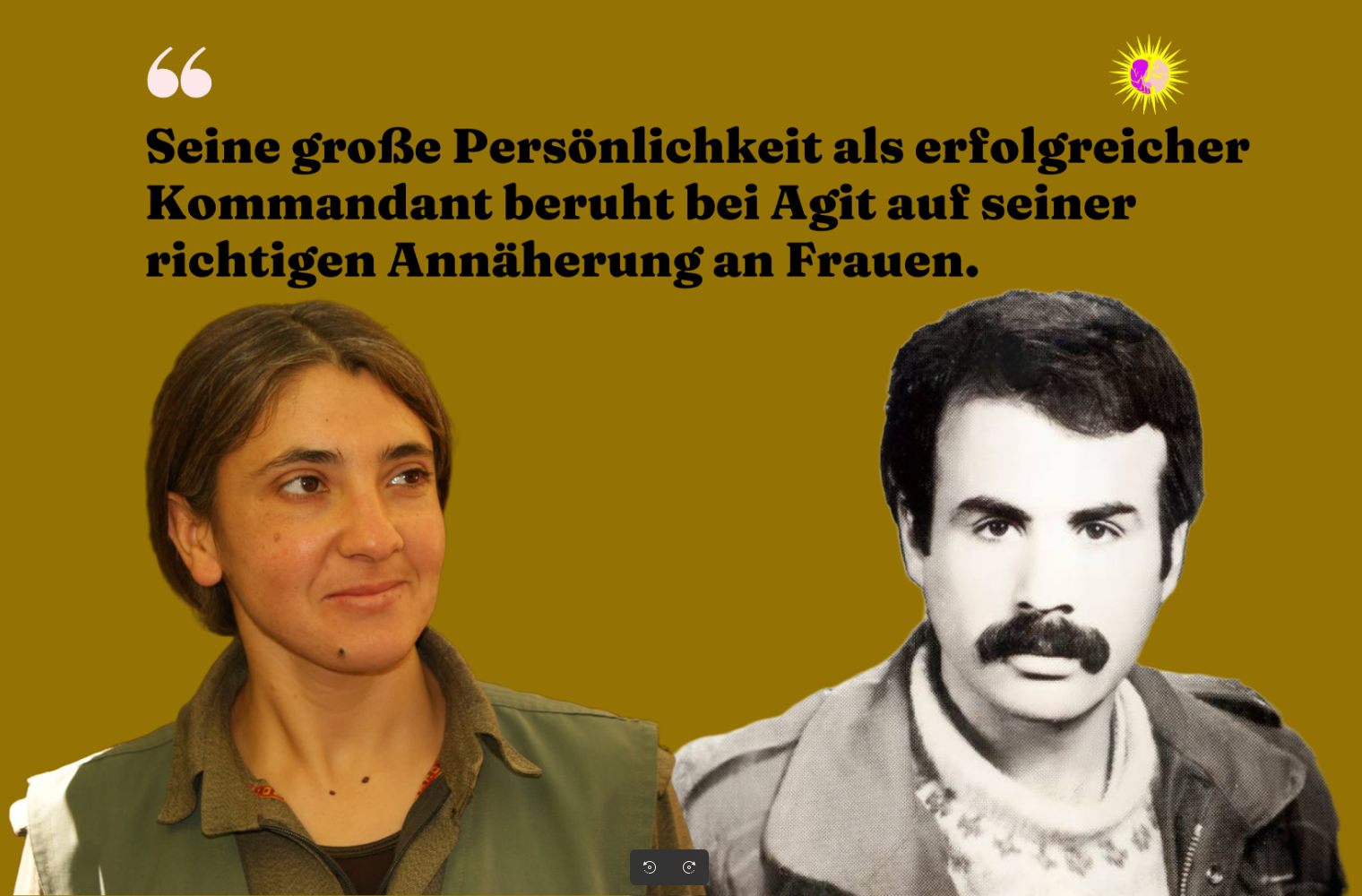
    Das ist ein Auszug aus einem Brief, den die Guerillakämpferin Şehîd Hêlîn Murad von den Bergen Kurdistans zu der Jineoloji sendete. In diesem Teil analysiert sie die revolutionären Persönlichkeiten von Männern und Frauen in der PKK und in der Geschichte. Am 15. August 1984 führte der Kommandant Agit die erste Aktion des bewaffneten Kampfes der PKK an. Den Grund seines Erfolges und seiner Vorreiterrolle verstehen wir besser, wenn wir uns seine Persönlichkeit und seine Annäherung an Frauen genauer anschauen.

    Revolutionäre Männer- und Frauenpersönlichkeiten

    Wenn wir von der Geschichte der Frau sprechen, müssen wir es in der Annäherung und in der Methode auch spüren lassen, dass es sich auch um die Geschichte von der Neuschaffung des Mannes handelt. In der Geschichte unserer Partei ist die Entstehung der freien Frau auch der Beginn der Entstehung des freien Mannes.

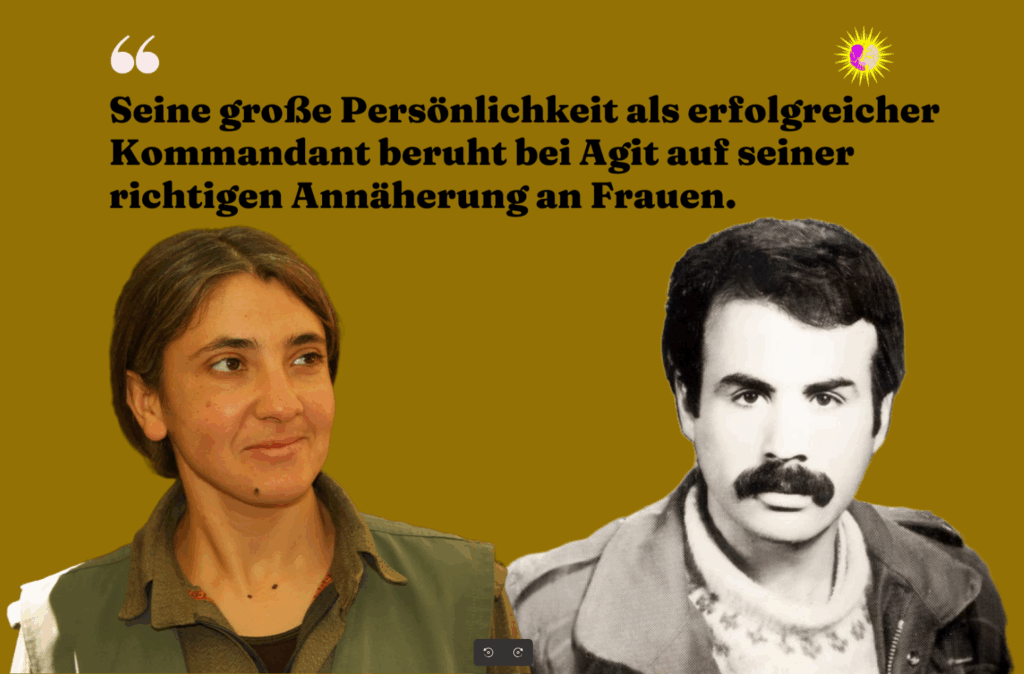
    Hierbei können auch viele Freunde aus der Geschichte unserer Partei als Beispiel aufgegriffen werden. Vor allem die Herangehensweise von Heval Agit (Mahsum Korkmaz) an Frauen ist ein Beispiel. Seine große Persönlichkeit als erfolgreicher Kommandant beruht bei Agit auf seiner richtigen Annäherung an Frauen. Die Praxis von Heval Agit in Botan (Region in Nordkurdistan), seine Beziehung zu und seine Zusammenarbeit mit den Freundinnen in seiner Einheit, hat viele Realitäten hervorgebracht. Es ist richtig, Heval Agit auf diese Weise hervorzuheben. Wenn wir in unserem gegenwärtigen Widerstand davon sprechen, wie erstickend die klassischen Ansätze der Kommandantur sind, dann hängt das damit zusammen, dass die klassischen männlichen Maßstäbe nicht überwunden werden konnten. Nur die männliche Persönlichkeit, die für die Überwindung der klassischen Maßstäbe kämpft und Respekt vor der Lebens- und Kampfeskraft der Frauen hat, kann im Krieg eine Linie des Erfolgs gewährleisten.

    Dass Heval Agit von Abdullah Öcalan als «Agitê Şêrîn» (Süßer Agit) bezeichnet wurde und ihm in Liedern so gedacht wird, hängt damit zusammen, dass er sich von klassischen männlichen Maßstäben entfernt und sich verändert hatte. Aus diesen Gründen denke ich, dass es sehr wichtig ist, die Persönlichkeit und Praxis von Agit in den Vorträgen zur Frauengeschichte zu thematisieren und sie zu recherchieren. Auch die Weisheit und Schlauheit von Heval Mazlum (Mazlum Doğan) ist ein Beispiel. Er hat sich der Frau bewusst, mit Wissen, Schönheit und Moral angenähert. Heval Mazlum war es, der Heval Agit mit der Partei in Kontakt gebracht hatte. Der gefallene Freund Şehîd Sari Ibrahim, der in der Einheit von Agit kämpfte, hatte ebenfalls eine bescheidene Persönlichkeit. Er sprach täglich über den Beginn der Praxis der Berge der damaligen Zeit und widmete der Freundinnen in dieser Zeit einen wichtigen Platz. Er sollte als eine gerechte und tapfere Männerpersönlichkeit erwähnt werden, welche die Arbeit und Mühen der Frauen respektierte.

    Es gibt viele männliche Freunde, die als Beispiele in der Frauengeschichte behandelt werden können. Wenn die Verbundenheit zur Frauenfreiheitslinie als grundlegender ideologischer Maßstab für die Männer erklärt wird, entsteht eine positive Grundlage. An dieser Stelle hat Heval Fikri Baygeldi als beispielloses Beispiel für seine Verbindung zur Ideologie der Frauenbefreiung sein Engagement für die Freiheit der Frauen an der Front der Männer zum Ausdruck gebracht. Sein Engagement für die Führungsrolle der Frauen in den Lektionen für die Freunde zu betonen wird diese positiven Grundlagen verbessern. Dadurch werden sie zu historischen Figuren.

    Auch die gemeinsame Leitungspraxis von Şehîd Besê und Şehîd Zeynel (Celal Barak) in Dersim 1994 ist ein Beispiel. Hier wurde der Geschlechterkampf auf ideologische Weise geführt und Heval Besê konnte bei Heval Zeynel wichtige Veränderungen bewirken. Wie ein richtiger Geschlechterkampf das Kampfpotenzial in einer Region steigern kann, lässt sich in der Persönlichkeit von Heval Besê erkennen. Es ist wichtig, Heval Besê im Unterricht für die Freunde als eine Frauenpersönlichkeit zu thematisieren, die die Freunde Zeynel und Ayhan transformierte. Die Größe des Freundes Zeynel zeigt sich hingegen in seinem Respekt für die Kommandantin Besê Anuş, die das Leben und den Krieg anführte. Es gibt viele solcher Beispiele. Wichtig ist es, dieses Erbe sichtbar zu machen.

    Kurz gesagt, wenn wir also Vorträge zur Geschichte der Frauen halten, müssen wir die Transformation des Mannes mehr in den Vordergrund rücken und die gesellschaftliche Ebene betonen. Die Fortschritte in der Persönlichkeit des Mannes müssen noch besser enthüllt und bewertet werden. Denn das ist der Erfolg des Widerstandes der freien Frauen. Wenn wir doch nur den gemeinsamen Kampf von Agit, Hawa, Ayşe und Azîme während des Krieges in Botan [in den 1980er Jahren] oder die Praxis von Besê und Zeynel in Dersim [in den 1990er Jahren] in einem Roman verschriftlichen könnten…

    Ein weiterer wichtiger Punkt ist es, das Erbe der Frauenrealität in der Gesellschaft Kurdistans in der Vergangenheit und Gegenwart zu thematisieren. Es liegen uns wichtige Fakten vor, die mit grosser Sorgfalt die Hinterlassenschaften der neolithischen Kultur darlegen können. Es ist ein Aufgabenbereich der Jineolojî, die Welt und unsere gesellschaftliche Realität auf diese Weise zu betrachten und kontinuierlich die Welt der Frau, ihre soziale Rolle und Mentalität sichtbar zu machen. Diesbezüglich müssen die Realitäten der Regionen, Stämme, Konfessionen, Glaubensrichtungen, in den Bergen und Städten verglichen und die Mutterkultur sichtbar gemacht werden. Wenn wir Persönlichkeitsanalysen machen, führt es zu größeren Erfolgen für die Persönlichkeits- und Bewusstseinsentwicklung, wenn die Frauen- und Männerrealität der jeweiligen Gesellschaftsstruktur mit einbezogen wird. Ausserdem ist es wichtig, die Realitäten des Mannes als Jäger, Händler und Liebhaber miteinander in Bezug zu setzen und zu interpretieren. Es ist wichtig, Vergewaltigungskultur und Faschismus als eine Realität der Männerherrschaftsmentalität zu definieren. In den letzten Jahren habe ich mich zudem mit der Realität der freien Frau in den Bergen, mit der Kämpferin und ihrer Geschichte, auseinandergesetzt und meine Gedanken vertieft. Hierbei habe ich einige wichtige Erkenntnisse gemacht. Ich habe gesehen, dass mutige, kämpfende Frauen nicht nur in Kurdistan, sondern überall, wo es starke neolithische Kultureinflüsse gab, präsent waren. Von Anatolien, der arabischen Welt bis nach Europa, wurde diese Epoche stark gelebt.

    Es war wichtig, die anatolische Mythologie von Artemis und Apollo zu sehen. Sie waren als Göttinnen-Götter der Verteidigung für ihre Pfeile bekannt. Artemis steht in Kontinuität der hurritischen Kultur und ist als Beschützerin der jungen Frauen und Bogenschützengöttin bekannt. Dass die Pfeile von Artemis aus Gold waren, zeigt, dass sie die neolithische Kultur repräsentiert und verteidigt. Sie und Apollon sind Zwillinge. Artemis hat bei mir das grösste Interesse geweckt. Apollos Pfeile sind silberfarben. Bekanntlich wurden Kupfer, Silber und Gold in der Technik und Technologie des Neolithikums verwendet.

    Auf der anderen Seite werden der Kriegsgott Ares und die Göttin Athena, die als Göttin von Athen bekannt ist und von Zeus erschaffen wurde, in der griechischen Mythologie durch Bronze- und Eisenpfeile symbolisiert. Mit anderen Worten, sie verteidigen die Zivilisationskultur und repräsentieren Krieg, Zerstörung und Plünderung. Diese Mythologien veranschaulichen die Unterscheidung zwischen der Kultur des Kampfes als Tapferkeit und Hingabe, sowie jener des Krieges für Zerstörung und Plünderung.

    Andererseits sind die Amazonenkämpferinnen mit Artemis verbunden. Es gibt sogar Erzählungen, die besagen, dass sie Artemis angebetet haben.

    Im Anatolien des 13. Jahrhunderts gab es unter der Bezeichnung „Bacılar“ (Schwestern) eine Frauenorganisierung, die neben ökonomischen Aktivitäten auch als Kämpferinnen ihre Städte verteidigten. Gegen die brutalen Angriffe der Mongolen haben sie die Städte verteidigt. Die Amazonen und kämpfenden Schwestern werden als gute Reiterinnen und geschickt mit Pfeil und Bogen umgehende Kämpferinnen bewertet. In Anatolien sind die Bacılar-Schwestern als turkmenische Frauen bekannt. Auch in der arabischen Welt wird über Frauen geschrieben, die als gute Pferde- und Kamelreiterinnen in Kriegen kämpften. In der islamischen Zeit setzte sich diese Kultur unter den Frauen fort, die der Tradition von Ahl al-Bayt angehörten. Frauen nahmen als Kriegerinnen am Krieg gegen die Tyrannei von Muawiya teil. Fatma, Ayşe und Zeynep sind einige dieser Frauen.

  • Şehîd Hêlîn Murat writes about Commander Agit, as a revolutionary personality

    Şehîd Hêlîn Murat writes about Commander Agit, as a revolutionary personality

    This is an extract from a letter that the woman guerilla Şehîd Hêlîn Murat addressed to Jineolojî from the mountains of Kurdistan. In this part, she analyzes revolutionary personalities of men and women inside of the PKK and in history. On August 15, 1984, Commander Agit led the first action of armed struggle of the PKK. The reason for his success and vanguardship can be better understood when we understand his personality and his approach towards women.

    Revolutionary men and women personalities

    When we speak of the history of woman, we must also deal with it and let it be felt in the approach and method that it is the history of the re-creation of man. In the history of our party, the emergence of the free woman is also the beginning of the emergence of the free man.

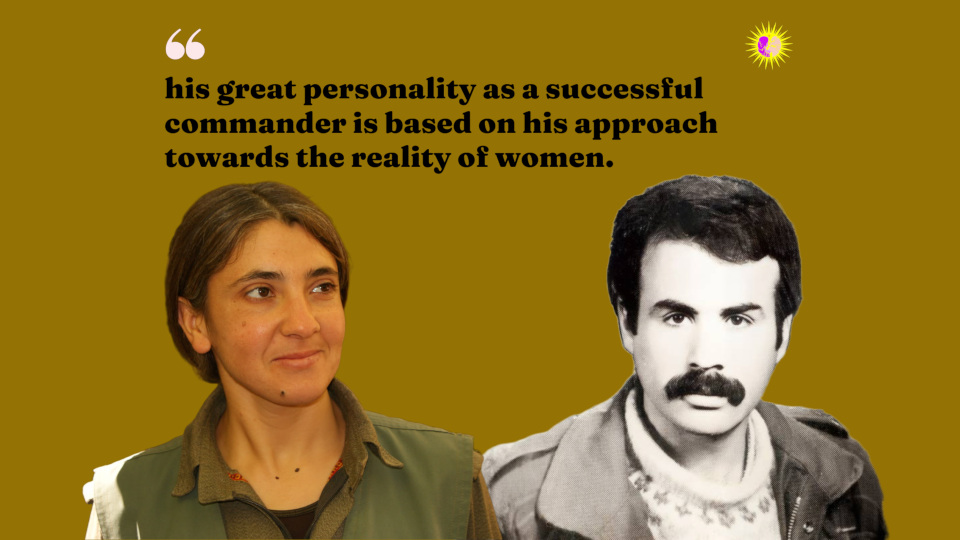
    Many friends from the history of our Party can also be taken up here. Especially the approach of Heval Agit (Mahsum Korkmaz) towards women is an example. In Heval Agit’s case, his great personality as a successful commander is based on his approach towards the reality of women. Heval Agit’s practice in Botan (region in Northern Kurdistan), his relationship with and cooperation with women friends in his unit, has produced many realities. It is right to highlight Heval Agit in this way. In our present resistance, when we talk about how suffocating the classical approaches of command are, this is related to the fact that the classical masculine standards could not be overcome. Only the masculine personality that fights to overcome the classical standards and has respect for women’s power to live and fight can ensure a line of success in war. The fact that Heval Agit was called “Egîdê Şêrîn” (Sweet Agit) by Abdullah Öcalan and that he is commemorated in this way in songs is related to the fact that he had moved away from classical male standards. In the educations on women’s history, I think it is very important to address and to research more about Agit’s personality and practice.

    The wisdom of Heval Mazlum (Mazlum Doğan) is also an example. He approached women consciously, with knowledge, beauty and morality. It was Heval Mazlum who had brought Heval Agit into contact with the movement. The fallen friend Şehîd Baranê Zer, who fought in Agit’s unit, also had a modest personality. In his memoirs, he gave space to the first experiences of women fighters. He should be mentioned as a just and brave male personality who respected the work and toil of women. When the attachment to the women’s freedom line is understood as the basic ideological benchmark for men, a positive foundation is created. For this, Heval Fikri Baygeldi is a historical figure who should always be emphasised in the educations for the friends. For, as a man, he exemplarily was connected to the ideology of women’s liberation and was associated with the vanguard of women. This is why these personalities are historical. The joint leadership practice of Şehîd Besê and Şehîd Zeynel (Celal Barak) in Dersim in 1994 is also an example. In these cases the gender struggle was conducted in an ideological way and the friend Besê was able to bring about important changes in the friend Zeynel. How a real gender struggle can increase the struggle potential in a region can be seen in Besê’s personality. It is important to address Besê as a female personality who transformed the friends Zeynel and Ayhan. The greatness of the friend Zeynel, on the other hand, is shown in his respect for the commander Besê, who played a leading role in life and war. There are many such examples. It is important to make this heritage visible. So when we give education on women’s liberation, we have to focus on the transformation of men. Because that is the success of the resistance of the free women. If only we could write down in a novel the joint struggle of Agit, Hawa, Ayşe and Azîme during the war in Botan [in the 1980s] or the practice of Besê and Zeynel in Dersim [in the 1990s].…

    Another important point is to address the legacy of women’s reality in the society of Kurdistan in the past and present. We have important facts that can present the legacy of the Neolithic culture with great care. It is a task of the Jineolojî to look at the world and our social reality in this way and to continuously make visible the world of women, their social role and mentality. In this regard, the realities of the tribes, denominations, faiths, in the mountains and cities must be compared and women’s culture made visible. When we do personality analysis, it leads to greater success for personality and consciousness development if the women’s and men’s realities of the respective social structure are included. It is also important to relate and deal with the realities of men as hunters, traders and lovers. It is important to define rape culture and fascism as a reality of the male domination mentality. In recent years, I have also been exploring the reality of the free woman in the mountains, the woman fighter and her history. In doing so, I have made some important realizations. I have seen that brave, fighting women were present not only in Kurdistan, but everywhere where there were strong Neolithic cultural influences. From Anatolia and the Arab world to Europe, this era was strongly lived. It was important to see that in the mythology of Anatolia, Artemis was as well known as Apollo as the goddess of defense with her bow and arrow. Artemis is in continuity with Hurrian culture and is known as the protector of young women and archer. The fact that Artemis’ arrows were made of gold shows that she represents and defends the Neolithic culture. She and Apollo are twins. Artemis aroused the greatest interest in me. Apollo’s arrows are also silver. As we know, copper, silver and gold were used in Neolithic engineering and technology.

    On the other hand, the god of war Ares and the goddess Athena, known as the goddess of Athens and created by Zeus, are symbolized in Greek mythology by bronze and iron arrows. In other words, they defend the civilization culture and represent war, destruction and plunder. These mythologies illustrate the distinction between the culture of battle as bravery and devotion, and that of war for destruction and plunder. On the other hand, the Amazon fighters are associated with Artemis. There are even narratives that say they were her sisters in faith. They show how widespread and important the existence of women fighters was. In the 13th century, in Anatolia, there was a women’s organization called “Bacılar” (sisters) who, in addition to economic activities, also defended their cities as fighters. They defended the cities against the brutal attacks of the Mongols. The Amazons and the fighting sisters are valued as good horsewomen and skilled fighters with bow and arrow. In Anatolia, the Bacılar sisters are known as Turkmen women. In the Arab world, women are also written about as good horse and camel riders who fought in wars. In the Islamic period, this culture continued among women who belonged to the tradition of Ahl al-Bayt. Women participated as warriors in the war against the tyranny of Muawiya. Fatma, Ayşe and Zeynep are some of these women.

  • The autonomy of women – Time to insist on our autonomous organization

    The autonomy of women – Time to insist on our autonomous organization

    First of all, we send our greetings to the fighting young women all over the world.

    We start writing this perspective by commemorating all the women that fell martyr in the vile attacks of the imperialist powers in Kurdistan, Palestine and in many other countries. From their sacrifice we take the strength and the determination to continue today the struggle for a just, human and free world.

    Our monthly perspective will deal with women’s autonomy. By autonomy, we mean the creation of spaces and structures just for women in all different areas of life. Why is autonomous organisation so important for women? Why must we always insist on our autonomy, and how will it lead us to our freedom? These are questions we will answer in this perspective with examples from history and from life. Here in Rojava, discussions about women’s autonomy are increasing after Syria’s Alewi and Druze women called for perspectives from the Women’s Movement of Rojava.

    In the past month, the jihadist transitional HTS government’s militias committed heavy massacres on religious minorities in Latakia, Suweida and other regions of Syria. These massacres must not be seen disconnected from the violent offensive that Israel and Turkey, leaded by United States and Britain, are committing against the peoples of the Middle East. As the terrible massacre committed against the people and the women in Palestine, so they want to do against the people of Syria and against everyone that does not fit into their imperialist plan. About the actual situation the women in Rojava are saying very clearly, „If we had not had our autonomous self-defense structures, they would have come for us, too. This is why we encourage all Syrian women to organize“. Pictures that arrived lately from Suweida show how the women started to mobilize and take action, the opportunity for them to build autonomous self-defense structure is now concrete. Because they realized that they have to be the leading force to defend their societies and end the dominant male jihadist mentality. Once again it is clear that just the freedom of woman can guarantee the freedom of a society. To reach this, autonomous organization is the first and fundamental step to take.

    The month of August means commemoration of the women of Shengal

    The month of August began with the anniversary of the Shengal massacre which was carried out on August 3, 2014. The Islamic State massacred the Ezidi community, killing more than 10,000 people. Women in particular were touched by the cruelty of ISIS. More than 7,000 women were abducted and sold in markets as sex slaves. More than 2,700 women are still missing. After the PKK guerrillas and the YPJ and YPG self-defence units came to Shengal and fought ISIS, the foundation was laid for the self-organization of the Ezidi society. The society was especially influenced by the courage and strength of the women fighters who took the lead in the fight. In order to be able to defend themselves specifically against sexist violence in the future, the Ezidis in Shengal set up autonomous women’s councils and the women’s units of Shengal (YJŞ). Today, the women’s structures not only guarantee the physical safety of Ezidi women, but they are also a place of common education and finding solutions to problems within society. The IS did indeed attempt to commit a complete femicide. With forced conversion, rape and murder, the Ezidi women’s existence as a whole was in danger. Therefore, the self-organization of women of Shengal today is the greatest defence of their existence.

    The brave women of Vietnam, what are their names?

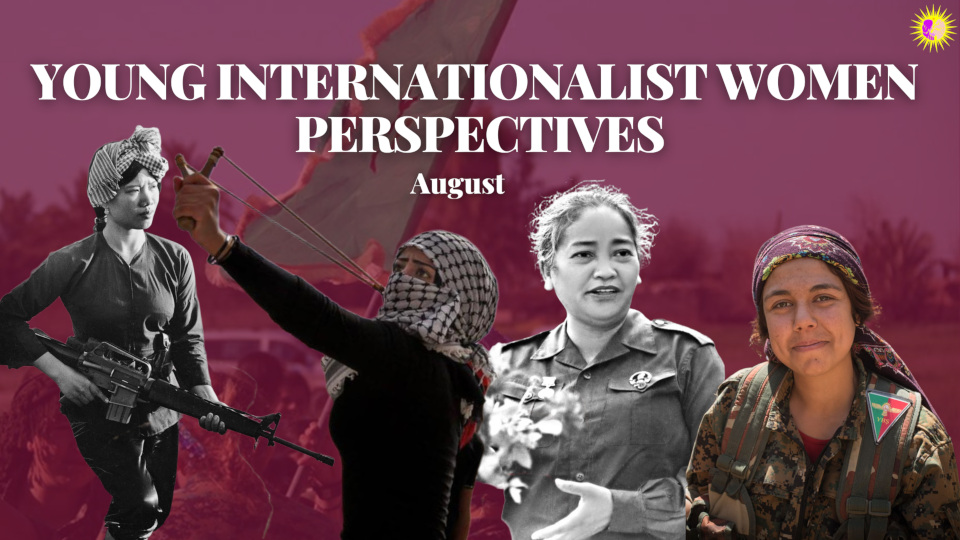
    August marks the beginning of the August Revolution in Vietnam. On August 19, 1945 the Viet Minh took the Vietnamese capital Hanoi. This was the beginning of a relentless struggle for freedom and independence. Both in the August Revolution and later in the liberation war of South Vietnam, women played a central role. Over 1.7 million women fought in the Viet Cong. Countless other women were doing organizational work, as doctors and nurses, and espionage work for the revolution. The courageous Vietnamese women followed the example of the Trung sisters, who led uprisings against the Chinese invasion in 40-43 BC. In addition, Vietnamese women felt a strong attachment to their country and wanted to liberate it at any cost. But who were the Vietnamese fighters and pioneers? Why do we hardly know their names today? The first female commander Nguyễn Thị Định is a founding member of the NLF (National Liberation Front) and later led thousands of young women to the liberation of her country under the name Long Haired Army. Certainly, countless legends and novels could be written about these Vietnamese heroines, but their stories have mostly gone unheard and unwritten. This is based on the reality that although women were involved everywhere with great passion and strength, they did not organize themselves strongly enough ideologically and autonomously. They fought with determination, formed their units, but all with the goal of national liberation. Although there were some protests and demands for freedom for them as a women, they did not achieve any visible results. Aside from some legal reforms, could the Vietnam war be an answer for the women’s struggle?

    You exist as much as you are organized”

    Rêber APO says “You exist as much as you are organized “. This is especially true for us women. Without organization, our very existence is in danger. The example of Shengal makes this quite clear. And in the example of Vietnam, we also see that organizing cannot only mean participation in the general political struggle, but it must be a women’s struggle, with the liberation of woman at its centre. Otherwise the issue of women’s liberation will be pushed to the sidelines again and again. What can we learn from the stories of the women before us? Even though we may now understand how central women’s liberation is, we often fall into the traps of patriarchy. The attacks of patriarchy vary from place to place. Especially in centres of capitalist modernity, like Europe, the attacks on our existence are much more abstract and difficult to understand. So in the next part of the perspective, we want to expose some of the mindsets that we carry within us unconsciously.

    Women’s freedom comes after the revolution (or women’s meeting comes after the general one)

    In many national liberation struggles, the women’s issue was dismissed as a so-called secondary contradiction. When women in revolutionary processes made demands for their freedom and autonomy, they were often not taken seriously. Perhaps a few reforms were discussed, but there was no fundamental convergence on the subject. Women fought heroically in liberation wars, but ended up back in the kitchen afterwards. And they were often discriminated against in their own structures, sometimes even abused and raped. Okay, in theory, we understand today that the concept of “woman’s liberation after the revolution” does not work. But this pattern of thought often haunts us in our political daily lives. For example, we quickly abandon our autonomous projects and organizational work to prioritize the general political topics. We think that once the general political work in the city or village goes well, we will have the capacity to think about the structures of women. But then we often encounter aggression and sexist behaviours. We see women whose opinions are not taken seriously, who do not dare to speak their mind in meetings and discussions. Women who work all the time, but whose hard work is hardly respected. If we look closely, sexism is at the root of all power mentalities. That is why fighting it, is the foundation of all other political struggles. In our political daily life we should therefore see our women’s structures as the basis of our organization and always give priority to women’s work. Following the principle that “liberating a woman from the clutches of patriarchy is a revolution in itself”, we should give great importance to each of our steps, and never let men tell us that there are more important things than autonomous work.

    Autonomy begins in the way we approach life

    Once a young woman visited an experienced Kurdish woman guerrilla fighter. She lived at that time, because circumstances did not allow it otherwise, as a woman alone with a group of male guerilla in an academy. The young woman observed the fighter and saw that she sometimes sat with the male comrades and told stories, and sometimes stayed on her own. Sometimes, she discussed and laughed with the men, but against wrong attitudes of the male comrades she gave them strong answers and drew her boundaries. She was alone as a woman, but still never made herself dependent on the attention of the men. The young woman asked: ‘How can you live alone with these men?’ The guerrilla fighter laughed and said: “I’m not alone, I have a whole army of women behind me”. What we can learn from this story is that autonomy begins in our thoughts and feelings and can be developed and strengthened with the organization. A strong organization of women builds in ourselves the courage to stand on our own feet and have a strong stance towards men wrong behaviours, even when we are physically not together with other woman comrades. Women’s autonomy is not something just physical. It is about feeling each other as woman and always feeling the strength of other women in everything we do. We can quickly get past any uncertainty, react confidently towards sexist behaviour in everyday life and give strong responses. We do not always have to wait for the next autonomous meeting or the next autonomous education to express and defend our identity as women. Even if the possibilities do not always allow it, we should always see ourselves as a united front and always stick together and trust each others.

    More important than ever, self-organization

    Dear revolutionary young women,

    Whether we are socialists, Marxists, anarchists, ecologists, democrats, class fighters, cultural defenders, we are women! What blocks us in our political work most of the time are the internal patriarchal attacks. That is why an autonomous women’s structure is never an extra job, or a double burden, but the solution to the fight against patriarchy. Of course women organization cannot stand for its own. This is why it always has to give a strong perspective to the outside. Autonomy can never be an escape from confrontation with men. That approach would alienate us from reality. Autonomous spaces are spaces of struggle. They are the places where we as women get to know ourselves and expand our strengths. In which we see women as pioneers. Places where we can find solutions to all the different social and political problems. Here in Rojava, women are building their autonomy everywhere. From women’s communes, young women’s councils, women’s cultural movements, women’s economic committees, women’s cooperatives, from women’s self-defence units to women’s universities, women’s sports associations. That is why women in all spheres of life, in all political bodies, have their own power and bring their own colour. Here they get to know themselves, build strong bonds with each other, and give each other what they need to develop strong personalities: mutual respect, love and a strong common struggle.

  • New Ezidi temple in Rojava

    New Ezidi temple in Rojava

    On 3 August 2014, the so-called Islamic State invaded the Shengal region in Northern Iraq and committed a genocide and mass femicide against the Ezidi people. To remember this day and show a strong stance against this massacre the religious leader of the Ezidis Bave Cawish, and the members of the Ezidi spiritual council met in a public ceremony with the leaders of the Orthodox Christians and the Muslim Arabs from North-East Syria.

    It is a historical step. Together they put the first stone of a new Ezidi temple that will be built in the village Digur, close to Heseke. After this, Bave Cawish held a prayer. There were speeches from other religious leaders, political parties, and the Autonomous Administration as well as committee members of this project, who came all the way from Europe. There was also music from a children’s choir and other artists.


    We interviewed Suad Hiso, the co-chair of the Ezidian Union of North-East Syria. She explained what happened here on this historic day and its importance.

  • FROM KURDISTAN TO INDIA – WOMEN’S STRUGGLE IS INTERNATIONAL

    FROM KURDISTAN TO INDIA – WOMEN’S STRUGGLE IS INTERNATIONAL

    Poem of Pritha Paul, a lawyer and activist from India, about the “Jin Jiyan Azadi” Revolution

    This poem was written in the wake of the widespread, worldwide protests which erupted in rage against the murder of Jina Amini by the moral police in Iran. The poem aims to capture the collective struggles, dreams and hopes of all the revolutionary women around the world and across times who are bound to each other, if not by blood, in spirit and in defiance. It is intended as a tribute to all the revolutionary women who continue to resist, rebel and revolt against an unjust world for a fairer future, as well as a tribute to the Kurdish Women’s Revolutionary Movement which acknowledges and recognises the central role of women in the revolutionary process, spaces and structures and propagates the same by raising their slogan “Jin Jiyan Azadi” or “Woman, Life, Freedom”.

    INHERITANCE

    My mother fought a fight last night:

    She was dreaming.

    My mother was murdered last night,

    While you were sleeping.

    The State came looking

    For signs of chaos,

    Guns and bombs but

    They found something worse:

    Thoughts, ideas and a desire to be free,

    And the same desire for you and for me.

    My mother was writing a song:

    On prison,

    A song on Liberty,

    But singing was Treason.

    Yet she sang, she danced,

    She chopped off her hair;

    Unbothered by her discarded Scarf’s dirty glare.

    They warned her: Ghosts

    Of her Ancestors’ Cats,

    Told her someone will come

    Knocking on her gates.

    But their mistresses gave her

    Their strength and might.

    Let whoever come,

    She was ready to fight.

    That’s when she heard a banging sound

    That tasted like fear and smelled like a hound:

    The State barged in

    And marched through the door,

    Held her by the hair

    And threw her to the floor,

    Her dreams got scattered

    But she held them to her chest,

    The State failed to seize them

    Despite their very best.

    At last, they decided

    To set her dreams on fire,

    They wanted to test

    How her fate would transpire.

    Brave, she held her own,

    Her dreams, her desire.

    But the State failed to notice

    That the Scarf’s state was dire.

    They turned their back,

    Thinking it’s the end.

    But with her fiery ashes,

    Like poems, we were penned.

    We, her daughters,

    Have inherited her wrath,

    Her memories, her moves,

    Her maverick attacks.

    I speak with her tongue,

    Her words and her voice,

    I shriek for the right

    Of my sisters’ choice.

    I scream for all women,

    I scream for our life,

    I demand my liberty,

    And my sisters’ alike.

    I may be burned, drowned,

    May be buried alive;

    But my daughters will grow,

    Like weeds,

    Where they’re not wanted to thrive.

    Pritha Paul, a lawyer and activist from India

  • As a young women, I am following the path of my mother

    As a young women, I am following the path of my mother

    Heval Lorîn talks about her mother Şehîd Hediya Abdulah, who fell martyr on the 20th November 2022 in Dêrik, Rojava.

  • PERSPECTIVE FOR EUROPE – APRIL

    PERSPECTIVE FOR EUROPE – APRIL

    Violence, rape and feminicide: our answer is organized self-defense!

    First of all we, the Internationalist Young Women Commune of Rojava, send greetings to all the young women in the world. In a sexist system that aims the domination of the whole world through the oppression and exploitation of the women’s bodies, cultures and values, the life of any young women is a resistance by itself.

    We are writing these perspectives while entering now in a new political historical phase. In the recently published calls of Rêber Apo he made clear that the women and especially the young women have to play a central role in the democratic transformation of the society, leading the people out of this situation of chaos and violence. In the calls, especially the ones that he addressed to the women for the 8th of March and later on to the youth, Rêber Apo affirms again that the young women have the knowledge, the emotions and the strength to play this important role.

    Now our question is: we, as young internationalist women, how much do we really believe to have the capacity to play this role? How much do we see ourselves as a leading force of change and creation? How much we recognize the perspectives of Rêber Apo inside of our lives and realities?

    In a time where the violence waged against humanity by the unmoral capitalist and imperialist forces is reaching its highest level without any limit, the democratic forces must take a strong stance in the defense of freedom and democratic values. In doing so, we must deepen and strengthen our understanding of the roots of the social and political problems that we are facing.

    The historical war against the young woman

    In order to be able to correctly understand the present we have to look at the history of the women. In the Neolithic time, before the system of central civilization, the important role of the women in the society reached its peak. Since the beginning of central civilization, we see how the system of hierarchy and class domination started with a violent oppression of the woman in order to become effective and spread around the world. Instead of playing her central and natural role in the organization of the society, managing the economy and building the life, the woman became the property of the man.

    We can find evidence of this process in the mythology of that time, in which the mother goddesses that before were represented as holy figures of free and natural life, began to be deprived of their role. The myth of Tiamat and Marduk symbolizes the violence of this process. Tiamat was one of the most important mother goddesses of the Neolithic time. Marduk, her son, killed her with three arrows. One inside her head, to kill her thoughts and values, one inside her heart, to kill her love and life, and one inside her uterus, to kill her ability to create life. After this episode, known as the first feminicide in the history of humanity, Marduk used her death body to create the earth and the sky. From this moment on a new culture was slowly built up – a culture of rape, killing and enslavement. Throughout the history, the dominant male mentality continued and developed itself, killing the ability of the woman to think, to love and to create life and using the women’s bodies, intelligence and emotions for its own interests.

    During the 16th and 17th centuries, in the building and the spreading from England and Netherlands of capitalism, this mentality reached a new level with one of the most violent attacks against women that ever happened in the whole history of humanity, the witch hunting. The witch hunting destroyed a universe of believes and practices that, embodyng the values of the democratic, healthy and free society, represented an obstacle for the developing capitalist system. Within this process it becomes clear that capitalism built itself up on sexism. As a consequence of this massive violence also the other women learned to be obedient and silent and to submit to the hard work and abuse of men in order to survive and to be socially accepted. This dynamic continued until today and expressed itself in many different ways. As some examples, as women we learn to not trust in ourselves, to not believe in our thoughts and emotions, to not follow our instinct and to not speak without permission. We learn that if we want to live a life that is accepted in the system we have to shape our mentalities and our way of seeing and understanding the world like the man do. Or we have to become like the man wants us to be, accepting his violence and his oppression and normalizing it. At this point we should ask ourselves: When we talk, when we act, when we laugh, how much are we doing it according to the spirit of the free woman? Or how much our thoughts, emotions and actions are still under the influence of the man?

    The sexist system’s oppression is organized worldwide

    It is especially our responsibility, as young women, to be aware of the whole structure of violence and rape culture that the system has enforced on the societies all over the world in order to make the woman weaker and unable to play her vanguard role in the liberation of the peoples. As Reber Apo said “until the rape culture will not be overcomed, the truth of society cannot be revealed in the fields of philosophy, science, aesthetic, ethic and religion”. The construction and dissemination in the media of hypersexualized models of femininity has intensified the problem, openly inviting sexual aggression and contributing to this misogynistic and rape culture in which women’s aspirations for autonomy are degraded and reduced to the status of mere sexual provocation. Also in the fields of music, art, cinema the woman is represented as the object to sell, to conquer, to utilize. The sex industry, which is run predominantly by male criminal organizations capable of enforcing slavery in its cruelest form, its one of the highest example of this.

    The brutality of the attacks on women is often so extreme that it seems devoid of any utilitarian purpose. The goal is again to terror and to make the woman feel powerless. Such violence cannot emerge from the daily life of any community, it is systemic violence. It is planned, calculated and executed with the greatest guarantee of not being punished from the nation- state.

    We’re witnessing an escalation of violence against women, especially in those parts of the world – sub-Saharan Africa, Abya Yala, Southeast Asia – that are richest in natural resources and are now targeted by commercial enterprises, and where the anti-colonial struggle is strongest. The capitalist powers, through the Third World War, are determined to turn the world upside down in order to consolidate its power, which was weakened in the 1960s and 1970s by the anti-colonial, feminist and anti-apartheid struggles, and that is again under a great threath nowdays thanks to the uprisings of the youth all around the world and to the Jin Jiyan Azadi Revolution. Once again, their goal cannot be achieved without attacking the women, who are directly responsible for the reproduction and the defense of their communities.

    The increasing militarization of the countries through the propaganda of war and national security, the building of new military bases and infrastructures, the strict connection between universities and war industries, the number of armed men legitimated by the state such as private domestic guards, commercial security guards, prison guards, gang and mafia members, and soldiers in regular or private armies, plays a central role in forging increasingly dominant man mentalities in the society. In this way violence becomes indivisible in every aspect of the life, and also individual male violence becomes the response to women’s more assertive demands for autonomy and freedom. The expression of this mentality is the growing number of women killed in their houses by their partners, on their place of work, in school, in the streets. For how long can we, women from all the countries, accept this violence? For how long we will continue to stay silent when the sexist system enslaves us and destroys our lands and societies?

    Enough! We organize our own self-defense

    Against these organized attacks of the system, our first step to defeat this violence is to organize ourselves. In doing so, we have to come together and become ourselves as young women, we must develop our own will and ways to protect ourselves from the attacks of the system through self defense. We must never forget that we are in a time of war and as a consequence also the resistance must be organized on several fronts, in all the fields of the life. The decision of women to react, break our isolation and join with other women is crucial to the success of our goals. Such an objective, however, cannot be achieved if we as women do not acquire the resources we need to be independent from the system of men, not just in a physical and economical way, but also in our thoughts and mentalities. so that we will not be forced to accept degrading and dangerous working conditions and family relationships in order to ensure our survival. Starting from this point, we will together develop the capacity to find solution and strategies that can serve the building and the defense of a life in freedom and coexistence for all the people. When we as women are a united front, we become a force of creation for a new way of life, a new culture based on the principle of the Democratic Society. For every woman killed by this dominant male system, we must organize together our strength and our will, we must build structures where we can live in a communal and autonomous way, we must organize self-defense courses, a system of education to understand the reality of the system and its attacks against us, we must create a sociality that is based on love, respect and dignity. We must start a global offensive to liberate ourselves and bring the world out of the chaos created by the system.

  • THE Age OF MEDIA WARFARE – PART 1

    THE Age OF MEDIA WARFARE – PART 1

    The war that ist fought today is not just using classical methods anymore. In order to weaken the individual and the society, there is a strategical manipulation of mind and thoughts going on. With Media Warfare the system is attacking us, without us being aware of it.

    But as Rêber Apo says, that greatest technology is the human being itself. With the right revolutionary methods, we as women and youth can build an alternative and connect to the truth of humanity again.

    These evaluations of Lêgerîn Artemetan, member of the PKK Youth Commitee, are taken from the documentary “The Age of Media Warfare”.

  • “We were like comrades”

    “We were like comrades”

    We sat with Yade Emel and talked with her about the life of her daughter Şehîd Zîn Jinda who fell şehîd in the regions of the Democratic Autonomous Administration of North and East Syria (Rojava) a year ago today on 22 January 2024.

    Şehîd Zîn proves to us that the connection between mother and daughter, comrade and comrade, land and revolutionary, society and warrior, is stronger than death. We send our thanks to Yade Emel for sharing this message with us.

  • Music video: No to Execution, Yes to Free Life!

    Music video: No to Execution, Yes to Free Life!

    Sharifeh Mohammadi, Warishe Moradi & Pakhshan Azizi have been sentenced to death and are now in the notorious Evin Prison in Tehran, Iran. The Iranian regime wants to silence the voice of Kurdish women, and to crush the ongoing “Jin Jiyan Azadi”-Revolution.

    We as Young Internationalist Women send our voices and strength from Rojava to the Evin prison resistance. We will always stand side by side with Warishe, Pakhshan and Sharifeh and all the revolutionary women fighting in the prisons.

    Subtitles in the toolbar

Young Internationalist Women